

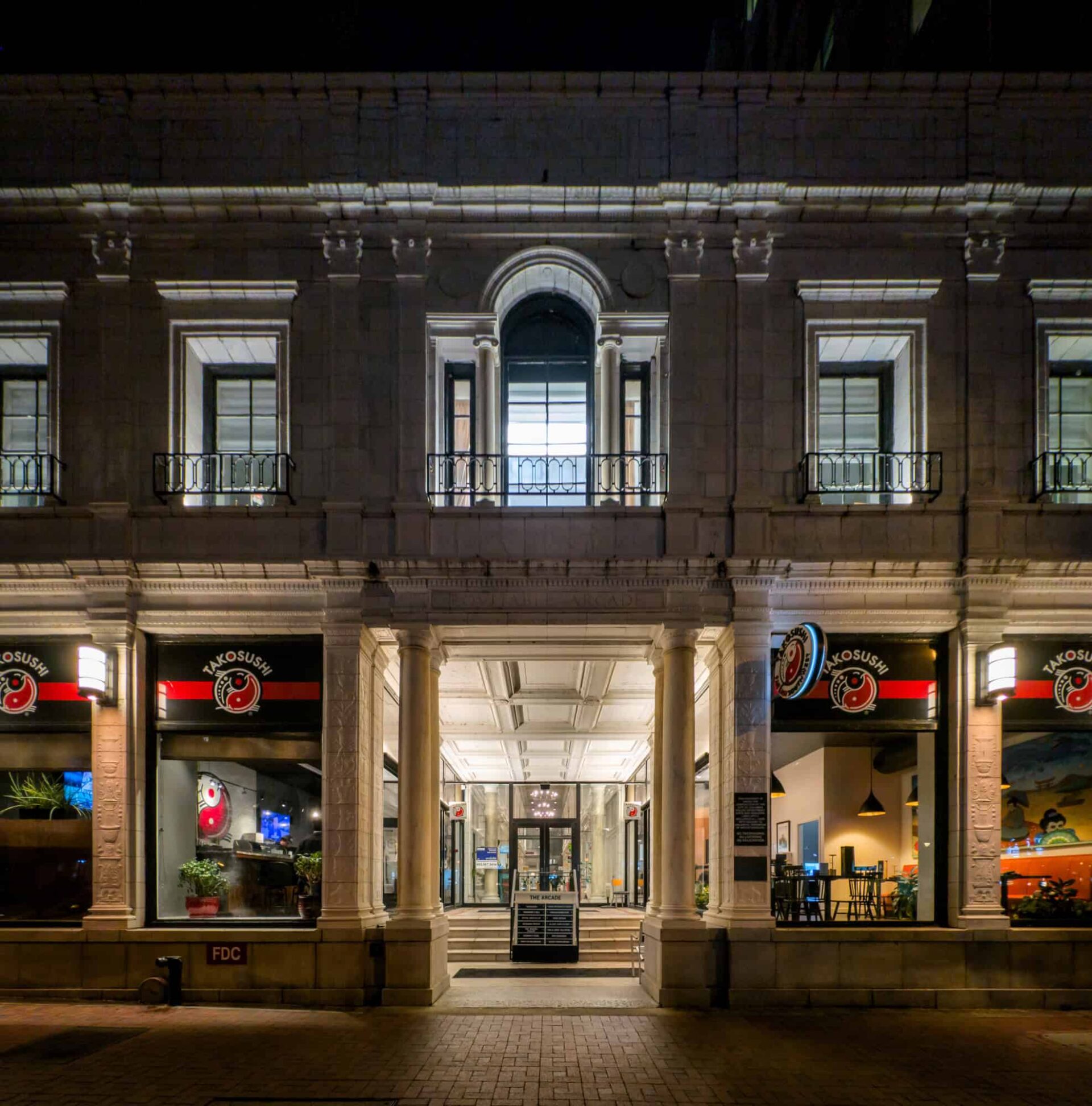
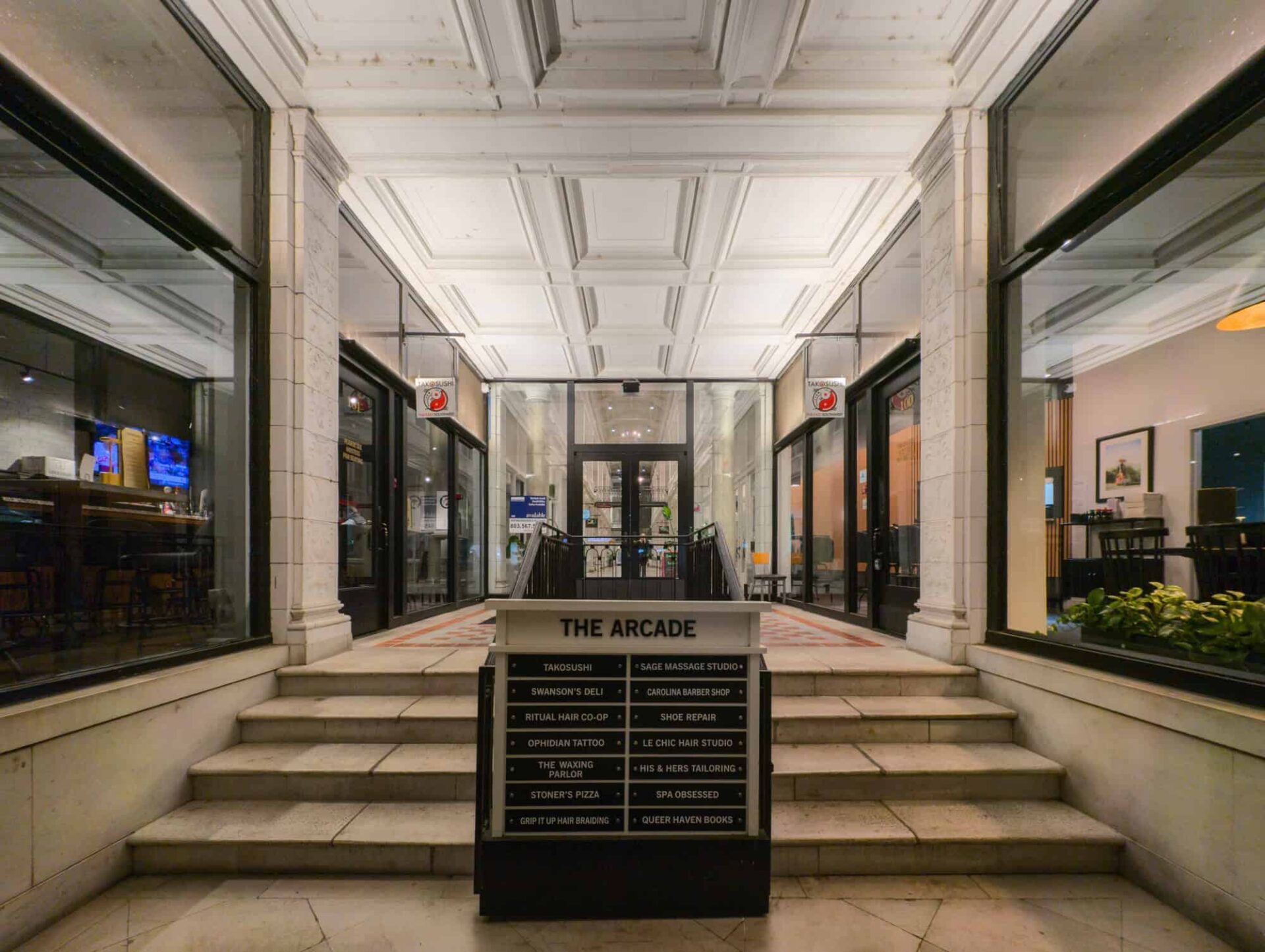
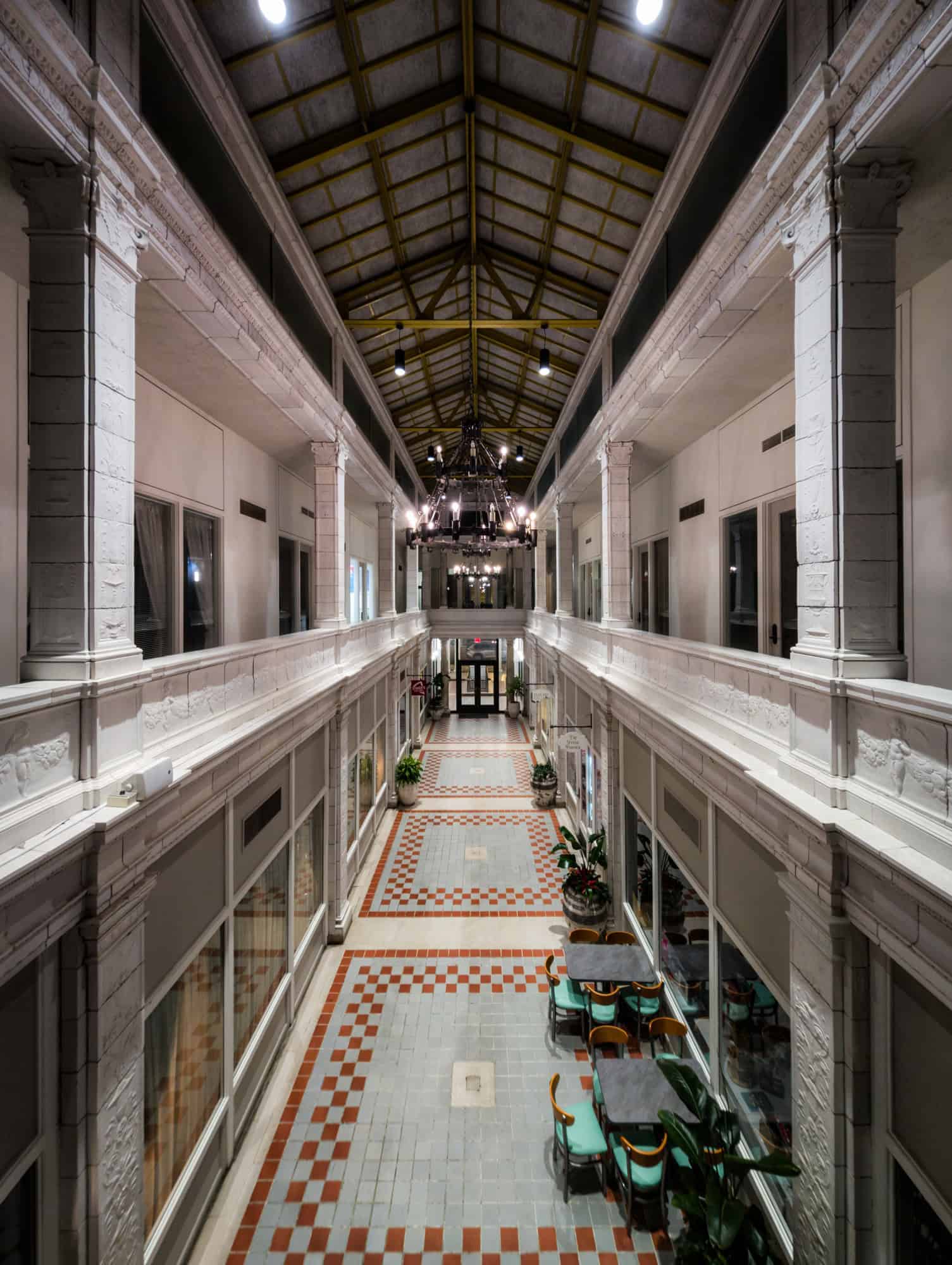
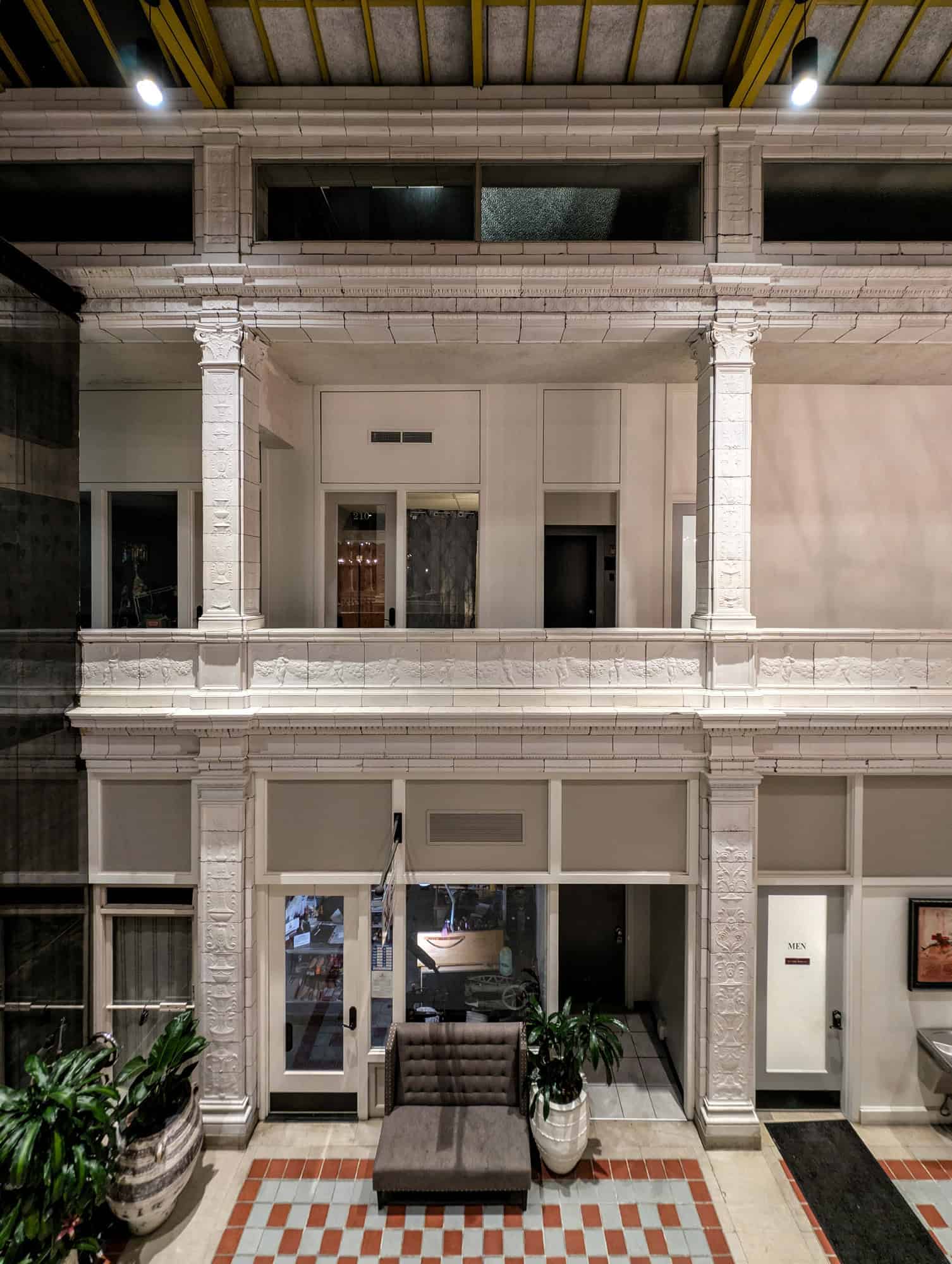
The Arcade Building, located in the heart of Columbia, South Carolina, stands as an important historical and architectural landmark. Added to the National Register of Historic Places in 1982, this former indoor shopping center was built in 1912 by the Equitable Real Estate Company. The structure, which cost $200,000 to construct (equivalent to about $6.31 million today), was Columbia’s first enclosed mall. Designed in the Renaissance Revival style, the building features a distinctive L-shape with two identical terra cotta facades that face both Main and Washington streets. The two-story building retains its original design, with five bays on each floor.
Early Business and Community Impact
When the Arcade Building opened, it quickly became a prominent business location in downtown Columbia. Situated near the Barringer Building, the city’s first skyscraper, the Arcade’s central location made it a prime spot for various businesses. Early tenants included Henry Abell’s Shoes, The Kiddie Shop, Mrs. McMaster’s Tea Shop, and the Seaboard Ticket Office, along with real estate and insurance firms. This variety of businesses contributed to the building’s status as a vital hub in the city’s commercial district. However, as the city expanded and suburban shopping malls began to emerge, the Arcade’s popularity waned.
Architectural Style and Evolution
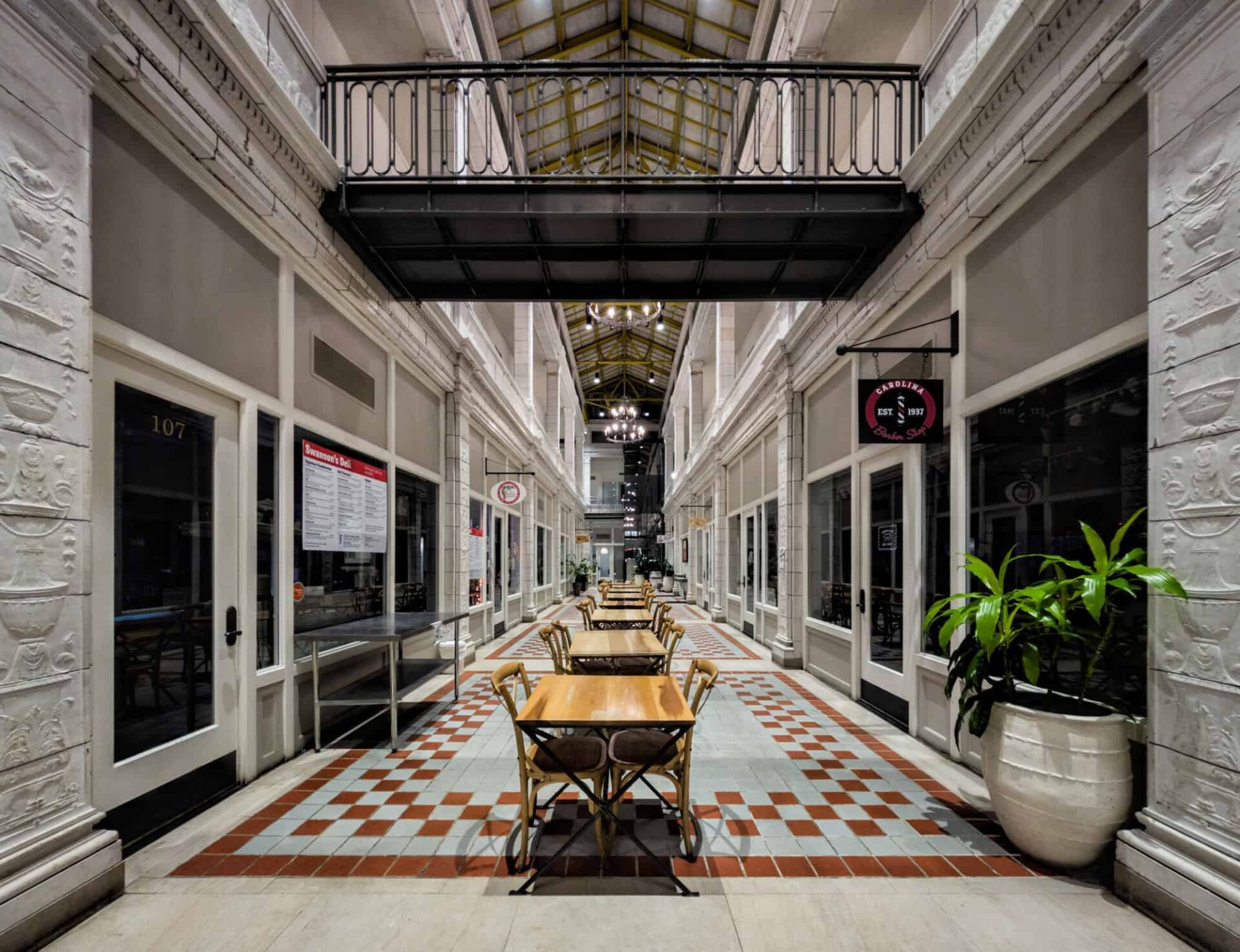
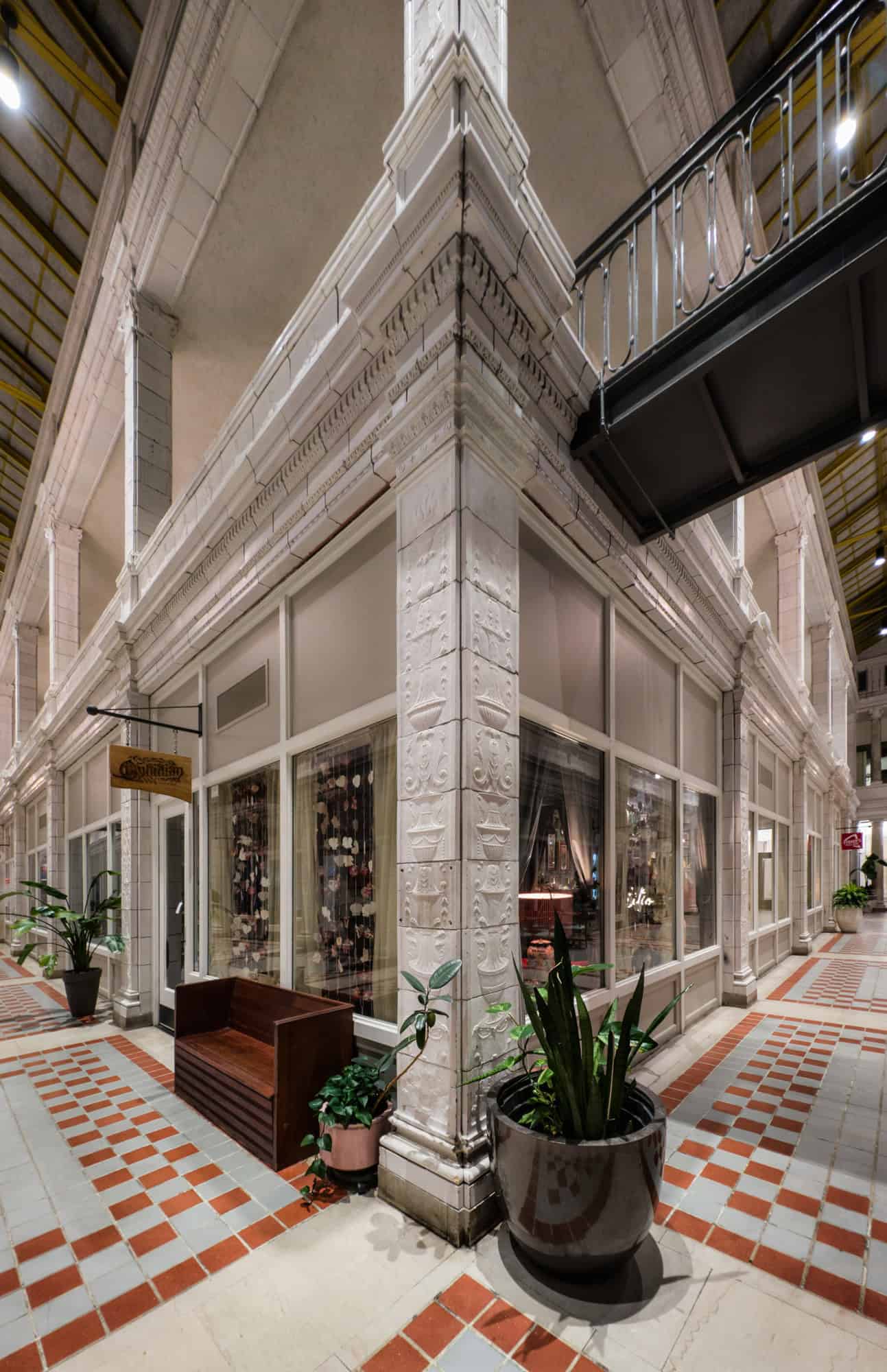
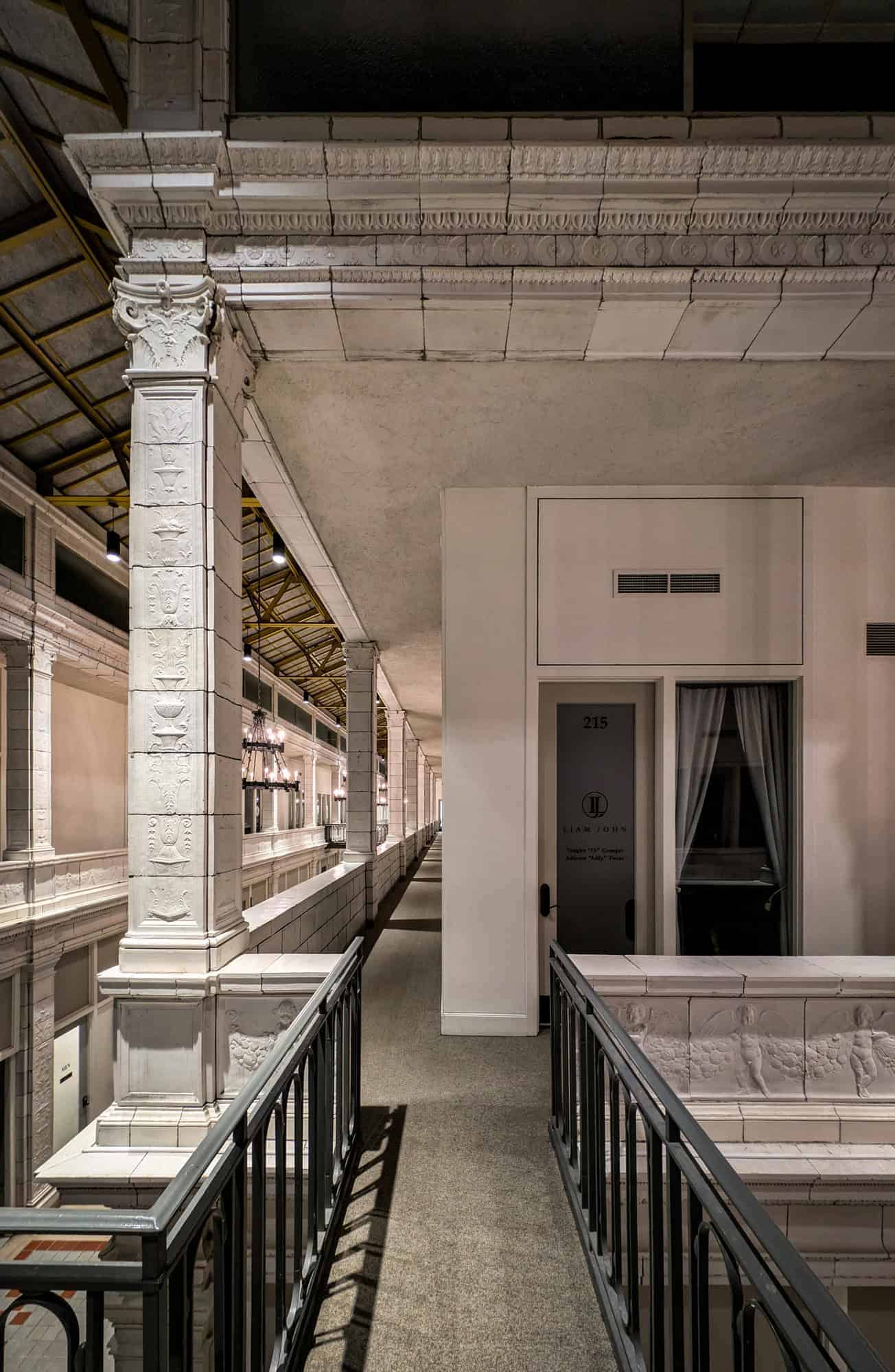
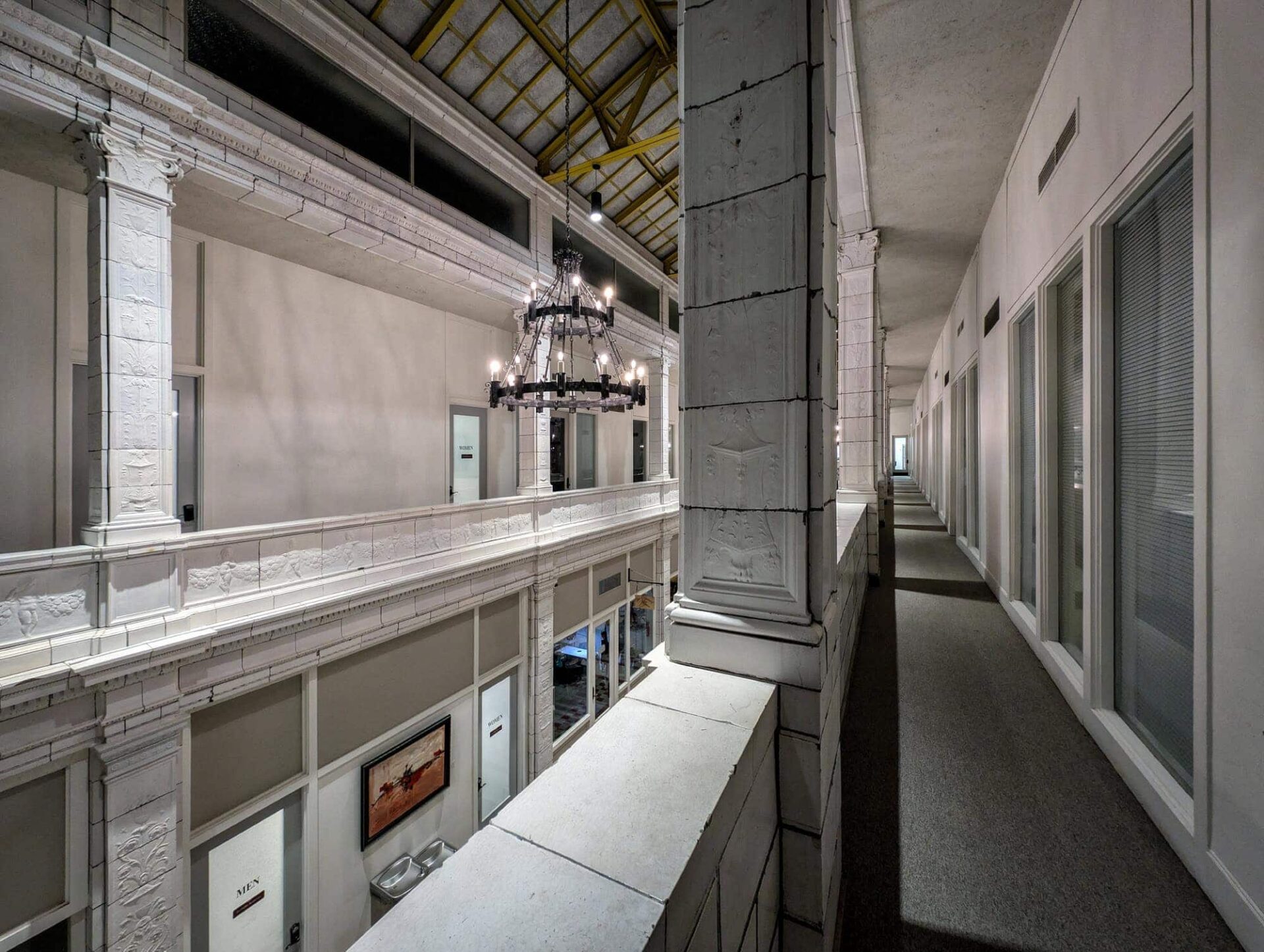
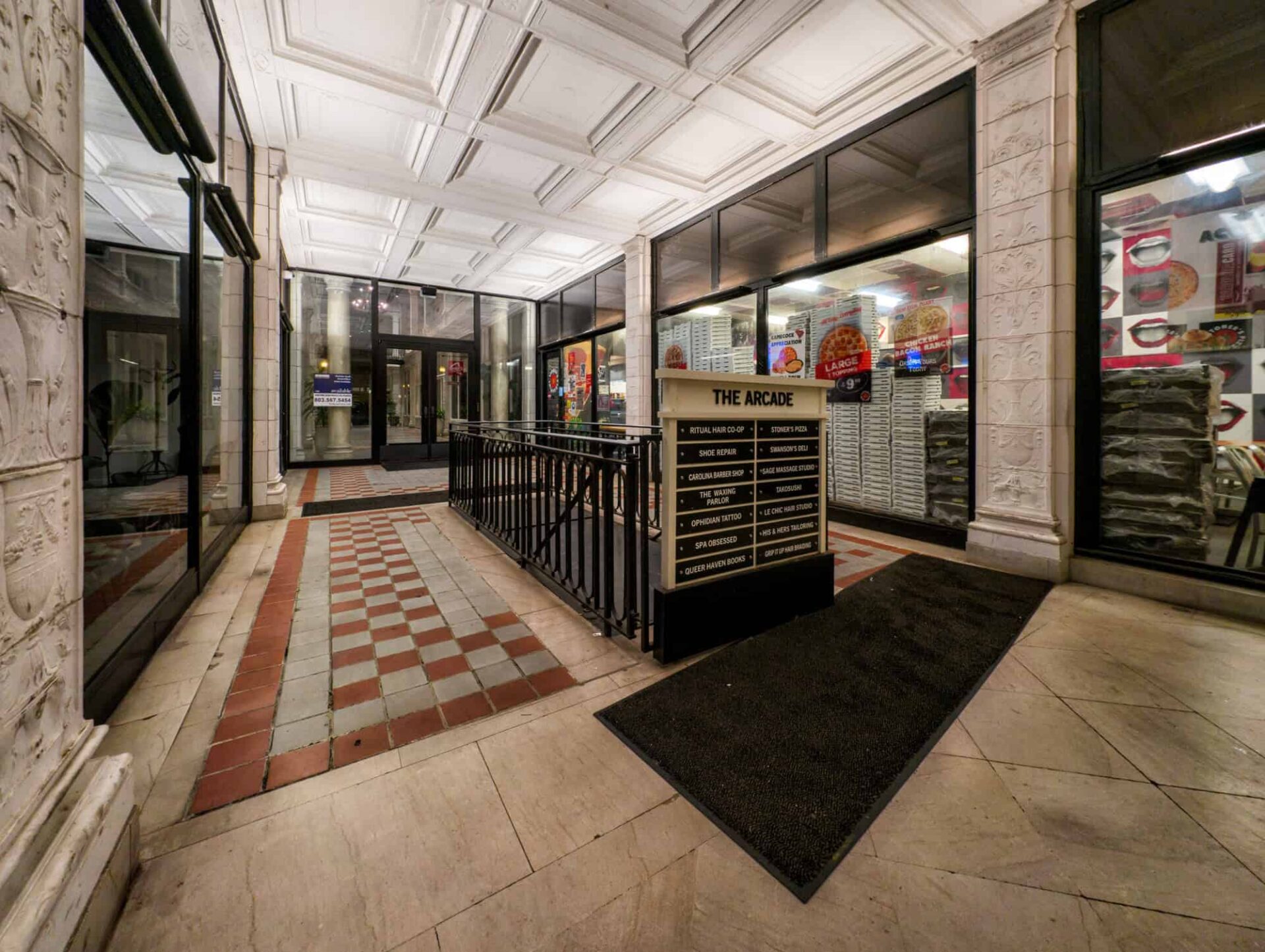
The Arcade Building is a notable example of Renaissance Revival architecture, which draws inspiration from classical Italian design. Originally designed as an open-air arcade, the structure’s central passage was eventually enclosed in the mid-20th century. Built with reinforced concrete floors and a fireproof design, the building was ahead of its time in terms of safety and durability. The two facades are embellished with ornate terra cotta pilasters, Tuscan columns, and intricate detailing such as urns, cherubs, and garlands. Palladian windows on the second floor further enhance the building’s classical aesthetic, while the interior features an open balcony and a skylight that bathes the space in natural light.
“Columbia Down Under” and Subsequent Changes
In the early 1970s, the Arcade Building’s basement was converted into “Columbia Down Under,” a nightlife venue inspired by the success of similar ventures like “Underground Atlanta.” This area featured a mix of bars, shops, and restaurants, but it was short-lived, closing in 1974 after just two years of operation. Throughout the 20th century, the building saw minor alterations, including the addition of marquees, awnings, and iron balconies. Many of these changes have since been modified or removed.
Preservation and Legacy
Today, the Arcade Building is a well-preserved example of early 20th-century commercial architecture and continues to stand as a testament to Columbia’s rich history. It remains a protected local landmark and a reminder of the city’s commercial development during the early part of the century. The building’s enduring architectural beauty ensures its place in the heart of downtown Columbia for years to come.
My Visit to the Arcade Building
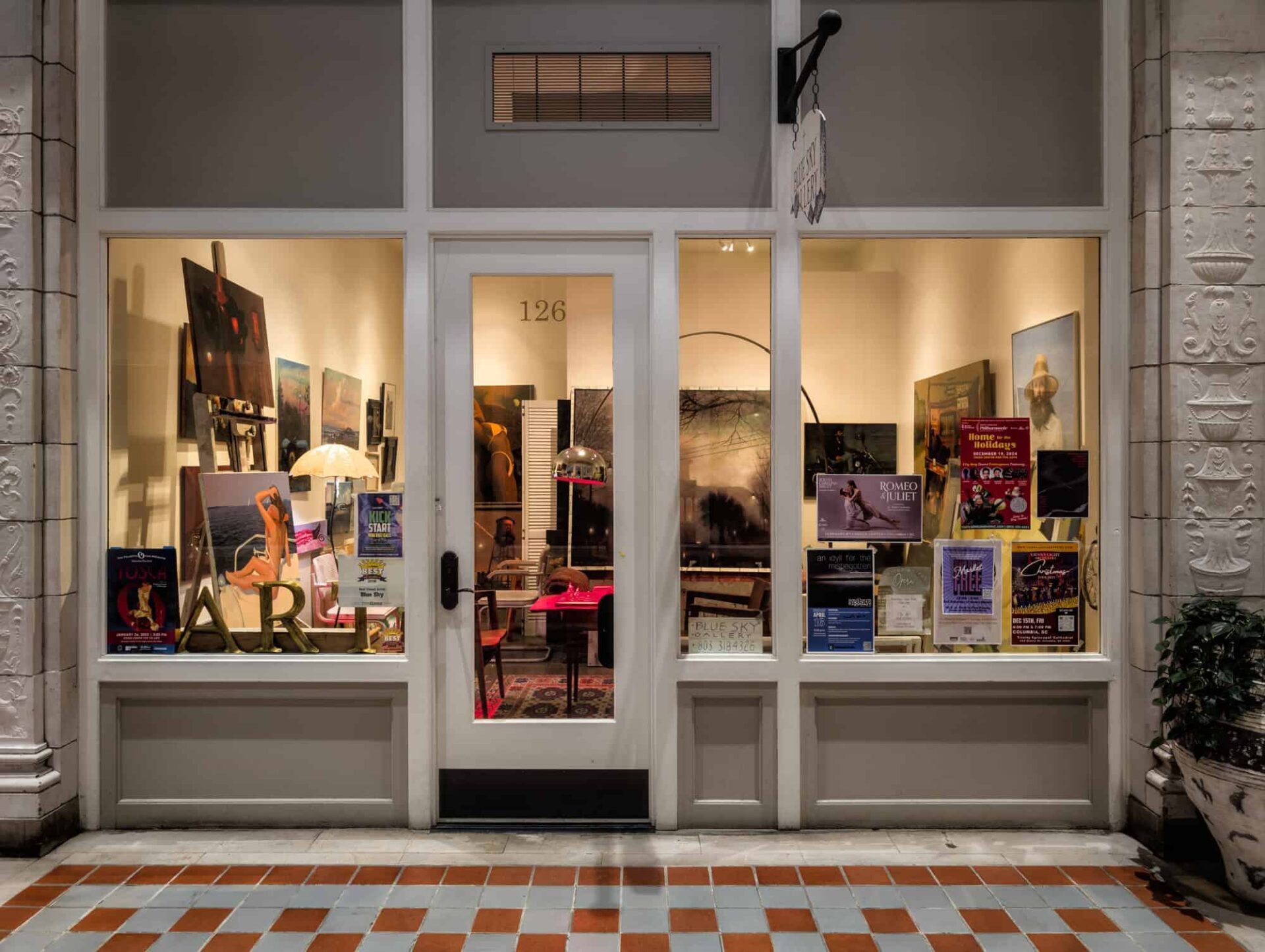
Unfortunately, my trip to the Arcade Building coincided with a major snowstorm, which meant that many of the businesses inside the Arcade Building were closed. This was a disappointment, as I was really looking forward to seeing it, but certainly not a strike against the location as it was just bad luck on my part. Despite the fact that only Stoners Pizza Joint was open, I was still able to walk around the arcade’s interior, and it’s quite a sight! It’s impossible not to notice the fact that it was originally an outdoor space, as it feels like a store-lined street that happens to have a (quite nice) ceiling. I really like this aesthetic, as it gives a nice hint of surreal individuality to the experience. The ornamental details on the stonework and the wrought-iron walkways are beautiful, and upon entering you get the sense you’ve discovered one of Columbia’s secret treasures. Shops include an art gallery, a tattoo parlor, a repair shop, a bookstore, hair salons, a deli, and more. The entire interior is perhaps about two blocks long and can be seen fairly quickly, although undoubtedly visiting at a time when the city is not covered in ice and the businesses are open will give you more of an opportunity to peruse. Even if somehow you manage to catch one of the very few occasions where this is a factor, however, the building itself is still very much worth seeing as a fascinating window into America’s retail history.










 Continue with Google