

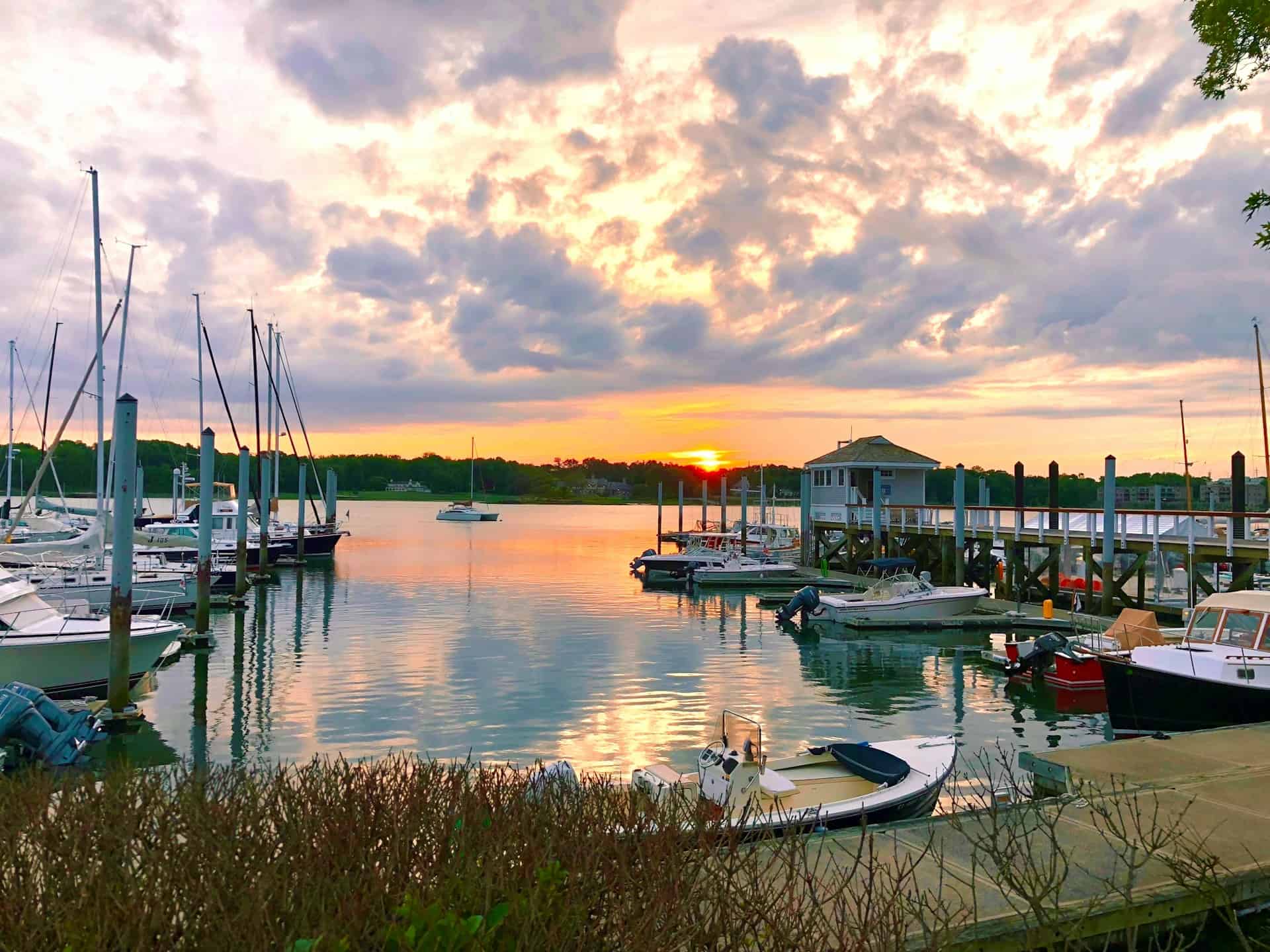
Connecticut’s Route 1 is the Boston Post Road — one of the oldest continuously traveled roads in North America. It’s been carrying traffic since 1672, when postal riders rode it between New York and Boston. Three hundred and fifty years later, it runs through Greenwich, Stamford, Norwalk, Bridgeport, New Haven, and on toward the Rhode Island line, a 100-mile stretch that swings between Gold Coast money and working port cities. This 3-day itinerary covers it south to north, the way it was always meant to be driven.
Pack layers. Long Island Sound pushes cold air inland even in summer. Bring comfortable shoes. And at minimum one night in New Haven for the pizza, which is not a suggestion.
Day 1: Southwestern Connecticut – Greenwich to Stamford to Norwalk
The Boston Post Road enters Connecticut at Greenwich, crossing from New York at Byram. This first leg runs through Fairfield County’s Gold Coast, where the highway passes hedge fund estates before hitting Stamford’s office towers and Norwalk’s harbor.
Greenwich, CT (Affluent Gateway)
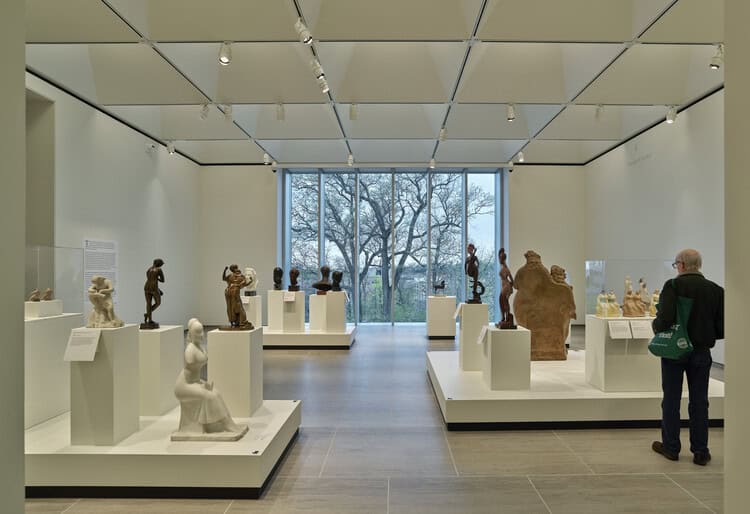
Enter the Gold Coast where the Boston Post Road begins Connecticut’s coastal run.
The Boston Post Road enters Greenwich from the west and runs through town as Putnam Avenue before rejoining the Route 1 designation. This is Fairfield County at its wealthiest. Duration: 2-3 hours.
Byram Shore Park sits at the state line, a low-key rocky cove that most visitors bypass. At low tide the mussel beds are exposed and the shore is quiet. Worth an hour if you want to stretch before the drive east.
Activities include the Bruce Museum for art and natural history (free on Tuesdays), Greenwich Point Park for waterfront access, the Bush-Holley House for American Impressionist history from the 1890s colony that gathered there, and Greenwich Avenue for coffee before the road.
Stamford, CT (Corporate Hub)
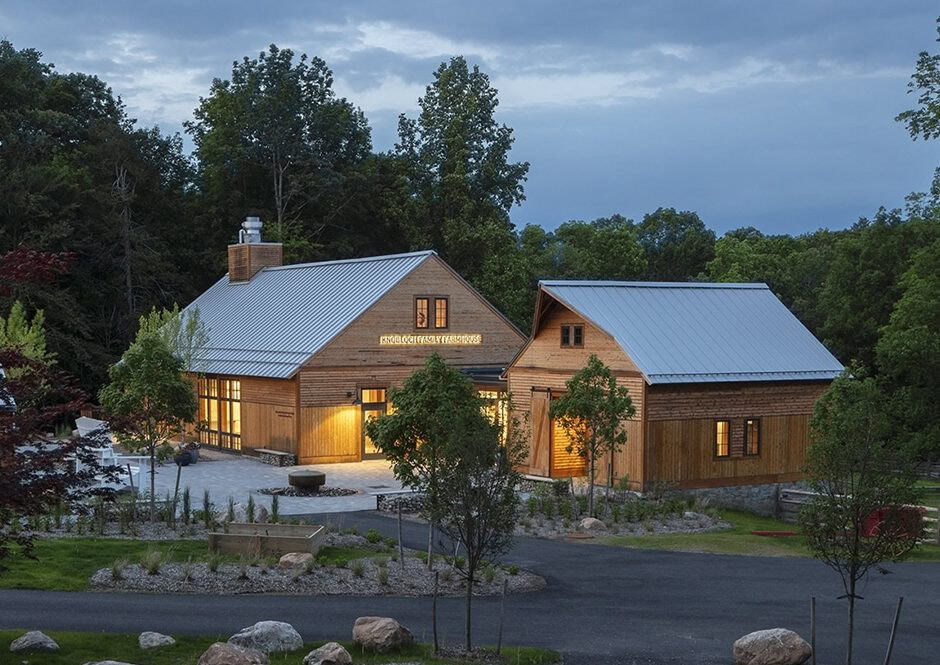
Skyscrapers and salt marshes share the same zip code here on Fairfield County’s biggest city.
Stamford is where the Gold Coast meets corporate Connecticut. The Boston Post Road runs right through the center. Fortune 500 headquarters line the skyline, but the waterfront is worth finding. Duration: 3-4 hours.
The Bartlett Arboretum on Brookdale Road has 91 acres and a wildflower meadow that most Stamford visitors never find. Cove Island Park on Cove Road puts you on a peninsula with views across the Sound, with egrets working the back channels year-round.
Activities include the Stamford Museum and Nature Center with its working farm and Bendel Planetarium, Harbor Point for waterfront dining, Mill River Park for a midday walk, and the downtown restaurant strip on Bedford Street.
Norwalk, CT (Maritime Mix)
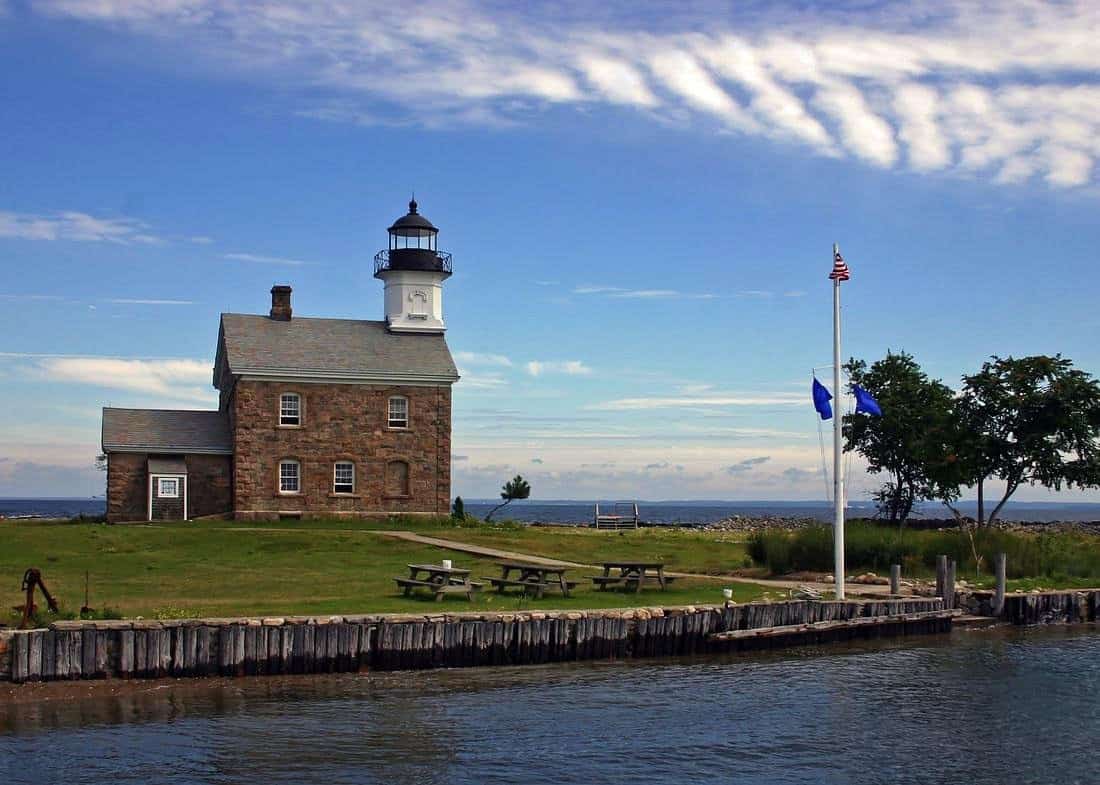
Oyster heritage and island hops where Route 1 parallels Long Island Sound.
Norwalk has been a working oyster port since the mid-1800s, and the annual Norwalk Oyster Festival in September is the largest event of its kind in New England. End Day 1 here. Duration: 2-3 hours (overnight recommended).
Activities include the Maritime Aquarium on Water Street for sharks and jellyfish, a ferry to Sheffield Island Lighthouse for Sound views, SoNo (South Norwalk) for shops and waterfront bars, the Lockwood-Mathews Mansion on West Avenue for a look at an 1868 Second Empire estate, and fresh oysters at any of the harbor restaurants.
Day 2: Central Connecticut – Norwalk to Bridgeport to New Haven
The Boston Post Road pushes east through Fairfield County’s industrial waterfront before reaching New Haven, where Yale’s Gothic towers press right up against one of the best pizza cities in the country.
Bridgeport, CT (Port City Revival)
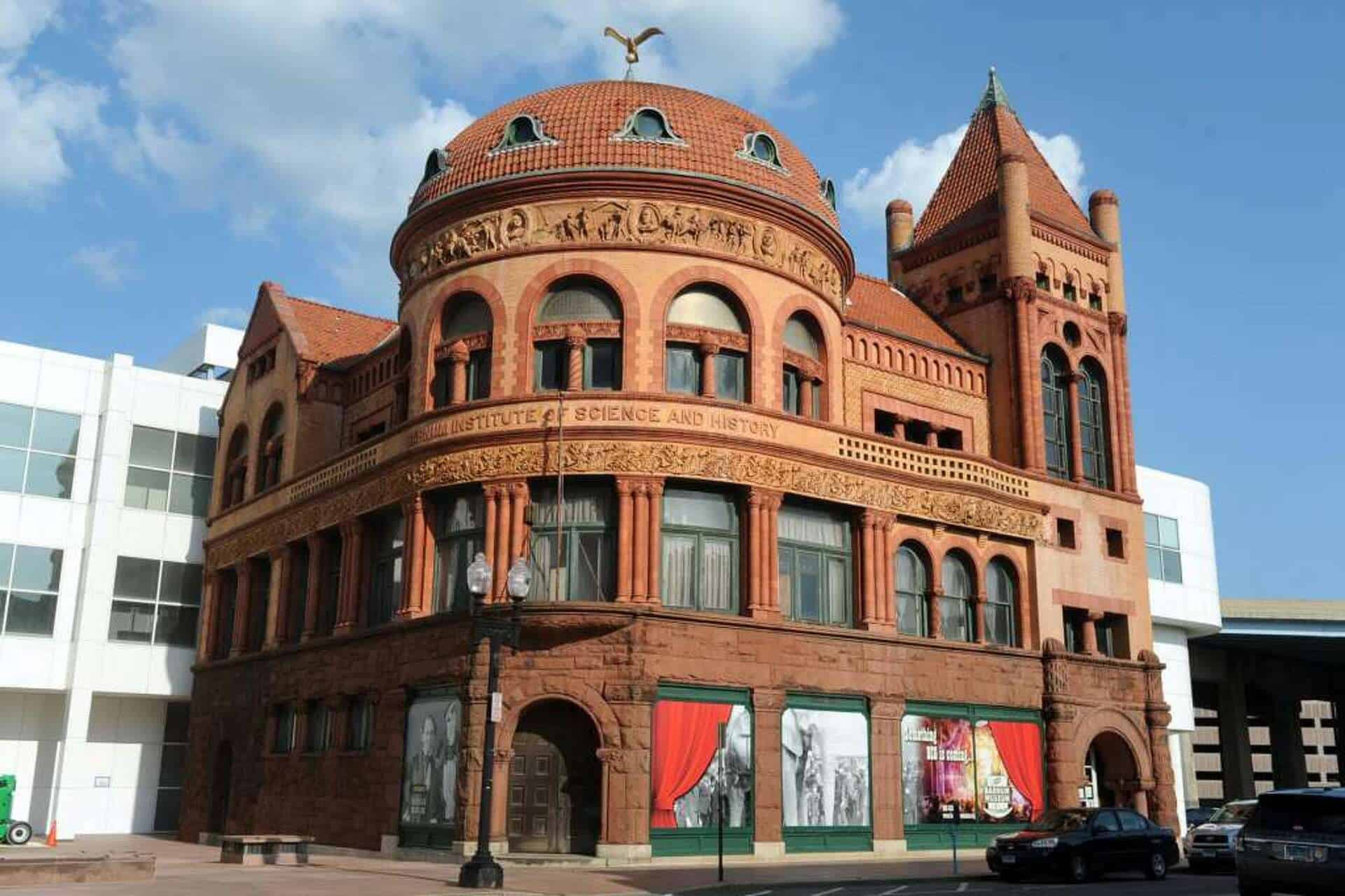
Circus history and harbor grit where Route 1 cuts through Connecticut’s largest city.
Bridgeport is Connecticut’s largest city and its most overlooked. P.T. Barnum was mayor here from 1875 to 1876, and the city has never entirely shed the circus energy — for better and worse. Route 1 passes directly through downtown. Duration: 3-4 hours.
Black Rock Harbor’s piers have become a street art corridor. It’s rough around the edges, which is the point. Pleasure Beach, accessible by water taxi from Johnson Street Landing, is a genuine urban anomaly: a barrier island with abandoned cottages and a shuttered amusement park that closed in 1996 after a bridge fire.
Activities include the Barnum Museum on Main Street for circus artifacts and city history, Beardsley Zoo (Connecticut’s only zoo), Seaside Park for a Frederick Law Olmsted-designed beach, the Bridgeport Arts Trail, and the Hollow neighborhood on Fairfield Avenue for Portuguese food.
New Haven, CT (Yale Enclave)

Apizza and Ivy League in a New Haven County hub where Route 1 meets Yale’s front gate.
Route 1 becomes Whalley Avenue and then Chapel Street as it enters New Haven, passing within two blocks of Yale’s Old Campus. New Haven is where the Boston Post Road’s travelers would have stopped for the night on the colonial postal run, and it’s still the best overnight on this itinerary. Duration: 4-5 hours (overnight recommended).
East Rock Park tops the traprock ridge north of downtown with hawk-watching platforms and a 200-foot basalt cliff. The Grove Street Cemetery on Grove Street has an Egyptian Revival gate from 1845 and holds Eli Whitney, Noah Webster, and Roger Sherman among its permanent residents.
The Cushing Center at Yale’s medical school holds Harvey Cushing’s collection of 2,000 preserved brain specimens — open to visitors, no appointment required since 2019.
Activities include Yale University campus tours (free through the Visitor Center on Elm Street), the Yale University Art Gallery for free permanent collections, the Peabody Museum for paleontology, Wooster Square for apizza at Frank Pepe’s (opened 1925) or Sally’s (opened 1938), and the Shubert Theater for touring Broadway shows.
Day 3: Eastern Connecticut – New Haven to Branford to Old Saybrook
The final leg of the Boston Post Road through Connecticut runs along the shoreline, through New Haven and Middlesex counties, from college town to harbor village. The road gets quieter and the scenery opens up.
Branford, CT (Shoreline Village)
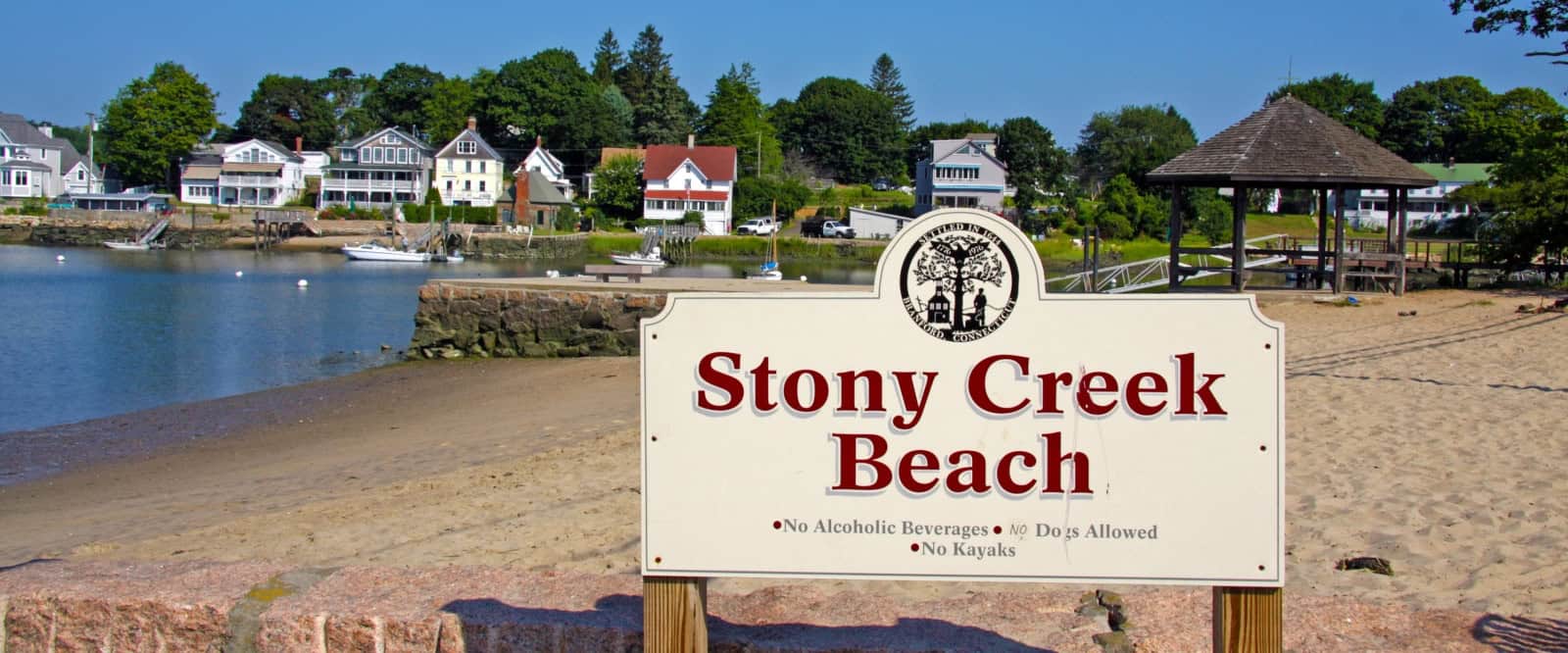
Rocky inlets and trolley history where Route 1 hugs the Sound.
Branford sits on a peninsula of granite — the same Stony Creek granite that built the base of the Statue of Liberty in 1886. The Thimble Islands offshore are a scattered archipelago of 365 rocky outcrops, with summer ferry service from Stony Creek dock. Duration: 2-3 hours.
The private coves between the Thimble Islands are best explored by kayak from Stony Creek. Some islands have houses, some are bare rock with nesting birds. Tom’s Island was reportedly used by Captain Kidd in the 1690s.
Activities include a Thimble Islands cruise from Stony Creek for mansion views, the Shore Line Trolley Museum on River Street in East Haven (the oldest continuously operating suburban railroad in the country, running since 1900), kayaking from Stony Creek, the Branford Historical Society at the Harrison House, and local breweries on Main Street.
Old Saybrook, CT (River Mouth Charm)
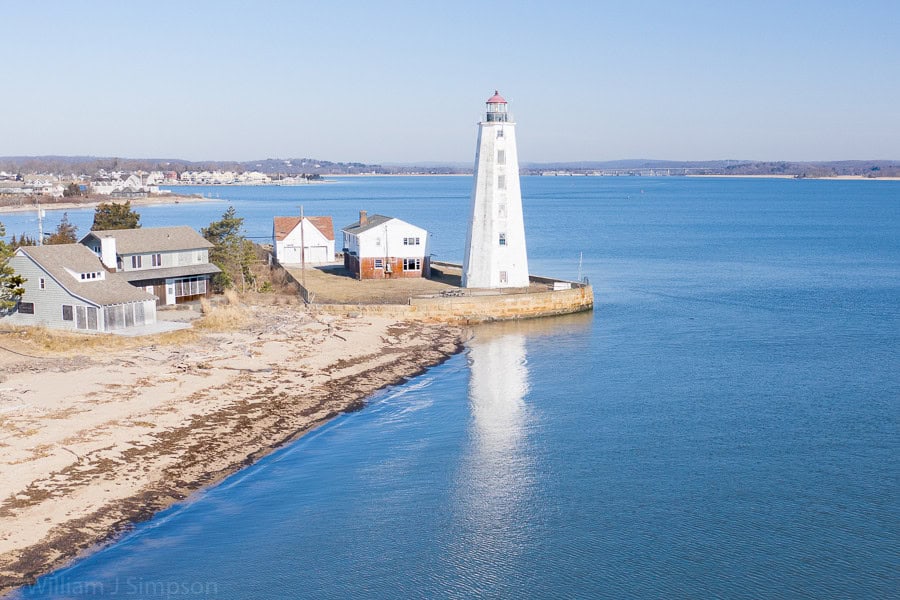
The Connecticut River meets the Sound where Route 1 ends its Middlesex County run.
Old Saybrook sits where the Connecticut River empties into Long Island Sound, which made it a significant colonial port and a natural end point for the Boston Post Road’s western run. Katharine Hepburn grew up here and returned for most of her adult life. Duration: 3-4 hours (extend for the RI border).
The Fenwick neighborhood at the tip of the peninsula, where Hepburn’s estate stood, has water views in three directions. Lynde Point Lighthouse at the river mouth is accessible by boat from Saybrook Point Marina. The Preserve trails off Route 154 run through coastal woodland with marshland edges.
Activities include the Katharine Hepburn Cultural Arts Center on Main Street for regional theater, a boat tour to Lynde Point Lighthouse, Saybrook Point Park for marina walking and river views, the Preserve trails for a quiet hour in the woods, and chowder at any of the waterfront restaurants before the drive east toward Rhode Island.
The Boston Post Road doesn’t end in Old Saybrook. It continues through Old Lyme, New London, and Stonington before crossing into Rhode Island. That’s a fourth day, or a reason to come back. What this 3-day itinerary proves is that Connecticut’s stretch of Route 1 carries as much history as any section of the highway — it just doesn’t announce it.



 Continue with Google