


The Nutmeg State's Enduring Story
Connecticut
Connecticut may be the third-smallest state in the union, but its impact on American history, culture, and innovation far exceeds its modest 5,543 square miles. Nestled between the metropolitan giants of New York and Boston, the Constitution State has carved out a distinct identity that blends Yankee ingenuity with cosmopolitan sophistication, maritime heritage with industrial might, and colonial charm with cutting-edge innovation.
From the rocky shores of Long Island Sound to the rolling hills of Litchfield County, Connecticut offers a landscape as varied as its history is rich. This is a state where you can walk the same streets as revolutionary patriots, dine on coal-fired pizza that rivals any in the nation, and witness the birthplace of innovations that changed the world, all within a drive of an hour or two.
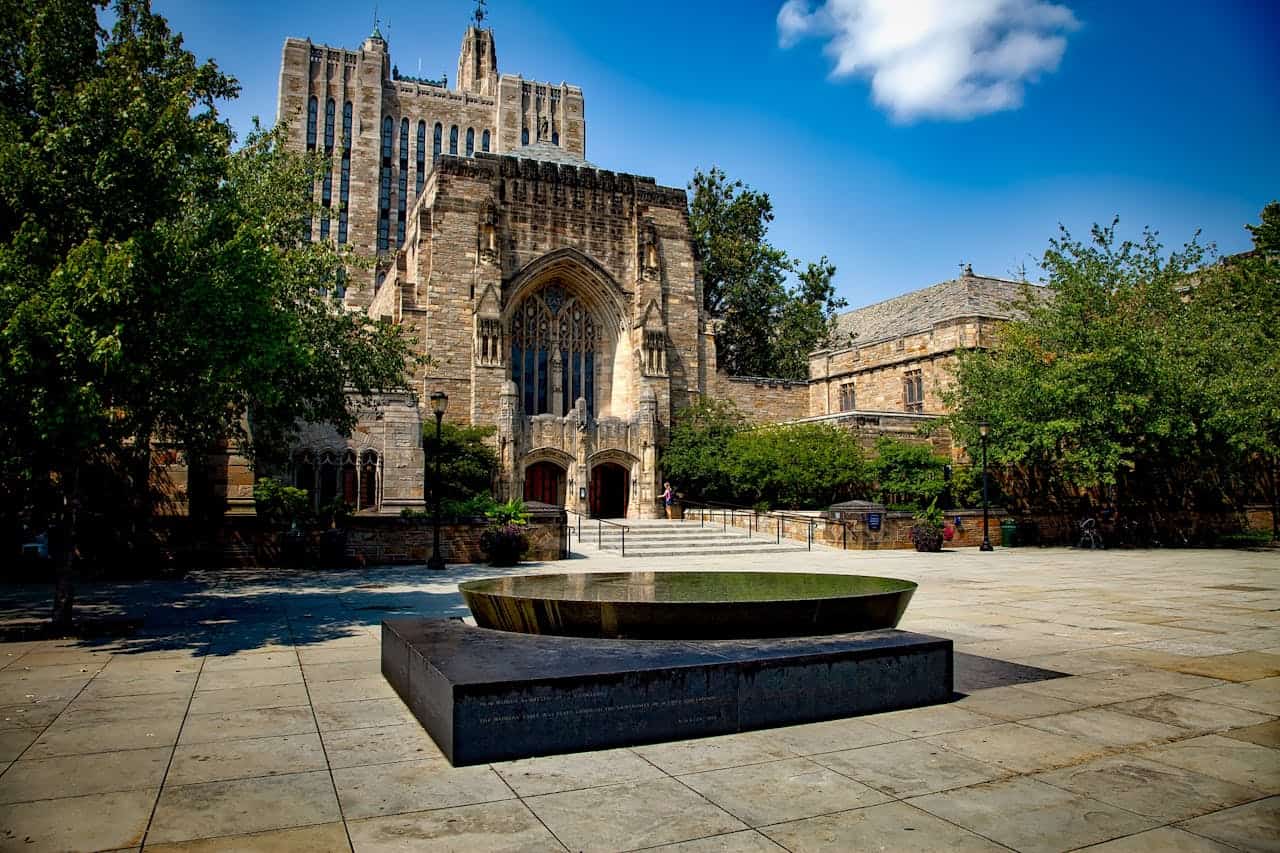
Table of Contents
- Geography & Natural Landscape
- Historical Timeline & Key Events
- Cultural Identity & Regional Character
- Economy & Industry Evolution
- Politics & Governance
- Cities, Towns & Population Centers
- Arts, Literature & Creative Heritage
- Food Culture & Regional Cuisine
- Route 1: The State’s Eastern Thread
- Share your Connecticut route 1 memory
- Hidden Gems & Local Secrets
- Modern Challenges & Future Outlook
Geography & Natural Landscape
The Lay of the Land
Connecticut’s geography can be divided into three distinct regions. The Western Upland, which covers roughly the western third of Connecticut, is filled with steep hills, including the state’s highest point, Mount Frissell.
Rising to 2,380 feet above sea level, this peak in the northwest corner represents the rugged beauty of the Taconic Mountains and Berkshire foothills that define this region.The southerly flow of the Connecticut River divides the state roughly in half. The coastal plain and central valley are relatively flat; they contain most of the larger cities.
This Central Lowland, running through the heart of the state, owes its distinctive character to ancient volcanic activity. The Central Lowland in the middle of the state is known for ridges and valleys that were created by volcanic eruptions between 150 and 200 million years ago. Because of this volcanic activity, the area contains lots of igneous, or lava-based, rocks such as basalt. It’s also where the state’s longest river, the Connecticut, flows.
The Eastern Upland completes the geographic trilogy, characterized by gentle hills, dense forests, and numerous rivers that once powered the mills of Connecticut’s industrial revolution. This region maintains much of its rural character, with scenic valleys and historic mill villages tucked into the landscape.
Climate and Natural Features

Despite New England’s reputation for a rugged climate, Connecticut’s weather is relatively mild. On the average, there are only 12 days a year when the temperature goes above 90 degrees, and about six days when it falls to zero or below. Despite Connecticut’s small size, there is some variety in climate, with temperatures in the northern hills as much as 10 degrees lower than those in the central valley year-round.
The state’s natural heritage includes eight National Natural Landmarks, testament to its diverse ecology. They represent the geological and ecological history of Connecticut, including glacial features such as bogs, old growth forests and swamps.
Among these treasures is Cathedral Pines in Cornwall, where ancient white pines tower up to 120 feet high, offering visitors a glimpse of the primeval forests that once covered New England.
Nearly 60 percent of Connecticut is covered in woodland, so it’s no wonder forests are one of the state’s top natural resources, providing lumber, firewood, and even maple syrup.
This forested landscape changes dramatically with the seasons, from the fresh greens of spring to the spectacular foliage displays that draw thousands of visitors each autumn.
Historical Timeline & Key Events
The Colonial Foundation
<image suggestion: Historical reenactment at a Connecticut colonial settlement or the Charter Oak site>
Connecticut’s European history began in the 1630s when English settlers from the Massachusetts Bay Colony ventured south into the Connecticut River Valley. It was organized on March 3, 1636, as a settlement for a Puritan congregation of settlers from the Massachusetts Bay Colony led by Thomas Hooker. The English would secure their control of the region in the Pequot War.
The colony’s early commitment to self-governance set it apart. The colony’s founding document, the Fundamental Orders of Connecticut has been called the first written constitution of a democratic government, earning Connecticut the nickname “The Constitution State”.
This revolutionary document, adopted in 1639, established a framework for representative government that would influence the later U.S. Constitution.
One of Connecticut’s most cherished historical tales involves the Charter Oak incident of 1687. Governor Robert Treat attempted to delay handing over the charter for several months, but on October 31, 1687, Andros came to Hartford to retrieve the charter in person. Treat proceeded to give a speech well into the evening on the importance of the charter. Suddenly, a strong gust of wind came through the door, blowing out the candles. By the time the candles were relit, the charter had vanished, safely hidden away in a nearby oak tree. The tree, which became known as the Charter Oak would endure as a symbol of Connecticut for generations.
Revolutionary Fervor
Connecticut earned its nickname as the “Provisions State” through its crucial support of the American Revolution. During the American Revolution (1765-1783), Connecticut was a key supplier of provisions, munitions and shipbuilding to the Continental Army and Connecticut Militia, thanks to its strategic location and robust manufacturing and farming capabilities. The state supplied tens of thousands of troops, including war heroes such as soldier-spy Nathan Hale and Gen. Israel Putnam.
Connecticut was a staunch supporter of the American Revolution, with a fifth of the state’s male population serving in the war. Jonathan Trumbull was the only colonial governor to support the patriots.
This overwhelming support reflected Connecticut’s independent spirit and its citizens’ commitment to self-governance: principles embedded in their political culture since the colony’s founding.
The Constitution State
Connecticut’s influence on the founding of the United States extended beyond military support. In 1787 the Constitutional Convention at Philadelphia was on the verge of collapse when Roger Sherman of New Haven and Oliver Ellsworth of Windsor offered the Connecticut (or Great) Compromise, which served the interests of both large and small states by suggesting a bicameral legislature with one house based on population and the other on equal state representation.
This compromise saved the Constitutional Convention and established the structure of Congress that exists today. On Jan. 9, 1788, Connecticut ratified the U.S. Constitution, becoming the fifth state of the original 13 states to join the union.
Industrial Revolution Pioneer
The 19th century transformed Connecticut from an agricultural state into an industrial powerhouse. The state took a leading role in the Industrial Revolution of the United States, with its many factories establishing a worldwide reputation for advanced machinery.
The development by Eli Whitney of the system of precision manufacturing of interchangeable parts and the assembly line in the late 18th century, however made Connecticut into a major center of manufacturing. This development changed “made in the United States” from a phrase connoting shoddy workmanship and expensive maintenance, into a world standard for high quality, and the entire system became known as the American system of manufacturing.
This innovation revolutionized not just manufacturing but warfare itself. Between 1800 and 1860, Connecticut manufacturers applied the system to the manufacture of economically priced high quality firearms, leading to Connecticut’s nickname “the arsenal of democracy.” This all started in 1797 when Eli Whitney began to manufacture weapons, later the Connecticut Valley Arms company. Middletown, Connecticut was the major supplier of pistols to the United States government during the War of 1812, with numerous gun manufacturers in the area.
Post-Revolutionary Transformation
The period following independence brought significant challenges. When Connecticut joined with 12 other colonies in declaring independence from Great Britain on July 4, 1776, little did it know that it would emerge from the Revolutionary War facing an unprecedented structural economic crisis that would threaten the state’s fiscal future. It was the same problem in the early 1800s. Agriculture was no longer productive. Agriculture was not a sustainable way for the state to support its economy. And they produced a miracle.
What was going on – at the same time people were moving out – is that all around the state, people were harnessing the water power of streams and rivers. Any places where there was a waterfall, they’d set up a factory village and begin creating these new industries. That became the basis for the Industrial Revolution in Connecticut.
Cultural Identity & Regional Character
The Land of Steady Habits
Connecticut’s cultural identity is deeply rooted in its colonial past and industrial heritage, earning it the moniker “Land of Steady Habits” for its conservative, tradition-minded approach to life and governance. Yet beneath this steady exterior lies a state of remarkable diversity and innovation.
The residents of Connecticut tend to be independent Yankees, especially in the small towns. Conservative values dominate, which means the entertainment here is rather sedate. Many historic farms and villages have been converted into living museums, offering a rare look at the origins of America.
This Yankee character manifests in the state’s famous town meetings, where direct democracy still thrives in many communities. The iconic town green, typically anchored by a white-steepled Congregational church, remains the physical and spiritual center of Connecticut towns, hosting everything from farmers’ markets to summer concerts.
A Melting Pot of Cultures
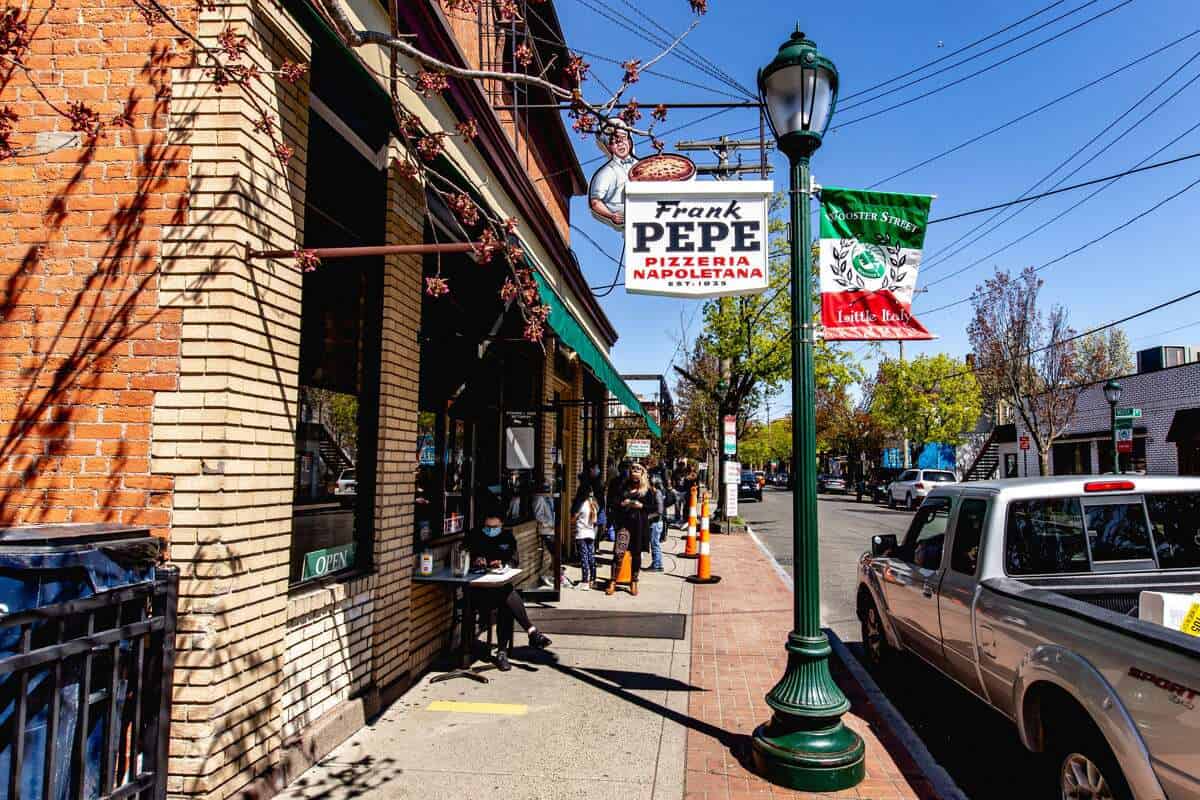
Wooster Street in New Haven’s Little Italy
While Connecticut’s Yankee heritage forms its foundation, waves of immigration have created a rich cultural tapestry. The immigration of the Irish, beginning in the 1840s, and of French Canadians after the American Civil War, continued throughout the 19th century. Later in the 19th century the primary sources of foreign immigration were southern and eastern Europe, Italy, Poland, Austria-Hungary, and Russia. New Haven and its suburbs are populated with large numbers of descendants of Italian immigrants, Poles are concentrated in the Naugatuck valley, and French Canadians live in the northeast.
This diversity is particularly evident in Connecticut’s food scene. Connecticut is rich with different world cultures. Although the state has one of the largest Italian-American populations per capita in the United States, you’ll also find Puerto Rican, Portuguese, Jamaican, Indian, Polish and Chinese communities here. And if you’re looking for ways to experience international culture and cuisine, here are some suggestions on local communities, celebrations and restaurants that serve up the best in taste and tradition.
Innovation as Cultural DNA
Connecticut’s spirit of invention and innovation is part of its cultural DNA. Here are just a few of the many achievements that happened here before they happened anywhere else.
This innovative spirit permeates the state’s culture, from its world-class universities to its thriving startup ecosystem.
The state’s intellectual tradition is anchored by Yale University, founded in 1701, which has shaped not just Connecticut but American culture as a whole. The educational and intellectual establishment was strongly led by Yale College, by scholars such as Noah Webster and by writers such as Mark Twain, who lived in Connecticut after establishing his association with the Mississippi River.
The Maritime Heritage
Connecticut’s 618 miles of coastline have profoundly influenced its character. Due to its geography, Connecticut has maintained a strong maritime tradition; the United States Coast Guard Academy is located in New London by the Thames River.
This maritime heritage lives on in places like Mystic Seaport, where the age of sail is preserved and celebrated, and in the working waterfronts of towns like Stonington and Norwalk, where fishing boats still head out to Long Island Sound for the daily catch.
Economy & Industry Evolution
From Mills to Modern Finance
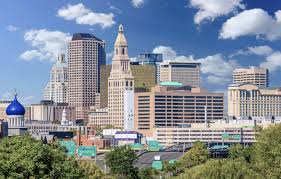
Hartford skyline
Connecticut’s economy has undergone several dramatic transformations. What began as an agricultural economy evolved into a manufacturing powerhouse, and has now become a center for finance, insurance, and high-tech industries.
Finance and insurance is Connecticut’s largest industry, according to the U.S. Census Bureau, generating 16.4% of gross domestic product (GDP) in 2009. Hartford, the state capital, earned the title “Insurance Capital of the World” with companies like Aetna, The Hartford, and Travelers calling it home.
In 2023, the GDP of Connecticut amounted to around 286.63 billion U.S. dollars. The finance, insurance, real estate, rental, and leasing industry in Connecticut contributed the most amount of money to the state GDP, amounting to around 77.44 billion U.S. dollars.
Manufacturing’s Continuing Legacy
Despite the shift to a service economy, manufacturing remains vital to Connecticut’s identity and economy. Aerospace and defense is one of Connecticut’s most vital industries, employing over 100,000 skilled workers. Jobs range from aerospace engineers and mechanics to project managers and supply chain analysts.
Other UTC divisions include UTC Propulsion and Aerospace Systems, including jet engine manufacturer Pratt & Whitney and UTC Building and Industrial Systems. Other major manufacturers include the Electric Boat division of General Dynamics, which makes submarines in Groton, and Boehringer Ingelheim, a pharmaceuticals manufacturer with its U.S. headquarters in Ridgefield.
The state’s manufacturing heritage includes some of America’s most iconic brands. Among the items that have been manufactured in Connecticut by long tradition are pins, clocks, silverware, sewing machines, firearms (notably Winchester rifles and Colt pistols), and many brass products. Submarines were produced in Groton beginning in 1924, including the first nuclear-powered submarine, the Nautilus.
The Knowledge Economy
Connecticut has successfully transitioned into the knowledge economy, with education, healthcare, and technology becoming major employers. Healthcare and pharmaceuticals are significant sectors in Connecticut’s economy.
Yale New Haven Health and Hartford HealthCare are among the state’s largest employers, providing thousands of jobs while advancing medical research and patient care.
The state’s highly educated workforce (Connecticut consistently ranks among the top states for educational attainment) attracts companies seeking skilled talent. Today, 14 of the nation’s Fortune 500 companies are headquartered in Connecticut, from global leaders in advanced manufacturing to next generation innovators in emerging technologies.
Economic Challenges and Opportunities
Despite its strengths, Connecticut faces economic headwinds. The total gross state product for Connecticut for 2023 was $345.9 billion, up from $321.7 billion in 2022. Connecticut’s adjusted per capita personal income in 2022 was estimated at $77,940, third-highest among states. There is a large disparity in incomes throughout the state; Connecticut was tied with California and Massachusetts for the second highest (after New York’s 0.52) Gini coefficient, at 0.50, as of 2020.
This income inequality reflects broader challenges. While Fairfield County boasts some of the nation’s wealthiest communities, cities like Hartford, Bridgeport, and New Haven struggle with poverty and urban decline. New Canaan is the wealthiest town in Connecticut, with a per capita income of $105,846. Hartford is the poorest municipality in Connecticut, with a per capita income of $16,798 in 2020.
Politics & Governance
The Evolution of Connecticut Politics
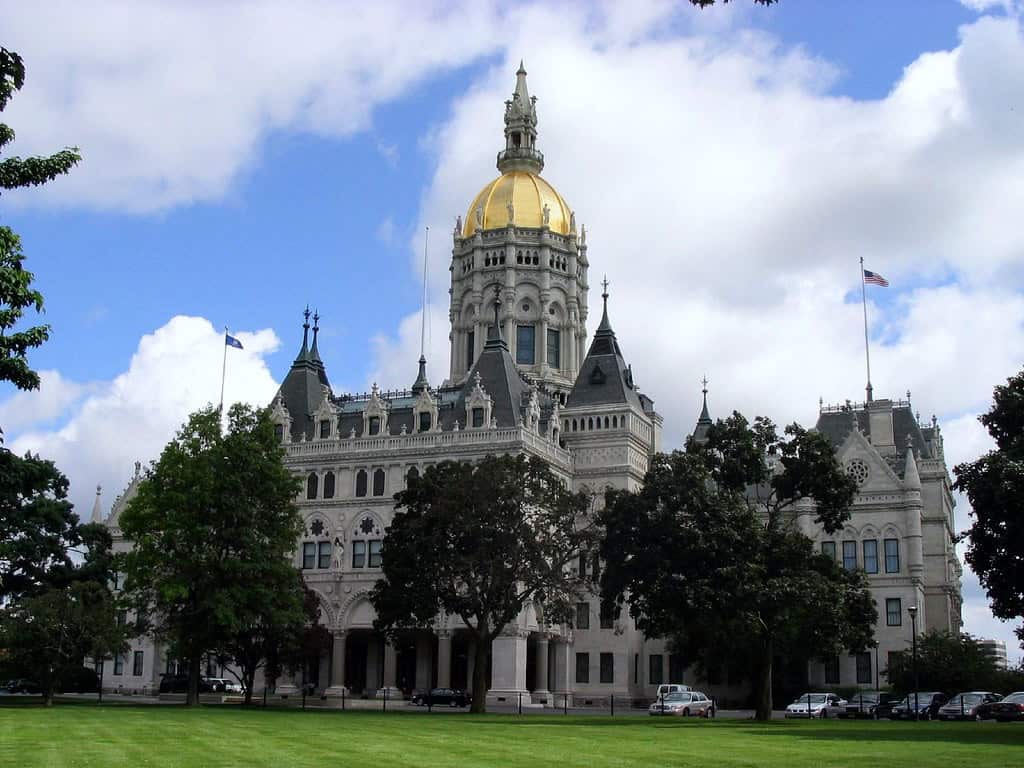
Connecticut’s political culture reflects its history as a state that values tradition while adapting to change. Once a bastion of moderate Republicanism, the state has shifted significantly in recent decades.
Historically, Connecticut was a bastion of Republicanism, although this was typically a liberal “Yankee” brand of the Republican Party. From the Civil War to the 1990s, the state voted Republican all but nine times on the presidential level. It only voted Democratic in the elections of 1876, 1888, 1912, 1936, 1940, 1944, 1960, 1964, and 1968. However, since the 1992 election, the state has voted Democratic every time, and since 1996, it has been by double-digit margins.
This shift reflects broader demographic and cultural changes. 1992 marked a shift in the state’s voting patterns. That year, former President Bill Clinton won Connecticut with more than 42 percent of Connecticut’s votes. The state hasn’t voted red in a presidential election since. The blue shift was a mix of a few things, said Gayle Alberda, an assistant professor of politics and public administration at Fairfield University. Each generation tends to lean a bit more Democratic than the last, she said. As each generation gets older, buys homes and has children, their priorities shift.
Contemporary Political Landscape
Today’s Connecticut presents a complex political picture. In both 2012 and 2022, the biggest active voting group in Connecticut has been unaffiliated voters, making up about 41% of total active voters in each year. Data from the Secretary of State’s office show that Democrats made up 36% and Republicans 20% of the electorate in both years. The three groups did see small changes, but they were all less than a percentage point.
This growing independent streak reflects Connecticut voters’ pragmatic approach to politics. While the state reliably votes Democratic in federal elections, it has elected Republican governors and maintains a tradition of bipartisan cooperation on many state issues.
In Connecticut, 48% of towns voted majority Democratic in 2016 (Clinton), increasing to 68% in 2020 (Biden), with a drop to 60% in 2024 (Harris). From 2016 (Clinton) to 2020 (Biden), 34 towns shifted from majority Republican to majority Democratic, with none flipping the other way.
Unique Governmental Structures
Connecticut’s governmental structure reflects its colonial heritage and commitment to local control. The state abolished county government in 1960, making it one of only two states (along with Rhode Island) without county-level administration. Instead, Connecticut’s 169 towns and cities handle most local government functions, preserving the tradition of home rule that dates to the colonial era.
Connecticut state law mandates that each city and town in the state elect one Registrar of Voters from each of the two “major” parties (currently the Democratic and Republican parties) to serve as election administrators and to handle various other election-related affairs in their respective municipality. A third party registrar may be elected in addition to the required Republican and Democrat if such candidate receives more votes than either the Republican or Democratic nominee.
This unique approach to election administration reflects Connecticut’s commitment to bipartisan oversight of the democratic process, a tradition that has helped maintain public confidence in elections.
Cities, Towns & Population Centers
The Urban Anchors
Connecticut’s cities each tell a unique story of American urban development. Hartford, the capital, stands as the insurance industry’s epicenter while struggling with urban poverty. Five towns had a population greater than 100,000 and included: Bridgeport (148,333), Stamford (136,309) New Haven (135,081), Hartford (120,576), and Waterbury (113,811). It is estimated that the percent of children living below the poverty level in 2021 was 31.9% in Bridgeport, 35.0% in Waterbury, 24.9% in New Haven, and 32.4% in Hartford.
New Haven, home to Yale University, embodies the tension between town and gown, with world-class cultural institutions existing alongside struggling neighborhoods. Yet it has also become a culinary destination, with Wooster Street’s pizzerias drawing food pilgrims from around the world.
Stamford represents Connecticut’s successful reinvention, transforming from a manufacturing city to a corporate hub that attracted General Electric (before its departure) and numerous hedge funds. The median household income of the five large towns in CT varied widely from a low of $42,468 in Hartford, to moderate levels in Waterbury ($48,793), Bridgeport ($46,445) and New Haven ($50,569), and to a high of $100,543 in Stamford.
The Gold Coast
Fairfield County’s Gold Coast (stretching from Greenwich through Westport to Fairfield) represents some of America’s wealthiest communities. These towns, with their excellent schools, pristine downtowns, and easy commutes to New York City, have attracted hedge fund managers, celebrities, and corporate executives.
Most of western and southern Connecticut (particularly the Gold Coast) is strongly associated with New York City; this area is the most affluent and populous region of the state and has high property costs and high incomes.
The Quiet Corner
In stark contrast to the urbanized southwest, Connecticut’s northeast region, known as the Quiet Corner, maintains its rural character. Towns like Pomfret, Woodstock, and Brooklyn offer rolling hills, historic farms, and a pace of life that seems unchanged from decades past. This region, part of the Quinebaug and Shetucket Rivers Valley National Heritage Corridor, preserves both natural beauty and industrial heritage.
River Towns and Coastal Communities
The Connecticut River Valley’s towns (from Old Saybrook at the river’s mouth to Windsor near the Massachusetts border) blend history with natural beauty. Essex, with its perfectly preserved downtown and riverfront, epitomizes the Connecticut river town, while Chester and Deep River maintain their small-town charm despite proximity to larger cities.
Along the coast, communities like Stonington, Mystic, and Old Lyme offer a different flavor; salt-tinged air, maritime heritage, and an artist colony legacy that continues to attract creative souls.
Demographic Patterns
The movement of people and industry into the cities dominated the population movements until 1950. Since then people generally have moved out of the three largest cities (Bridgeport, Hartford, and New Haven) to the suburbs and the former agricultural hill towns.
This suburbanization has created a ring of prosperous communities around the struggling urban cores, a pattern that defines much of Connecticut’s contemporary geography and its political and social challenges.
Arts, Literature & Creative Heritage
Literary Legacy
Connecticut’s contribution to American literature is outsized for such a small state. The state was known for its political conservatism, typified by its Federalist party and the Yale College of Timothy Dwight. The foremost intellectuals were Dwight and Noah Webster, who compiled his great dictionary in New Haven.
Mark Twain made Hartford his home for the most productive years of his career, writing “The Adventures of Tom Sawyer” and “Adventures of Huckleberry Finn” in his distinctive mansion on Farmington Avenue. Harriet Beecher Stowe, his neighbor, had already made history with “Uncle Tom’s Cabin,” written in Brunswick, Maine, but nurtured by her years in Connecticut.
The literary tradition continues with contemporary writers like Wally Lamb, Suzanne Collins (author of “The Hunger Games”), and numerous faculty and graduates of Yale’s renowned writing programs.
Visual Arts Heritage

Wadsworth Atheneum Museum
Connecticut played a crucial role in American art history, particularly through the Cos Cob art colony and the Lyme Art Colony. The town is home to the Florence Griswold Museum, which celebrates American Impressionism and the area’s rich artistic heritage. With its charming colonial homes, quiet shoreline, and cultural landmarks, Old Lyme offers a peaceful retreat with a deep connection to history and the arts.
The Wadsworth Atheneum in Hartford, founded in 1842, stands as America’s oldest continuously operating public art museum. Its collection spans 5,000 years and includes major works by Caravaggio, Goya, Monet, Picasso, and Sol LeWitt.
Performing Arts and Music
Connecticut’s performing arts scene punches above its weight, with several Tony Award-winning regional theaters. The Goodspeed Opera House in East Haddam has premiered numerous Broadway musicals, including “Man of La Mancha” and “Annie.”
The state’s music heritage ranges from Charles Ives, the innovative composer from Danbury, to contemporary artists like John Mayer and Michael Bolton. Jazz thrived in Hartford’s North End, while New Haven’s Toad’s Place has hosted everyone from Bob Dylan to the Rolling Stones.
Architectural Distinction
Connecticut’s built environment tells the story of American architecture. From the colonial homes of Old Wethersfield to the modernist gems by Marcel Breuer and Philip Johnson (who made New Canaan his home and laboratory), the state offers an architectural timeline of American design.
The variety extends from the Victorian painted ladies of Hartford’s West End to the glass houses of the modernist movement, from restored mill buildings turned into artist lofts to Yale’s eclectic campus where Gothic Revival meets Louis Kahn’s brutalism.
Food Culture & Regional Cuisine
The Pizza Wars
No discussion of Connecticut food culture can begin without addressing the elephant – or rather, the pizza – in the room. New Haven-style pizza is a style of thin-crust, coal-fired Neapolitan pizza common in and around New Haven, Connecticut. Locally known as apizza (/əˈbiːts(ə)/; from Neapolitan ‘na pizza [na ˈpittsə], lit. ‘a pizza’), it originated in 1925 at the Frank Pepe Pizzeria Napoletana and is now served in many other pizza restaurants in the area, most notably Sally’s Apizza and Modern Apizza.
What makes New Haven-style pizza distinct is its thin, often oblong crust, characteristic charring, chewy texture, and limited use of melting cheeses. It tends to be drier and thinner than, but closely related to, traditional New York–style pizza, both of which are close descendants of the original Neapolitan pizza. In a New Haven-style pizzeria, a classic or “plain” pizza is a crust, oregano, tomato sauce, and a little bit of grated pecorino romano cheese.
The white clam pie, topped with littleneck clams, garlic, olive oil, and oregano (no tomato sauce), represents New Haven pizza at its most distinctive and has achieved near-legendary status among food enthusiasts.
The Steamed Cheeseburger Phenomenon
Greasy burgers can move aside, steamed cheeseburgers are in! The first steamed cheeseburger was created at Jack’s Lunch in Middletown in either the mid-1920s or early 1930s. And for the longest time, it was only served in central Connecticut before becoming popular in other states.
So, what’s the difference between these burgers and your average patties? Steamed cheeseburgers are cooked via a steaming method, rather than being pan-fried or grilled. They’re steamed in a stainless-steel cabinet with trays that have the burger patty inside them. This method of cooking makes the fats melt away, and then they’re drained from the tray once the patty is cooked.
Ted’s Restaurant in Meriden has become the pilgrimage site for those seeking this uniquely Connecticut creation, serving thousands of these distinctive burgers to curious food lovers and loyal locals alike.
Maritime Bounty
Connecticut’s coastline provides abundant seafood, but the state has put its own spin on New England classics. Connecticut-style lobster rolls typically use warm, buttered lobster meat rather than cold lobster meat mixed with mayonnaise. The warm lobster meat is often served on a grilled hot dog bun that has been brushed with butter and toasted.
Not only did we perfect the lobster roll, but we invented it, too! It’s true! The first lobster roll was crafted right in downtown Milford at a restaurant called Perry’s back in 1929. And as is tradition, it’s served one way for most of the state: the right way. (Also known as “Connecticut-style” to other New Englanders.) This style of roll is simple, with just butter and lobster chunks between the bread, served hot or cold.
Agricultural Traditions
Despite its industrial heritage, Connecticut maintains strong agricultural traditions. The state’s farms produce excellent dairy products, leading to a thriving farm-to-table movement and artisanal ice cream shops that rival any in New England.
Apple orchards dot the landscape, particularly in the northern hills, producing cider that ranges from sweet to hard, traditional to innovative. The state’s vineyards, particularly those along the Connecticut Wine Trail, have gained recognition for their quality, benefiting from the moderating influence of Long Island Sound.
The Diner Culture
Connecticut’s diner culture deserves special mention. From the classic railroad car diners like O’Rourke’s in Middletown to modern interpretations, these establishments serve as democratic meeting places where construction workers share counter space with Yale professors, all united in their appreciation for perfectly executed comfort food.
Route 1: The State’s Eastern Thread
The Historic Highway
Most of US 1 through Connecticut encompasses its predecessor, the Boston Post Road, and, in many towns, it is still named Boston Post Road (or Post Road). US 1 in Connecticut largely parallels I-95 and has many interchanges with it. The route passes through each city and town of Connecticut bordering the Long Island Sound (in addition to the town of Orange).
This historic route, which predates the nation itself, serves as a thread connecting Connecticut’s coastal communities and their stories. Unlike the interstate that bypasses town centers, Route 1 takes travelers through the heart of each community, past village greens, historic homes, and local businesses that have served their communities for generations.
Share your Connecticut route 1 memory
Do you have a story you would like to share? We want to hear it!
Create a View to tell a unique story about a specific place
Want to see what others wrote about Connecticut?
Our Travel map has over 1400 posts from users like you
We have 2 types of content at Route1views:
- View: A unique experience at a single location
- Trip: A collection of experiences at different places, connected through a ‘road trip’
- Most first-time posters choose to make a View
A note about Route 1 Views
We are a user-driven social media site for celebrating and sharing stories along historic Route 1 USA. Using our platform is FREE forever and we don’t play any tricks. We don’t share your data or spam you with emails. We are all about sharing!

Western Gateway: Greenwich to Norwalk
Entering Connecticut from New York, Route 1 in Greenwich offers an immediate introduction to the state’s affluence and history. The road passes grand estates and boutique shops before entering Stamford’s urban core, where it becomes a commercial corridor reflecting the city’s transformation from manufacturing center to corporate hub.
Through Darien and into Norwalk, the route alternates between residential stretches and commercial districts, with glimpses of Long Island Sound reminding travelers of the maritime heritage that shaped these communities. Historic markers note sites like the Norwalk Green, where colonial militia drilled, and the locations of British raids during the Revolutionary War.
The Central Coast: Fairfield to New Haven
From Greenwich to Branford, US 1 is mostly a four- or six-lane principal arterial road (with some two-lane sections in dense areas). From Greenwich to Branford, US 1 is mostly a four- or six-lane principal arterial road (with some two-lane sections in dense areas).
This stretch showcases Connecticut’s diversity from Fairfield’s combination of beach community and university town to Bridgeport’s urban struggles and renewed waterfront development. In Stratford, the route passes the site of Sikorsky Aircraft, where the helicopter was perfected, and the American Shakespeare Festival Theatre, now silent but still imposing.
Entering New Haven, Route 1 becomes a urban thoroughfare, passing through neighborhoods that reflect waves of immigration: Italian, Irish, Puerto Rican, and more recently, Latin American. The route skirts Yale University and passes near Wooster Street, where pizza pilgrims congregate at the holy trinity of apizza establishments.
Eastern Shores: Branford to Stonington
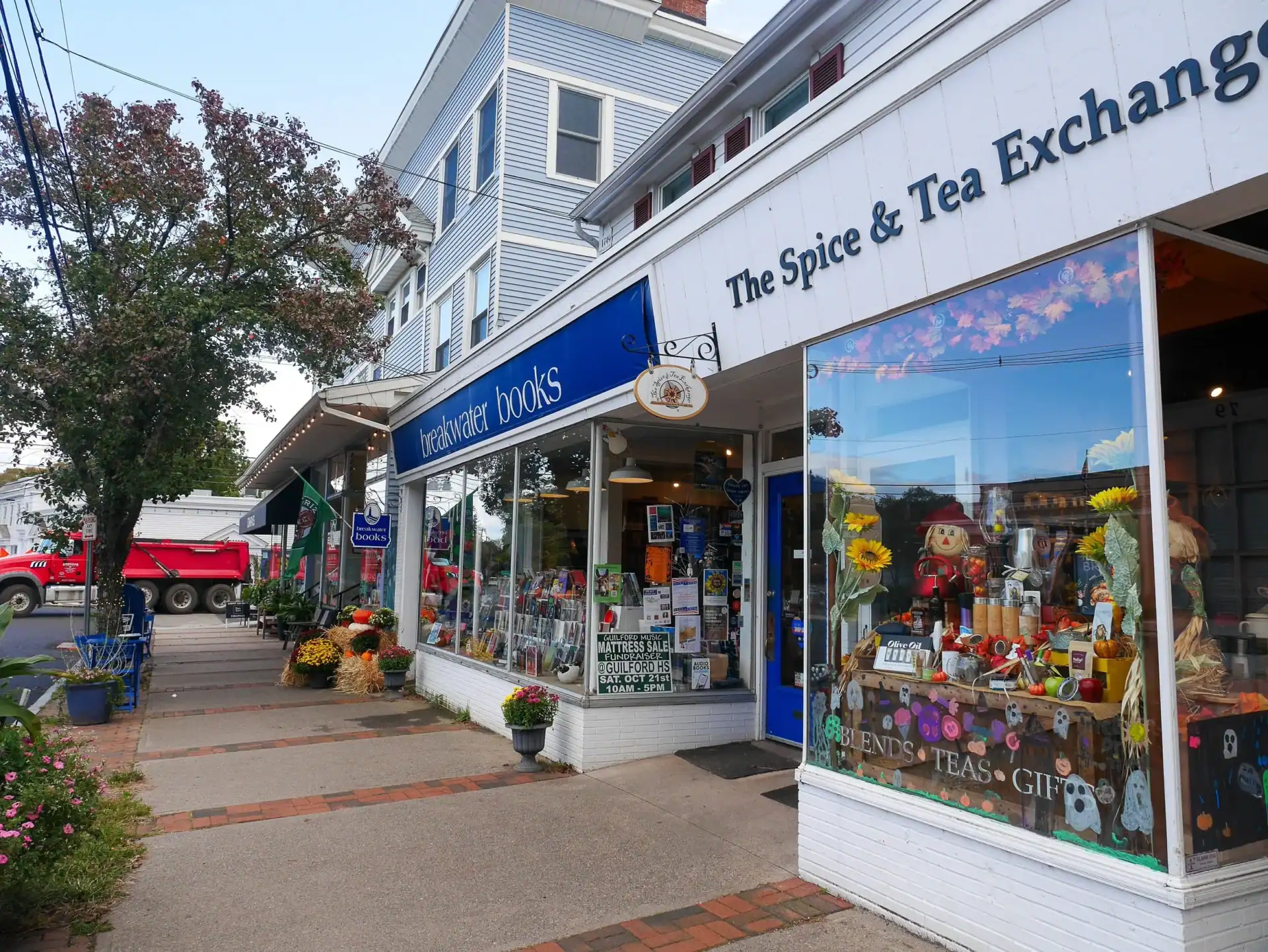
Historic downtown Guilford
From Branford to Stonington, US 1 it a two- or four-lane minor arterial road.
This section offers some of Route 1’s most scenic and historic stretches. Through Branford and into Guilford, the road passes one of New England’s largest town greens and numerous homes dating to the 17th and 18th centuries.
Madison, Clinton, and Westbrook each offer their own coastal charm, with antique shops, seafood restaurants, and beaches accessible via short detours south. In Old Saybrook, where the Connecticut River meets Long Island Sound, Route 1 provides access to both maritime heritage and the scenic river valley.
The eastern stretch through Old Lyme, East Lyme, and Waterford maintains a more rural character, with stone walls, historic cemeteries, and glimpses of salt marshes. The route’s passage through Groton takes travelers past the Naval Submarine Base and Electric Boat shipyard, where America’s submarine fleet is built and maintained.
Journey’s End: Mystic and Stonington
Route 1’s Connecticut journey concludes in the historic seaport communities of Mystic and Stonington. US 1a is the only surviving alternate US route in Connecticut; historically, there were about twenty. Present-day US 1A is a southern loop of US 1 serving downtown Stonington. Until 1939, it was part of US 1 itself.
Mystic, split between the towns of Groton and Stonington, offers a perfectly preserved 19th-century seaport at Mystic Seaport Museum, while the working waterfront continues maritime traditions. The final miles to the Rhode Island border pass through Stonington Borough, one of Connecticut’s most picturesque coastal villages, where 18th and 19th-century homes line narrow streets leading to the harbor.
Hidden Gems & Local Secrets
Natural Hideaways
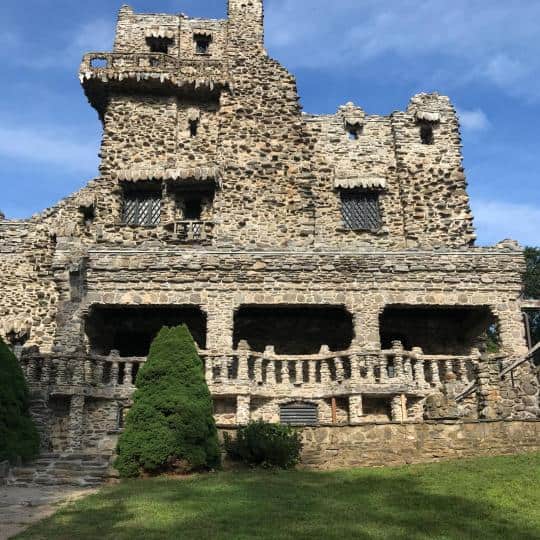
Gillette Castle perched on a hillside
Beyond the well-trodden tourist paths, Connecticut harbors numerous hidden treasures. We’ve uncovered a number of lesser known spots throughout the state, but we were worried that some folks may have missed them, so we compiled this list of hidden places just for you. From state parks to luxury resorts, there are tons of Connecticut destinations that are worth exploring. But these spots have the added bonus of being more unknown, which often means less crowded and more quiet.
In the northwest hills, Cathedral Pines Preserve in Cornwall protects one of New England’s last stands of old-growth white pine and hemlock. Until you’ve seen one with your own eyes, and walked around in one, it’s difficult to convey the grandeur of an old-growth forest. To walk amid ancient trees is to see a landscape now mostly gone to centuries of logging, and to understand why some have chained themselves to trees to stop them being cut down. One of the last sites of old-growth forest in New England is in Cornwall, known as Cathedral Pines.
The Thimble Islands, an archipelago off Branford, remain largely unknown despite their proximity to major population centers. Islands of the Long Island Sound: The Long Island Sound hosts several islands which harbor points of interest. For example, the Stewart B. McKinney National Wildlife Refuge sitting on Outer Thimble Island harbors a variety of bird species, with its rocky shores and tidal wetlands. Sheffield Island features a historic lighthouse and a coastline that serves as a nesting area for birds. Faulkner’s Island, also home to a historic lighthouse, acts as an important habitat for migrating birds. The Thimble Islands, a group of small islands, display landscapes shaped by glacial activity, combining residential areas with natural environments.
Quirky Attractions
Connecticut’s hidden gems include the decidedly unusual. In East Haddam, Gillette Castle stands as a testament to actor William Gillette’s eccentricity: a medieval-style castle complete with hidden doors, intricate woodwork, and a system of mirrors allowing the reclusive actor to monitor arriving guests.
Connecticut’s coolest hidden wonder, according to these sites, is Gungywamp in Groton, Connecticut. Atlas Obscura describes it as “the kind of mixed up place that drives archeologists crazy.” The site is said to be filled with multiple different conspiracy theories from the site being a pre-Columbian settlement, to alien and vortex theories, to tribal theories.
It is not uncommon for Ivy League universities such as Princeton, UPenn, and Harvard to have secretive members-only tomb societies. Aside from all the secrets it holds, the Tomb houses many skulls (no surprise for guessing!), gloomy photographs and drawings, coffins and other grim artworks.
Secret Foodie Spots
While tourists flock to famous pizza places and lobster shacks, locals know the real treasures are often tucked away. The Place in Guilford, an outdoor-only restaurant where seafood is roasted over open wood fires, operates on a BYOB basis and draws devoted followers who don’t mind eating at picnic tables regardless of weather.
In Noank, Abbott’s Lobster in the Rough serves lobster in a no-frills waterfront setting that hasn’t changed in decades. Meanwhile, modern hidden gems like Barcelona Wine Bar have multiple locations tucked into unexpected corners of the state, offering Spanish tapas and an extensive wine list to those in the know.
Underground History
In 1649, 59 British Judges sentenced King Charles I to death. This resulted in the dissolution of the monarchy and led Oliver Cromwell into power. In 1660, Charles II, the son of King Charles I, regained the power of the throne and issued an order to kill every remaining soul responsible for his father’s death. Among them were John Dixwell, William Goffe, and Edward Whalley. The three judges thought it best to flee to North America and avoid being executed. While Dixwell went to Connecticut, Goffe and Whalley made their way to Boston. However, a warrant against them made Goffe and Whalley move to Connecticut as well.
The Judges Cave in New Haven, where two of these regicides hid, remains accessible to hikers willing to make the climb, offering both a historical connection and panoramic views of the surrounding area.
Local Traditions
Considered to be one of the finest preserved mill villages in New England, the village of Collinsville in Canton features examples of 19th century industrial architecture in a walkable neighborhood offering outdoor fun, arts, dining and nightlife. On the weekends, nature lovers flock to Collinsville for kayak and canoe rentals on the Farmington River and bike rides on the Farmington River Rail Trail. There’s even something for antique lovers at Antiques on the Farmington, a converted factory filled with over 50 dealers.
Modern Challenges & Future Outlook
Demographic Shifts
Connecticut faces significant demographic challenges that will shape its future. The largest single-age group in Connecticut is the 55 to 59-year cohort, which comprises 7.37% of the population. This indicates that a significant portion of the population is nearing retirement age, which could have implications for workforce dynamics, healthcare needs, and social services in the near future.
The state’s population growth increasingly depends on international migration. The U.S. Census Bureau unveiled state-specific statistics last month for the years 2022 and 2023, revealing that from July 1, 2022, to July 1, 2023, Connecticut experienced a rise in its total population of 8,470. Once again, foreign migration played a key role in this positive trend with 37,453 individuals arriving from outside the United States, while 21,485 residents moved out of the state.
Economic Transitions
Connecticut’s economy continues to evolve, facing both opportunities and challenges. Connecticut’s unemployment rate dropped to 3% in October, according to a new report by the state Labor Department, which found unemployment at its lowest level in more than two decades. The unemployment rate dropped significantly, from 4.3% in May to 3.0% in October, indicating improved economic conditions and a stronger job market according to the BLS.
However, income inequality remains a persistent challenge. Connecticut households have significantly higher incomes compared to the national average. The state’s average income of $130,601 is 23% higher than the U.S. average, while its median income of $90,213 is 20% higher as per Income By Zip Code notes. This reflects Connecticut’s strong earning potential and economic standing relative to other states.
Yet this prosperity is unevenly distributed, with urban centers continuing to struggle while suburban communities thrive.
Climate change poses particular challenges for Connecticut’s 618-mile coastline and numerous river communities. Rising sea levels threaten coastal property and infrastructure, while increased storm intensity puts pressure on aging systems. The state has responded with ambitious environmental goals, including commitments to renewable energy and emissions reductions.
CT looks to ramp up resilience measures in the face of climate change – Oct 8, 2024. In CT, flooding is on the rise. ‘You don’t have to be on the coast’ to face serious flooding, CT report warns – Sept 18, 2024. Climate change has hit CT hard this year. Are we ready for more?
Urban Revitalization
Connecticut’s cities, long challenged by deindustrialization and suburban flight, show signs of renewal. New Haven has leveraged its educational and medical institutions to attract biotech companies and young professionals. Hartford struggles but has seen investment in its downtown, while smaller cities like New Britain and Waterbury work to reinvent themselves.
The challenge remains connecting prosperity in suburban areas with opportunity in urban centers, bridging divides that are both geographic and economic.
The Innovation Imperative
Connecticut’s future likely depends on its ability to maintain its innovation edge. Fueled by Yankee ingenuity and stick-to-itiveness, Connecticut residents and businesses have long been at the forefront of innovation on land, sea and air, from the invention of the world’s first nuclear submarine and helicopter to the fuel cell that powered NASA’s first space suit. Today, 14 of the nation’s Fortune 500 companies are headquartered in Connecticut, from global leaders in advanced manufacturing to next generation innovators in emerging technologies.
The state’s excellent universities, educated workforce, and quality of life position it well for the knowledge economy. Yet it must compete with other regions for talent and companies, balancing its high costs with its considerable advantages.
Housing and Affordability
With Connecticut home prices seeing an increase of around 9.8% last year, finding affordable housing has been one of the biggest obstacles for many residents. The median home price in Connecticut was around $381,620, according to Zillow. A separate Zillow survey last month found that four of the 10 most popular markets were in Connecticut: West Hartford, Newington, Wethersfield, and Middletown.
The housing crunch particularly affects young families and essential workers, threatening the state’s ability to attract and retain the next generation of residents.
Looking Forward
Despite its challenges, Connecticut enters its future with considerable assets. Its educated population, strong institutions, strategic location, and innovative spirit provide a foundation for adaptation and growth. The state that gave America the cotton gin, the helicopter, and the constitutional compromise continues to evolve, balancing reverence for its past with the imperatives of the future.
The continuation of evidenced-based programs, coupled with efforts to increase health equity and address social determinants of health (SDOH), are essential to achieving improved birth outcomes and reducing/eliminating disparities for mothers, infants, and children in Connecticut.
As Connecticut faces the future, it does so with the same spirit that has defined it for nearly 400 years: independent, innovative, and quietly confident in its ability to chart its own course. The land of steady habits may change slowly, but it changes deliberately, maintaining what works while adapting to new realities.
In a nation that often seems to move at breakneck speed, Connecticut offers something valuable: a place where history is preserved but not fossilized, where innovation builds on tradition, and where the best of American life (education, culture, natural beauty, and economic opportunity) come together in a package that, while not without its flaws, remains remarkably compelling.
From the gold-domed capitol in Hartford to the weathered fishing boats in Stonington Harbor, from the cutting-edge research labs in New Haven to the quiet beauty of the Litchfield Hills, Connecticut continues to write its story: one that began with wooden nutmegs and constitutional compromises, and continues with submarines and hedge funds, pizza wars and steamed cheeseburgers. It’s a story worth knowing, and a place worth discovering, whether you’re racing through on I-95 or meandering along Route 1, taking time to discover what makes the Nutmeg State a small place with an outsized impact on American life.