

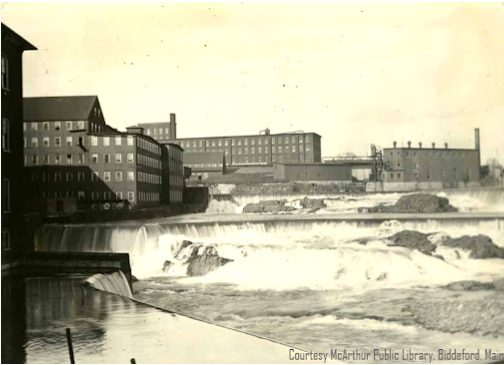
Travelers following U.S. Route 1 through Biddeford pass close to a place where the Saco River once supplied more than scenery. Its water powered the textile mills that helped turn Biddeford and neighboring Saco into a major industrial center.
The enormous brick buildings still stand along the river. But some of the most interesting history lies beneath them: underground canals built in 1837 to carry the water that powered the mills.
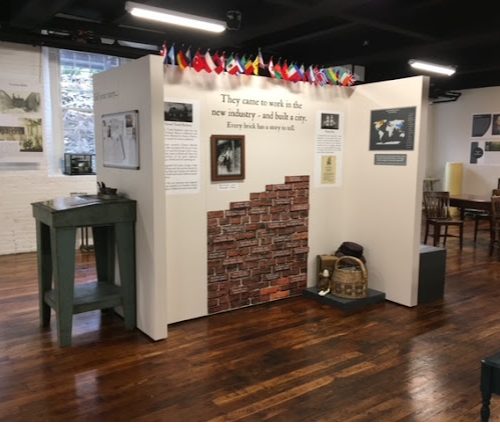
Today, the Biddeford Mills Museum preserves that history through exhibits, recorded interviews, and guided tours of the historic mill complex. It’s a chance to look beyond the brick walls and discover the machinery, labor, and lives that shaped this Maine city.
Why Build Mills Here?
Before electricity could be delivered through a power line, a river’s falling water could make a manufacturing site valuable. The Saco River offered that power. Companies developed mills and related infrastructure around its falls, creating an industrial district on both sides of the water. The Pepperell Manufacturing Company was incorporated on February 16, 1844, with authorization to manufacture cotton textiles at Saco Falls in Biddeford or Saco.
That date marks the company’s incorporation, rather than the construction of every building visitors see today. The mill district grew over generations, with different companies adding production buildings, warehouses, and machine shops.
The People Behind the Brick Walls
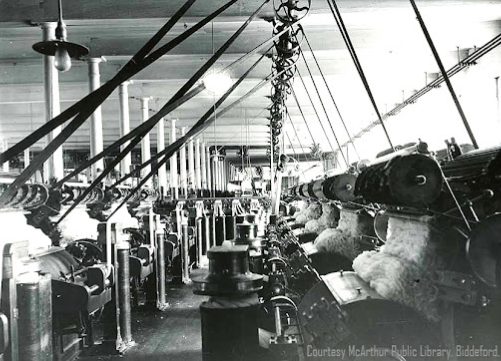
The mills brought jobs, but they also brought people whose lives became part of Biddeford’s story. The museum describes a workforce drawn from more than 25 countries. French Canadian immigration was particularly important to the city’s growth, as the expanding mills needed more workers than the surrounding farms and villages could supply.
Those jobs could be demanding. The Biddeford Historical Society’s account of mill labor describes a weave-room workday stretching from 5 a.m. to 7 p.m., with a half-hour breakfast break. Its history also addresses women workers and child labor.
The buildings are impressive, but the working conditions belong in the story, too. The museum helps keep those experiences visible. The city notes that mill tours are often led by former workers, giving visitors a connection to people who knew these rooms as workplaces.
From Cotton Textiles to Vellux Blankets
Manufacturing here continued well into the modern era. Production of Vellux blankets began just before Christmas in 1966, and ended in August 2009 when WestPoint Home ceased operations at the Biddeford plant. That’s a long journey from the water-powered beginnings of the mill district to synchronized machinery making blankets decades later.
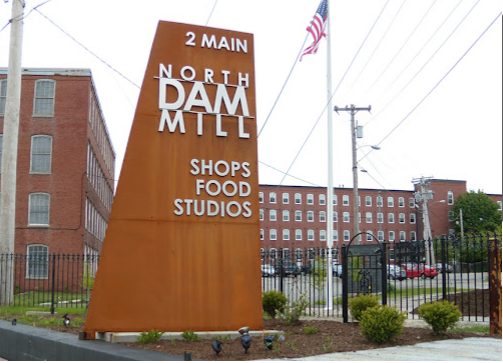
The buildings have continued to find new uses. Apartments and commercial spaces now occupy former textile mills, while the museum preserves the history of what happened inside them.
Why It’s Worth the Stop
A museum visit gives the mill district context. A guided tour can take that experience further, into former weave sheds and the underground canals described by the museum. These interior spaces should be explored through an authorized tour, rather than treated as public walking routes.
Outside, the public RiverWalk offers views of the Saco River, the falls, and the surrounding mill buildings. Laconia Plaza opens up views of the falls, while a pedestrian bridge connects the Pepperell campus at North Dam with the Saco Island mills.
Know Before You Go
Address: Biddeford Mills Museum, 2 Main Street, Building 18, Suite 230, Biddeford, ME 04005.
Route 1 proximity: In downtown Biddeford’s mill district, which reaches U.S. Route 1 at Elm Street.
Historic dates: Underground canals date to 1837; Pepperell Manufacturing Company was incorporated in 1844.
What you’ll find: Museum exhibits, historic mill buildings, public riverfront views, and guided tours when available.
Admission: The museum’s exhibit page lists museum admission as free. Check tour tickets separately
Hours and tours: Confirm directly before visiting. The museum’s website currently displays conflicting exhibit hours, and its regular mill tours are advertised through September. Group-tour inquiries are welcomed. Call (603) 785-9172 or email [email protected].
Pro Tip: Pair the museum with a RiverWalk visit. Seeing the falls helps connect the underground canal story with the river that powered the mills.









 Continue with Google