
Untitled Story
Origins of a Retail Pioneer
John Wanamaker, a visionary Philadelphia entrepreneur, launched his retail career in 1861 with a men’s clothing store called Oak Hall. In 1876, he transformed a former railway terminal into what became the city’s first true department store: the Wanamaker’s Grand Depot. Inspired by European models like the Royal Exchange in London, Wanamaker reimagined the American shopping experience, introducing fixed pricing and money-back guarantees. His Grand Depot expanded rapidly, incorporating women’s fashion and household goods, and became a key attraction during the American Centennial Exposition.
Innovation and Customer-Centered Business
Wanamaker’s quickly set new standards in retailing. It was the first store in the U.S. to implement price tags and pioneered in-store amenities such as restaurants and customer refunds. His emphasis on ethical advertising and dignified employee treatment reflected his strong Christian values. The store also introduced groundbreaking technologies, including electric lighting (1878), telephones (1879), and pneumatic cash tubes (1880). Wanamaker believed in investing in his staff, providing educational opportunities and medical care long before such benefits were common.
Building the Icon: A Temple of Commerce
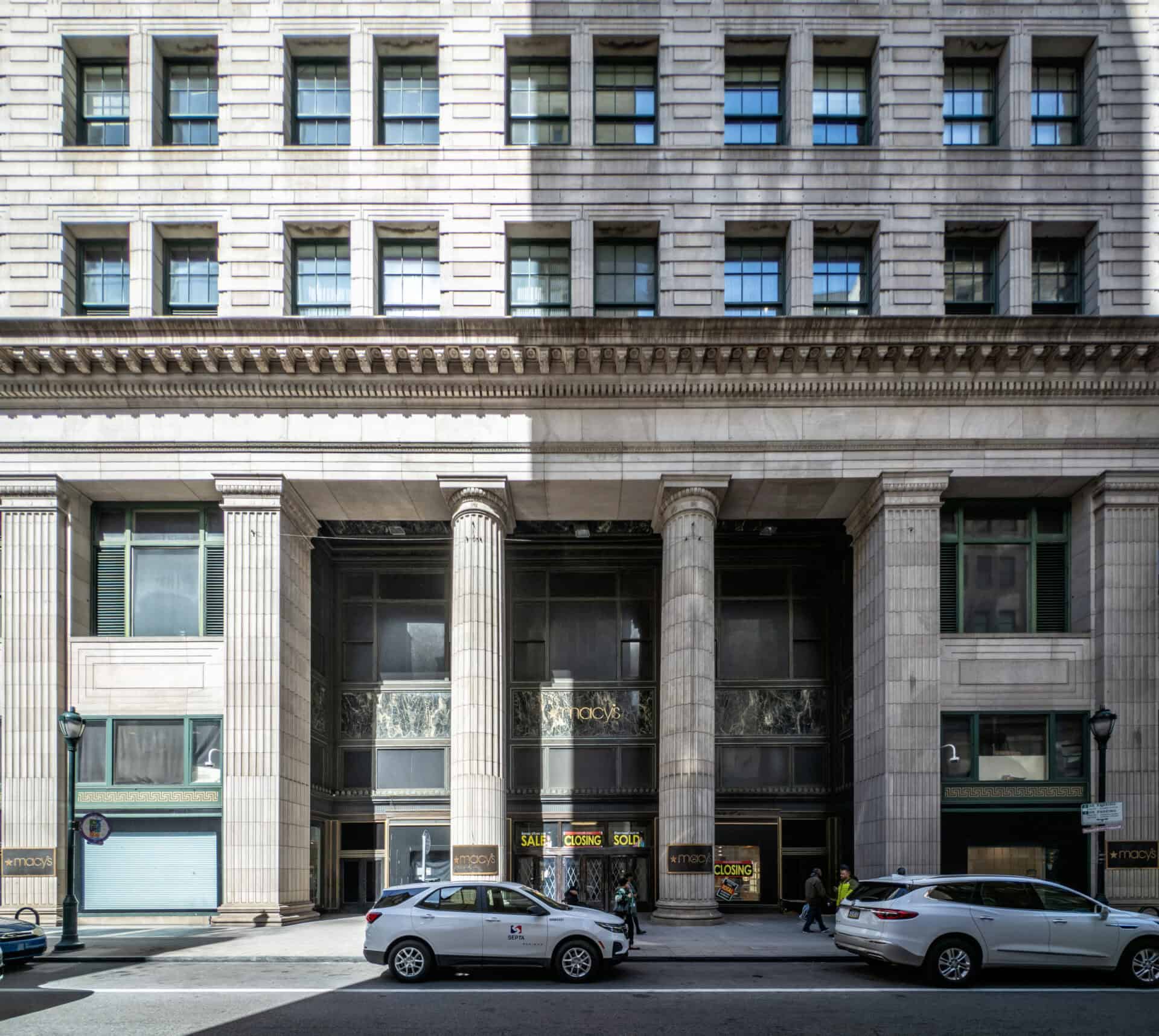
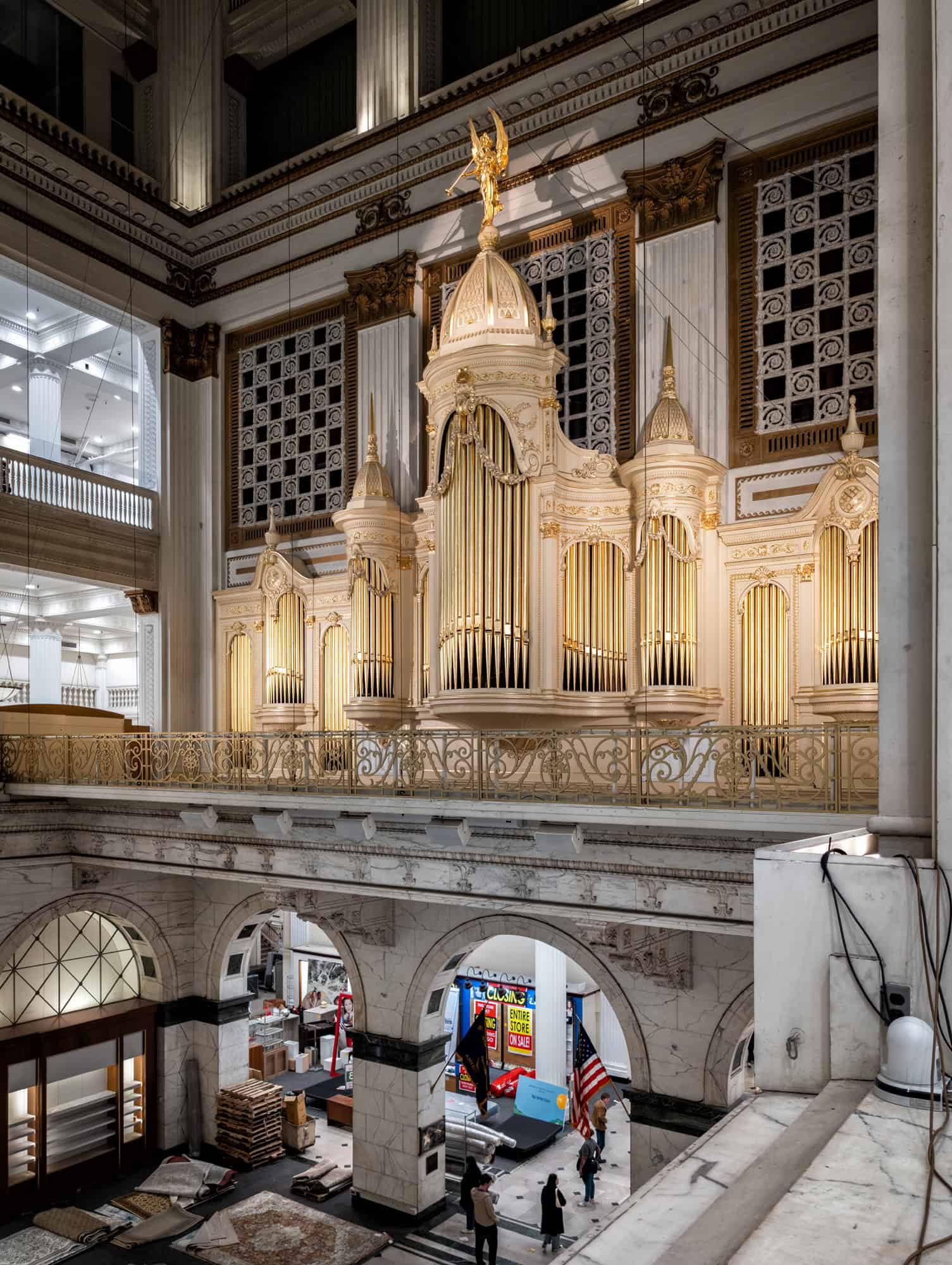
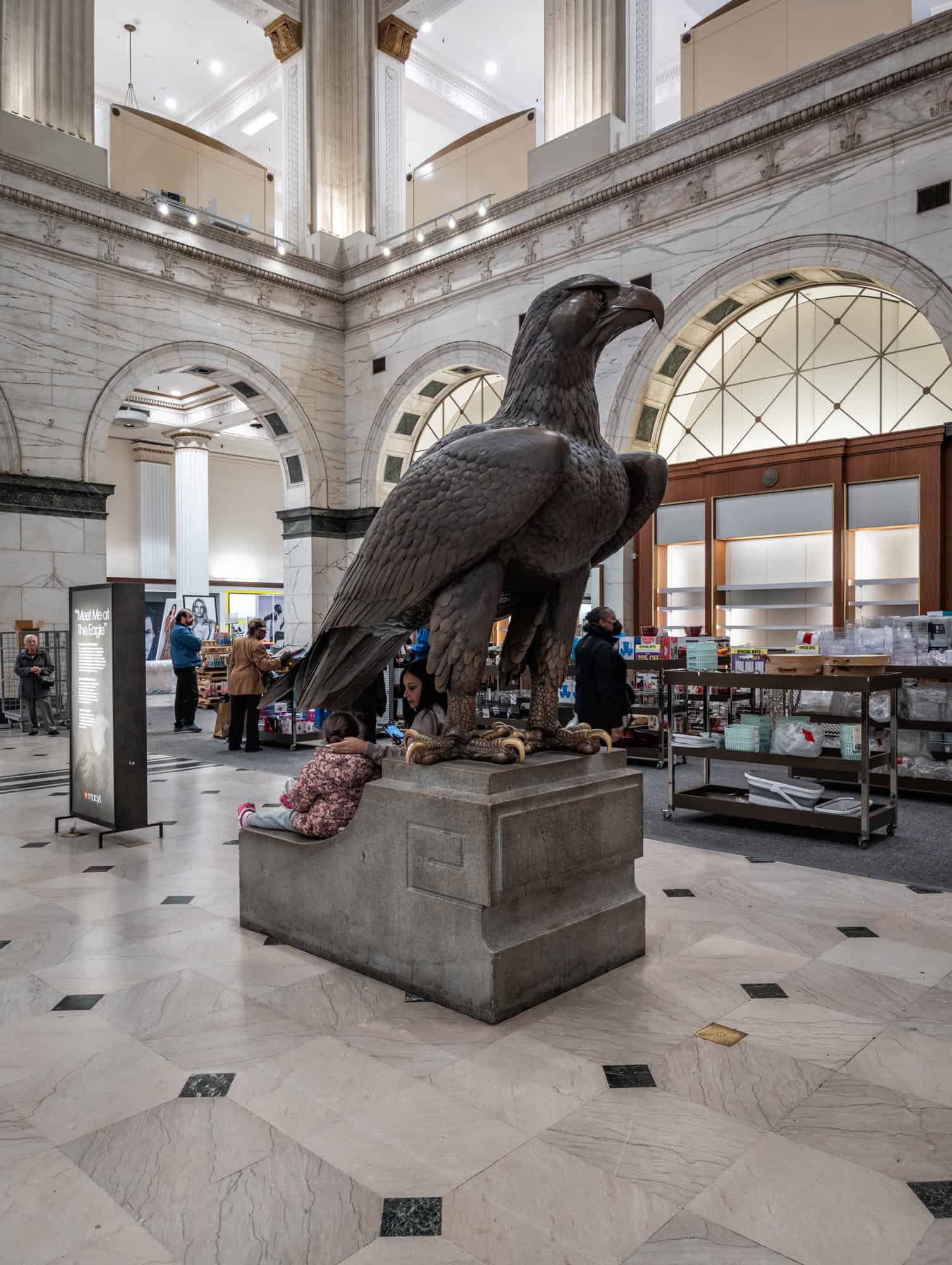
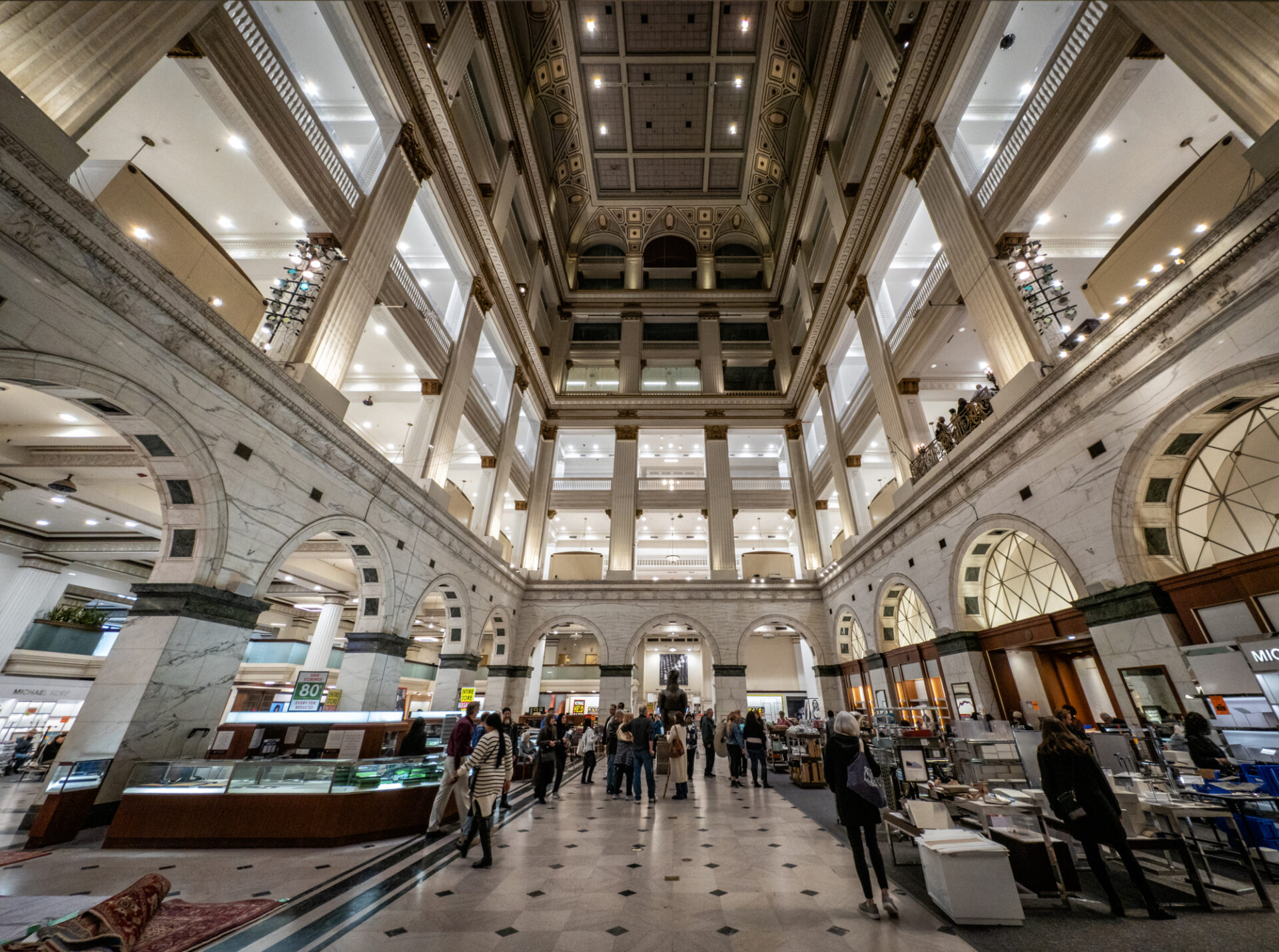
In 1911, Wanamaker replaced the original Grand Depot with a grander structure on the same site in Center City Philadelphia. Designed by renowned architect Daniel Burnham, the 12-story Florentine-style granite building was a marvel of its time. The centerpiece of the store was the Wanamaker Organ—originally from the St. Louis World’s Fair—installed in the majestic Grand Court. It became a cultural institution in its own right, with daily performances and annual organ festivals that continue to this day. The iconic bronze eagle, also from the World’s Fair, became the unofficial meeting place for shoppers.
The 20th Century: Expansion and Decline
Under John Wanamaker’s successors, especially his son Rodman, the store continued to thrive as a cultural hub. Wanamaker’s New York and Philadelphia locations were known for their elaborate decor and artistic programming. The stores embraced themed sales, European fashion trends, and new media like radio broadcasts. However, following John’s death in 1922 and Rodman’s in 1928, the business began to face increased competition from national chains. Despite modernization efforts, customer loyalty dwindled. In 1978, the chain was sold to Carter Hawley Hale, then to Woodward & Lothrop in 1986, but both failed to revive its fortunes.
A Series of Transitions: From Hecht’s to Macy’s
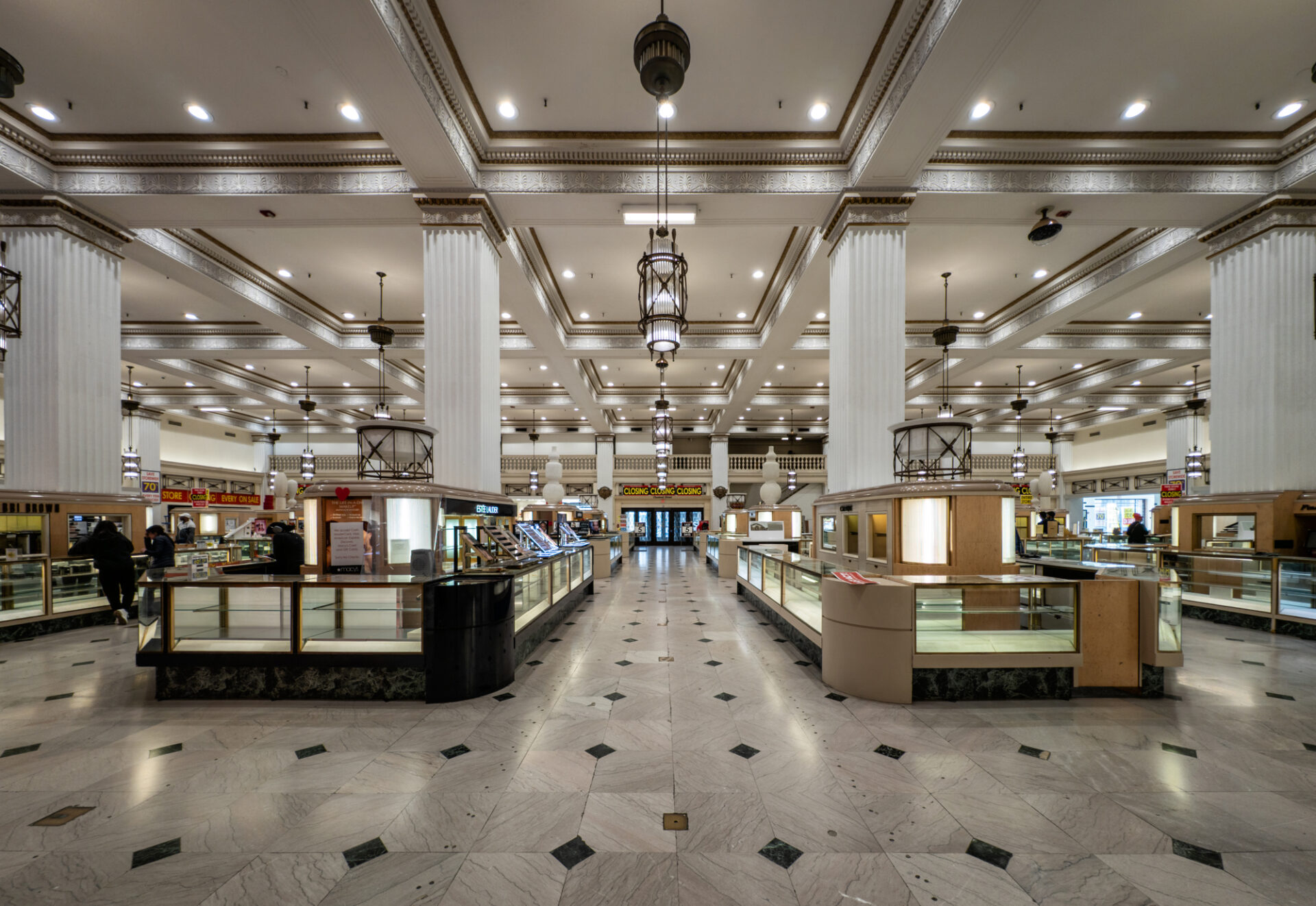
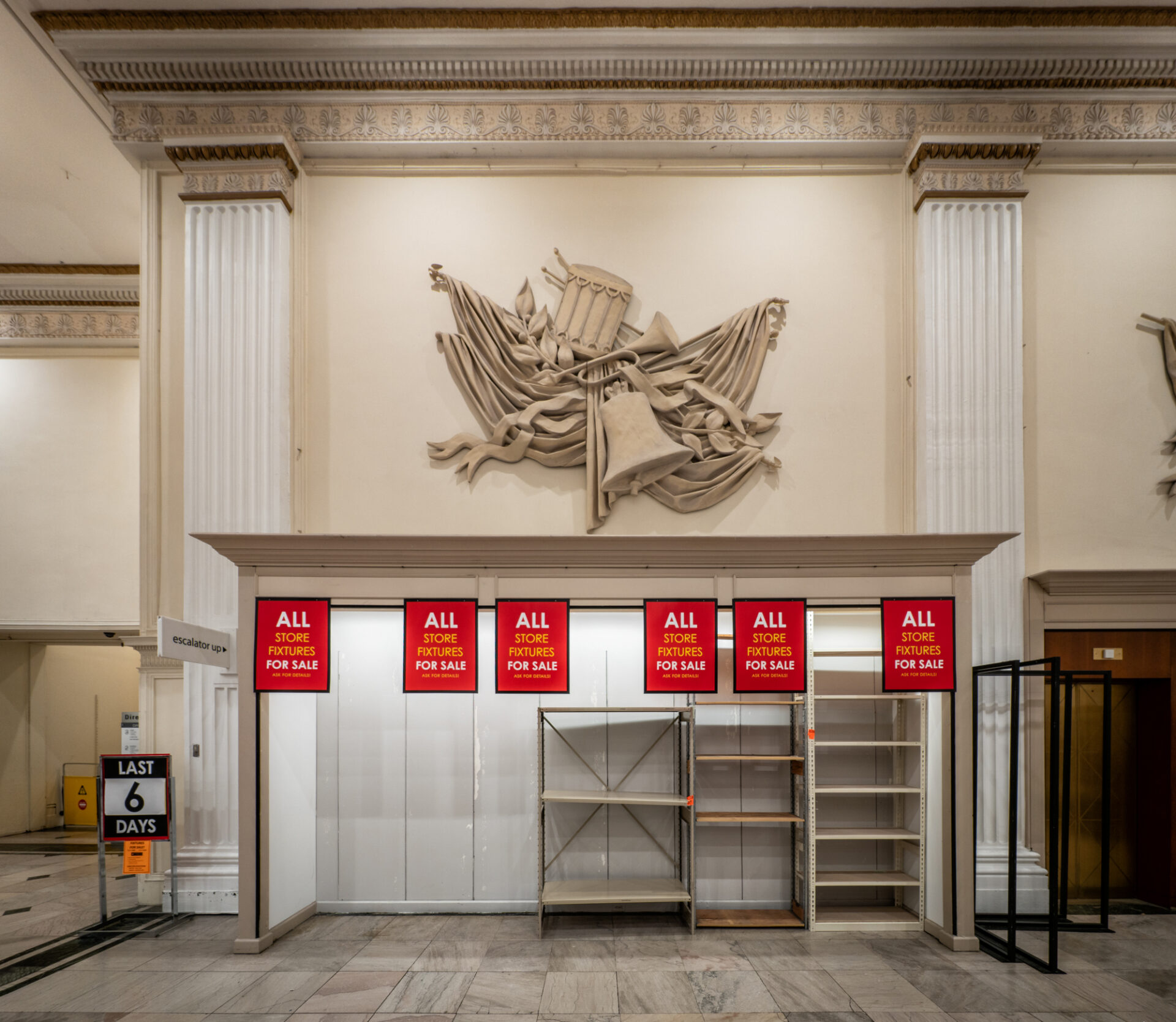
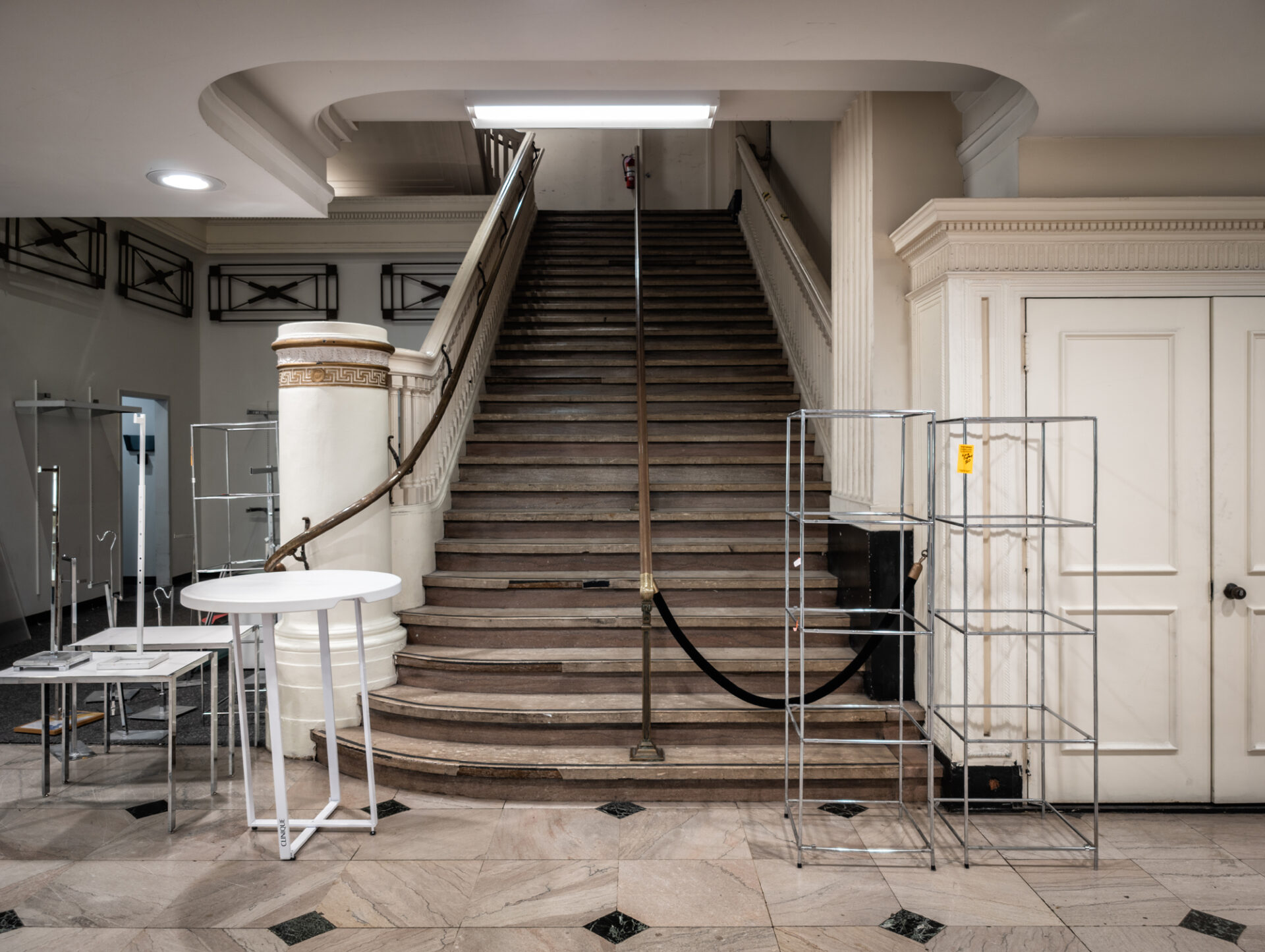
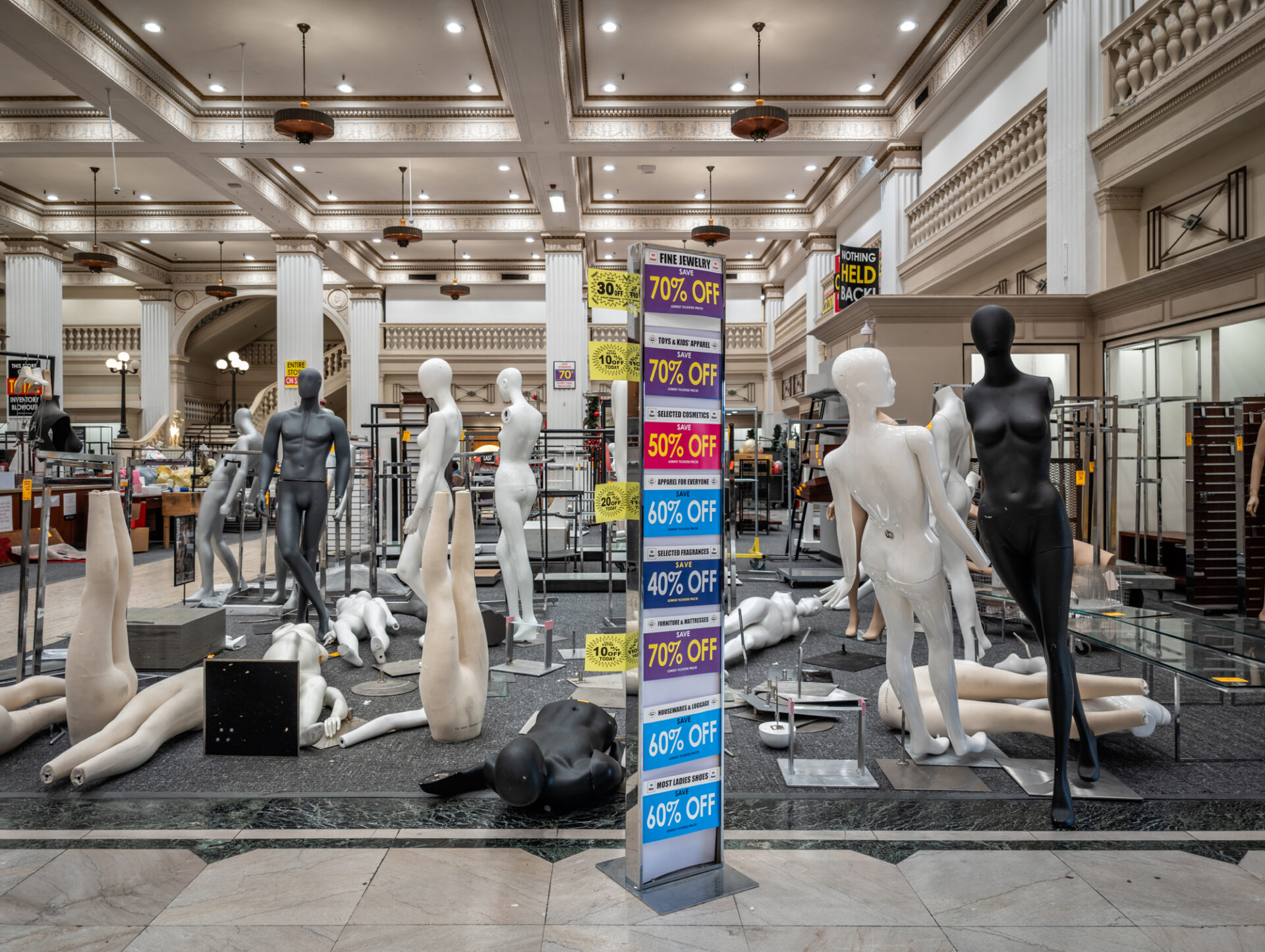
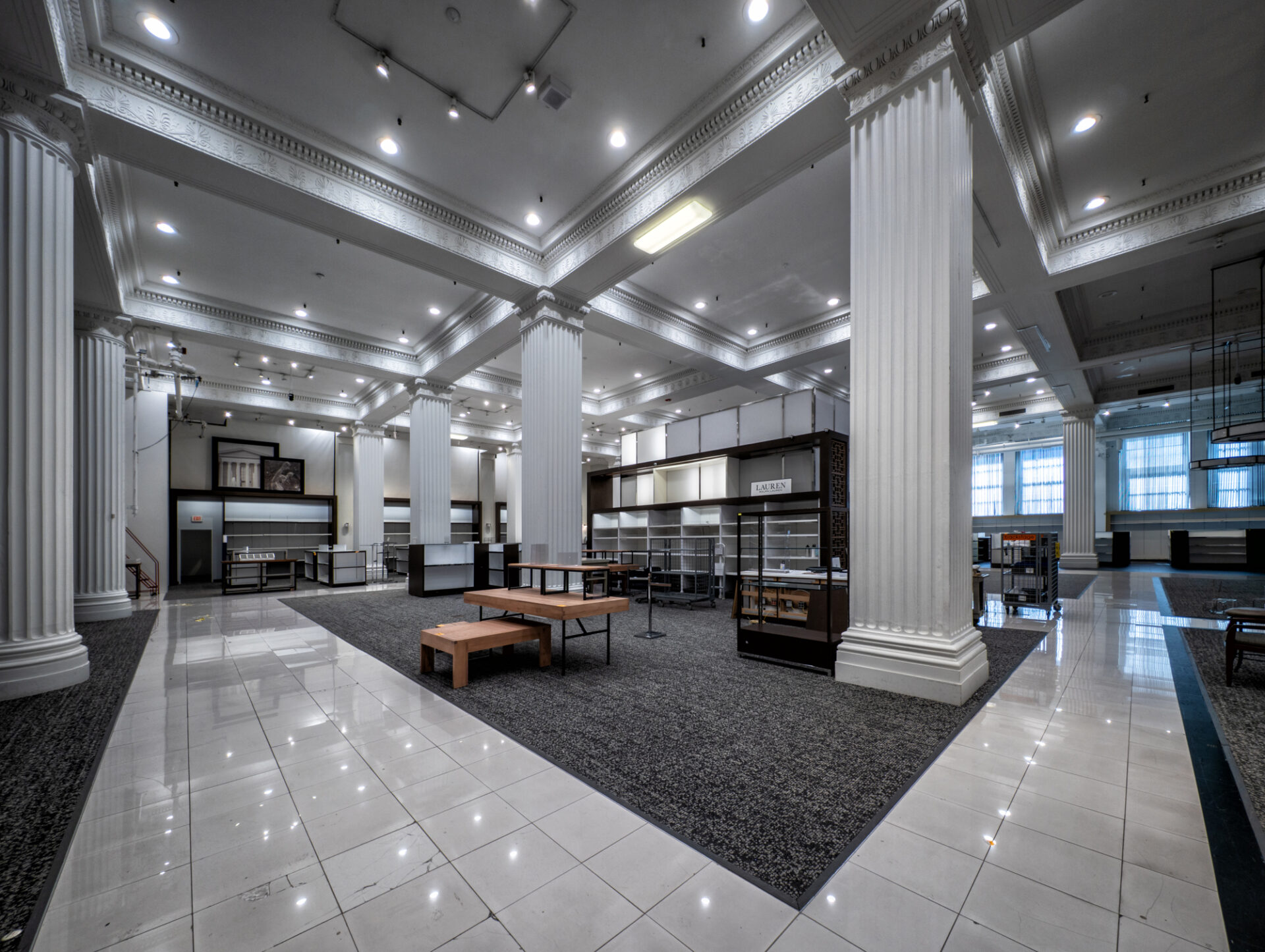
The 1990s saw the final chapter of Wanamaker’s as a brand. After its parent company declared bankruptcy, the May Department Stores Company acquired Wanamaker’s in 1995 and merged it into its Hecht’s division. The historic flagship building underwent substantial renovation, with retail operations shrinking to a fraction of the space. Ownership changed hands several times, and in 2006, Macy’s took over, continuing beloved traditions such as the Christmas Light Show and organ concerts. Yet by 2025, faced with declining foot traffic and shifting commercial priorities, Macy’s closed the location for good. The photographs included with this article are of its final days.
Legacy of the Wanamaker Building
Though no longer a retail destination, the Wanamaker Building endures as a symbol of American ingenuity and architectural grandeur. Declared a National Historic Landmark in 1978, it remains home to the world’s largest playable pipe organ and a cherished part of Philadelphia’s urban fabric. The building’s history captures the rise, innovation, and eventual decline of the grand department store era, but its cultural and architectural legacy continues to resonate with visitors and Philadelphians alike.
Matthew Christopher Jun 10, 2025 Philadelphia PA Architecture History Retail Stores

Jun 10, 2025

SHARE