

This Ain’t Eggs Benedict!
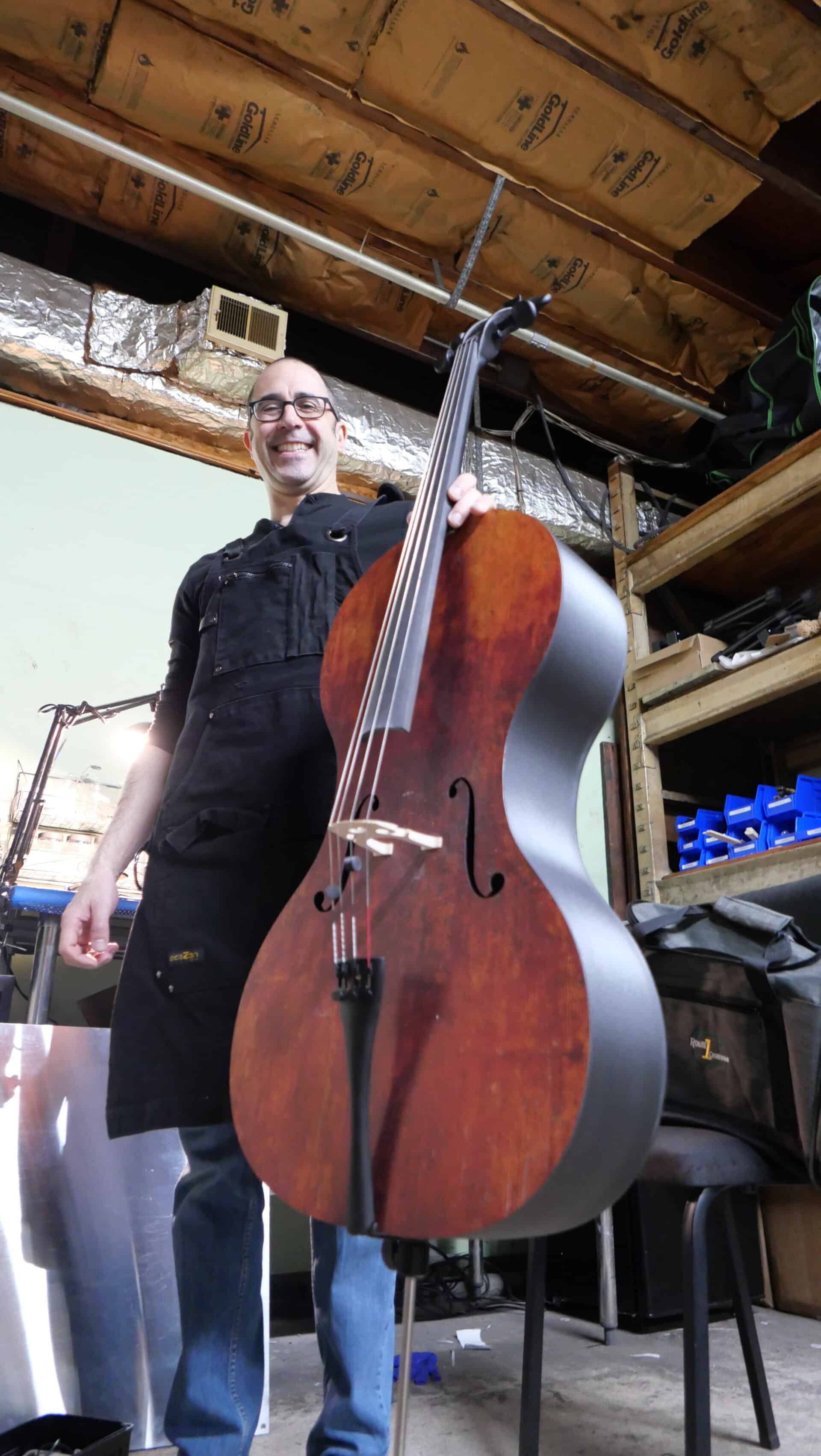
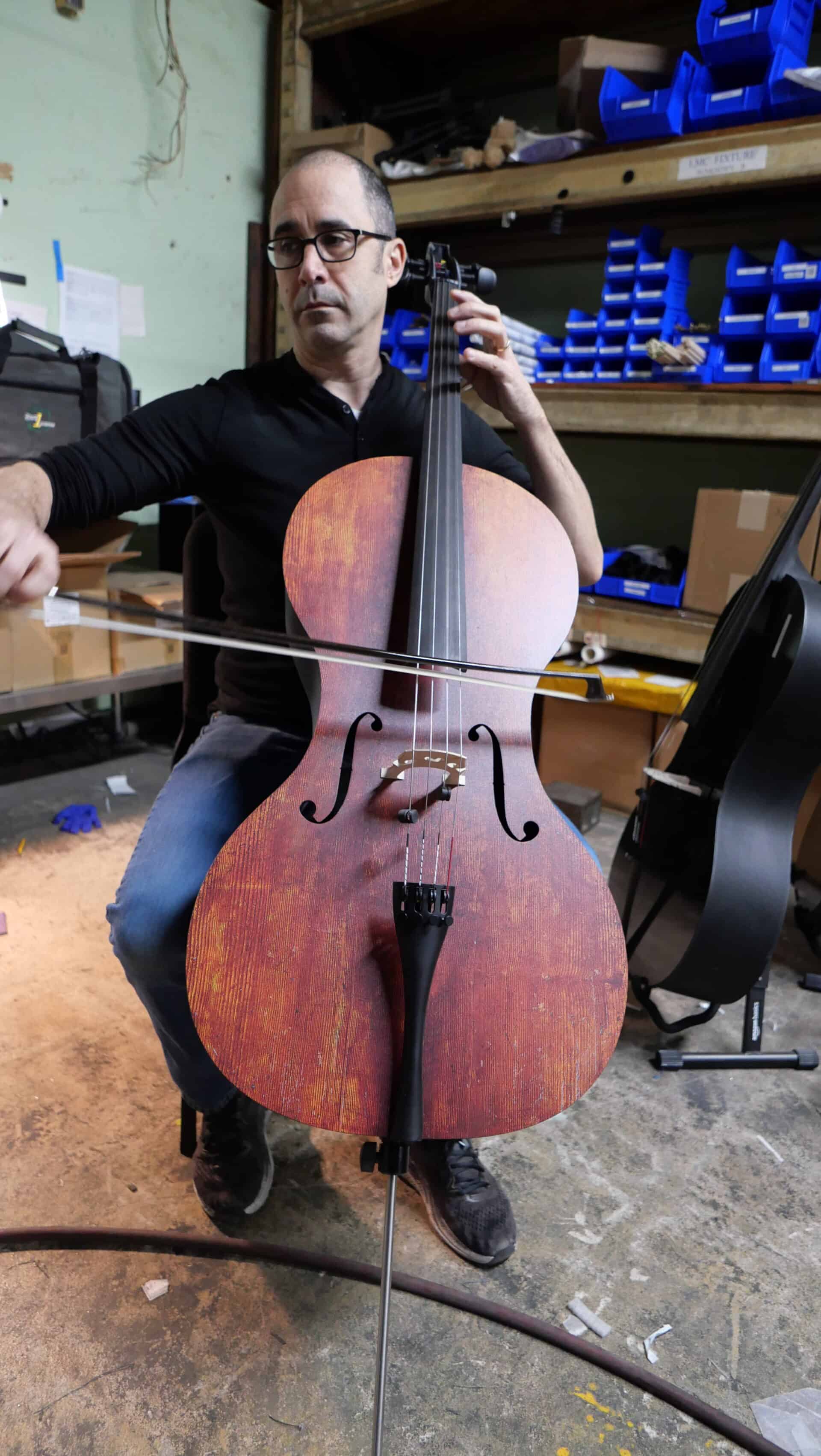
Invention is made possible by new technologies, except for the invention of eggs Benedict. This 21st Century case of co-invention between Elijah Lee and Alfred Goodrich arose because of carbon fiber technology and 3-D printing. It led to the collaborative design and manufacture of some of the world’s best sounding new cellos.
Their story bears the classic 1% inspiration and 99% perspiration ratio of bringing a new invention to life. A great idea is only the beginning; the real work of invention involves sustained effort, experimentation, and overcoming numerous failures. More than anything throughout the process Goodrich & Lee spent their time and energy sweating all of the details.
Origins: High School Teacher and student
Elijah and Alfred begin to collaborate during COVID at the Haverford School https://www.haverford.org/about-us where Alfred was teaching music and Elijah was his student. Alfred knew that Elijah had an interest in 3-D printing technology, so he began posing what if questions about the best ways of building a carbon fiber cello. Because Alfred’s band was grounded during the pandemic and his Silvertone Studios music recording business was shuttered for the same reason, he was able to take the time to set up 3-D printing all over his house and in the studios. Details from this chapter of the story is told by Alfred HERE
Design Development
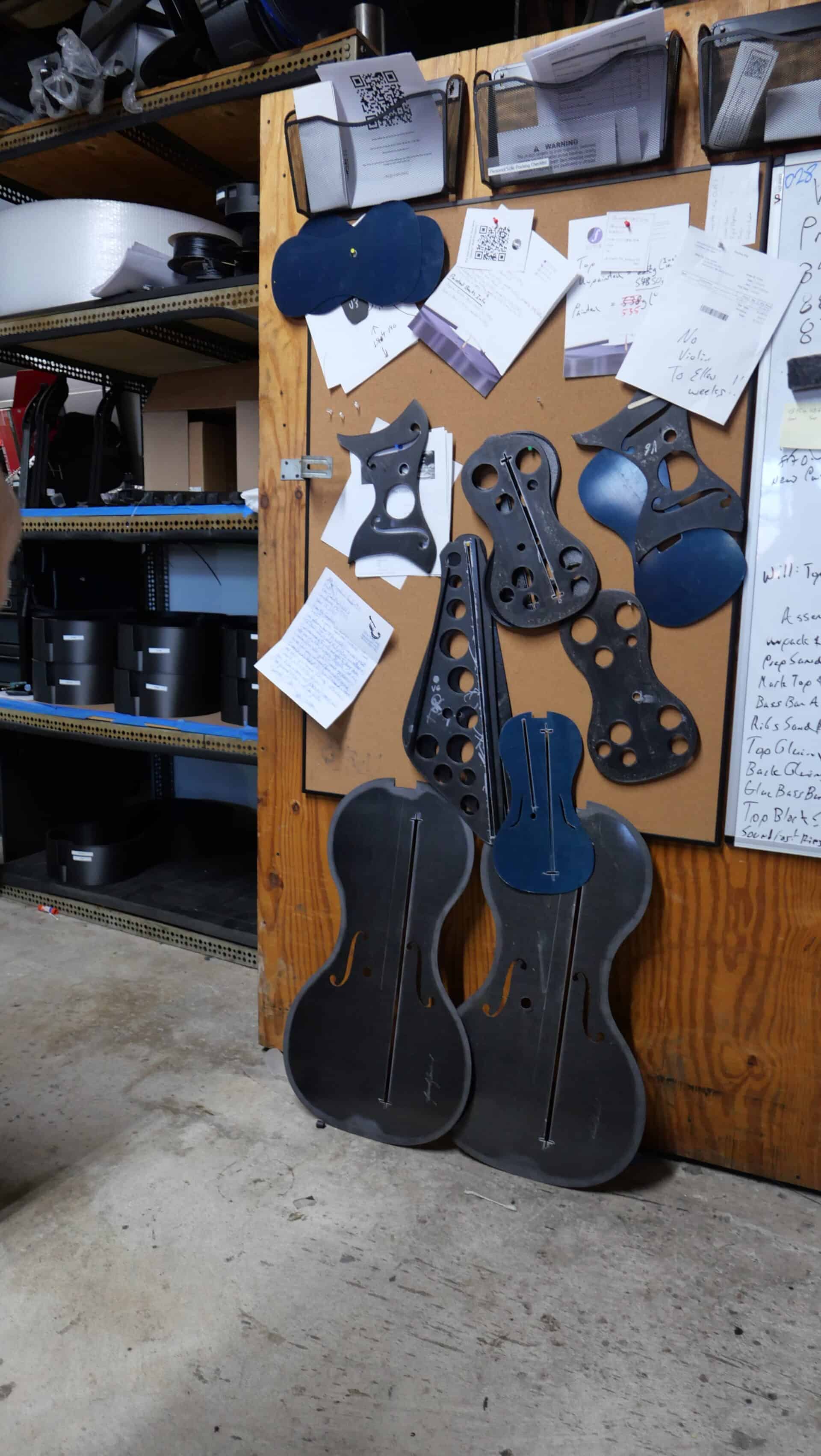
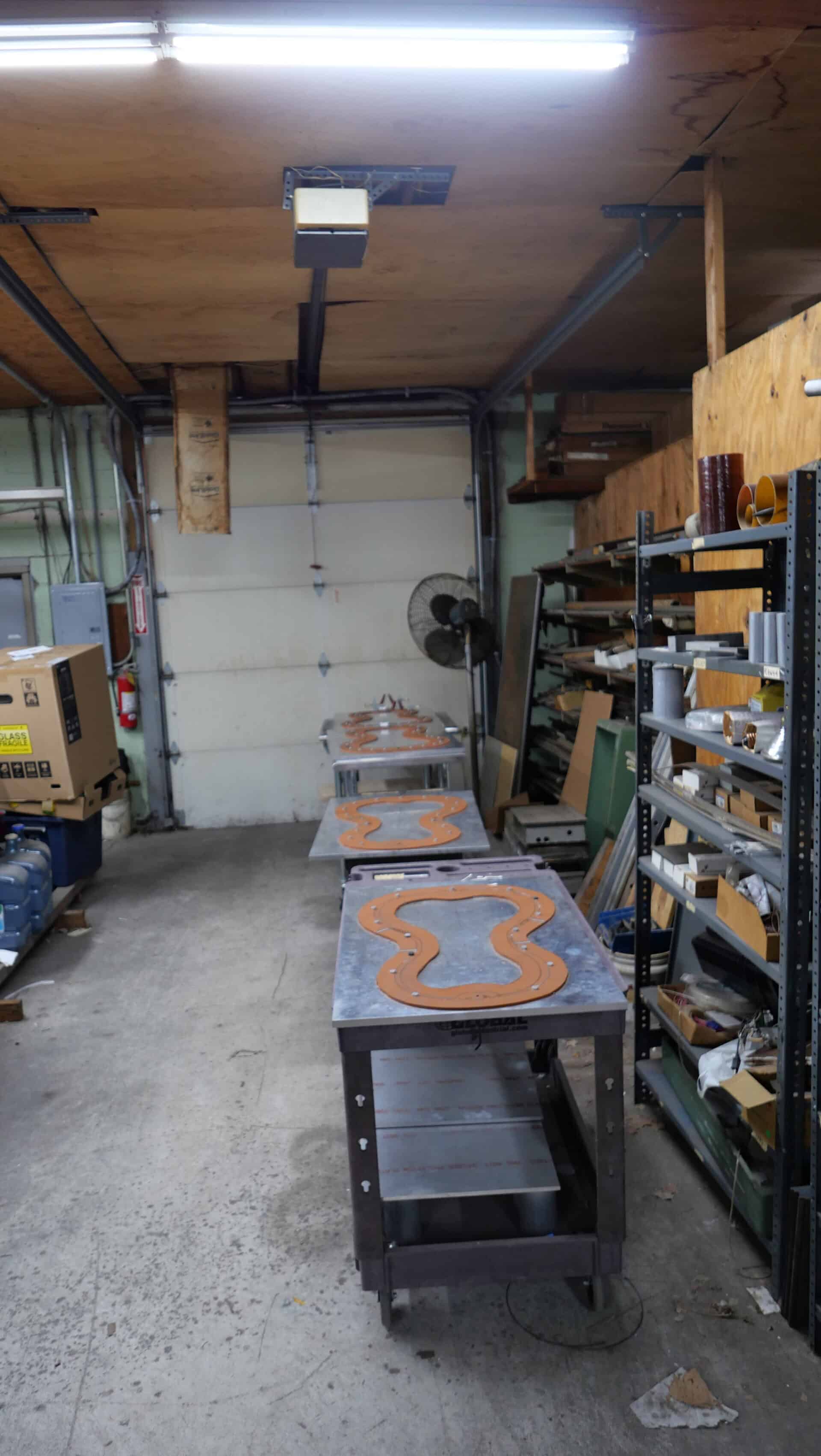
Although the end goal was to manufacture, market, and sell carbon fiber cellos, they began operating with seat of the pants financing. Their first design came from a CAT scan of Alfred’s father’s wooden cello, which gave them their first digital instrument template. They ditched their intention of printing curved cello fronts and backs, opting to use pre-manufactured flat panels, instead. They went through several iterations for bridges, joinery, tuning pegs, “wolf-stoppers”, finger boards, and posts, all the while trying to keep their price point from jumping too high, and ensuring the best possible sounding instrument.
This ain’t chopped liver, either!
Soon they would need to put together a serious business plan and seek out investors who started out mostly as friends and family. Through two rounds of raising capital, they navigated the land mines of parts and material uncertainties during the pandemic, and unknown timing for the return of customer demand. They revised their profitability estimates as expenses and price points got adjusted with each redesign of their instrument.
Chumming the waters
Their latest capital raise came in the fall of 2025 on national television. Laurie Greiner of Shark Tank offered Forte3D $250K for 16% of the business! Shark Tank not only provided needed working capital, but it provided them with much-needed visibility as they were adding violins to their offerings. After a lean 2025, finally demand began to outpace supply and purchasers were put onto waiting lists. As of early 2026, violins begin at $1,495, and their carbon fiber cello starts at $2,950.
Aesthetic Excellence
In 2025, Forte3D began offering custom artwork on their instruments. Because the fronts and backs of the cellos are flat, they can be used to display designs of any kind. It is an incredibly creative touch, personalizing each instrument in a unique way.
“WE NEED MORE INNOVATIONS LIKE THIS, CREATIVE SOLUTIONS THAT EXPAND ACCESS TO MUSIC-MAKING AND OPEN NEW PATHS TO IMAGINATION AND EXPRESSION.”— YO-YO MA
Making instruments for world-class cello players requires a constant focus on the details of design and manufacture. Alfred is keenly aware of the traditions of instrument-making and attending to all the details that arise when you have a expert customer.
Invention checklist
Perseverance knowing there is an answer/ a solution/ a way to make an instrument sound and perform even better.
Teamwork seeking creative breakthrough solutions from a team with varying experience and know-how. From instrument building assistant Will to Mike Block, the chief musical advisor & artist relations manager.
Listening – Alfred has amazing ears (he’s a long time recording engineer!) and understands the nuances of the instruments he’s created.
Practicality: More durable and stable than wood, carbon fiber is easier to maintain and more cost effective for instrument building. Forte3D combines their patented designs with traditional wooden bridges fingerboards, endpins, and tuning pegs to create a great sounding instrument.
Compare the inventions checklist with TheHaverford’s School “virtues” Character, Communication, Compassion, Confidence, Courage, Creativity, Dedication, Dependability, Friendship, Honesty, Honor, Humility, Initiative, Integrity, Justice, Leadership, Loyalty, Perseverance, Respect, Scholarship, Selflessness, Sharing, Support, and Teamwork.
The former student and teacher seem to have learned their lessons well!










 Continue with Google