

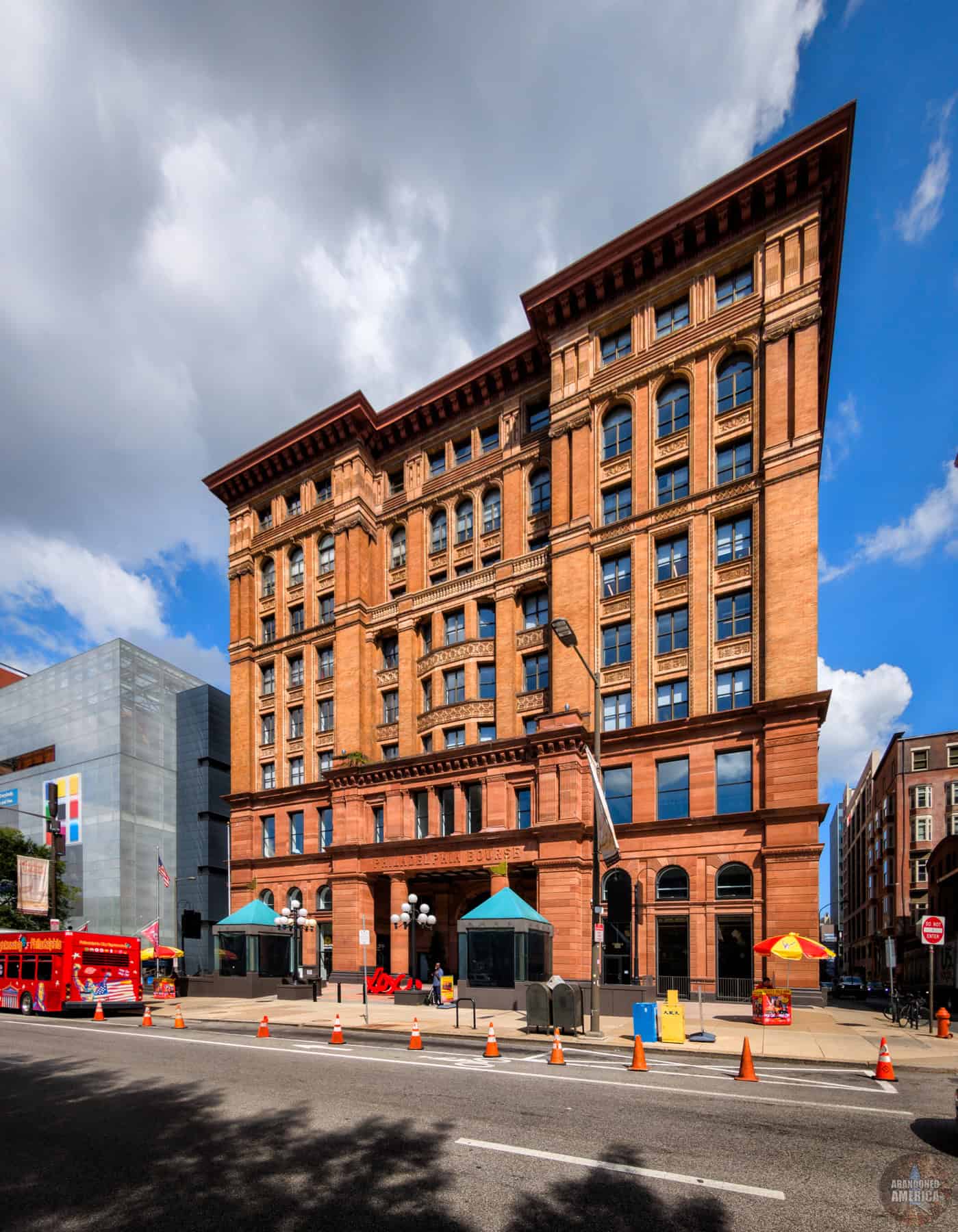
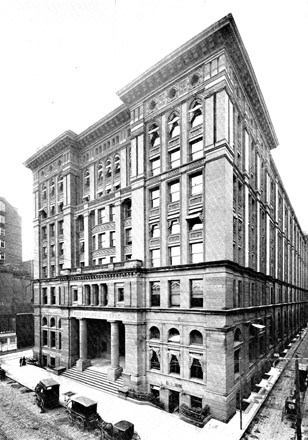
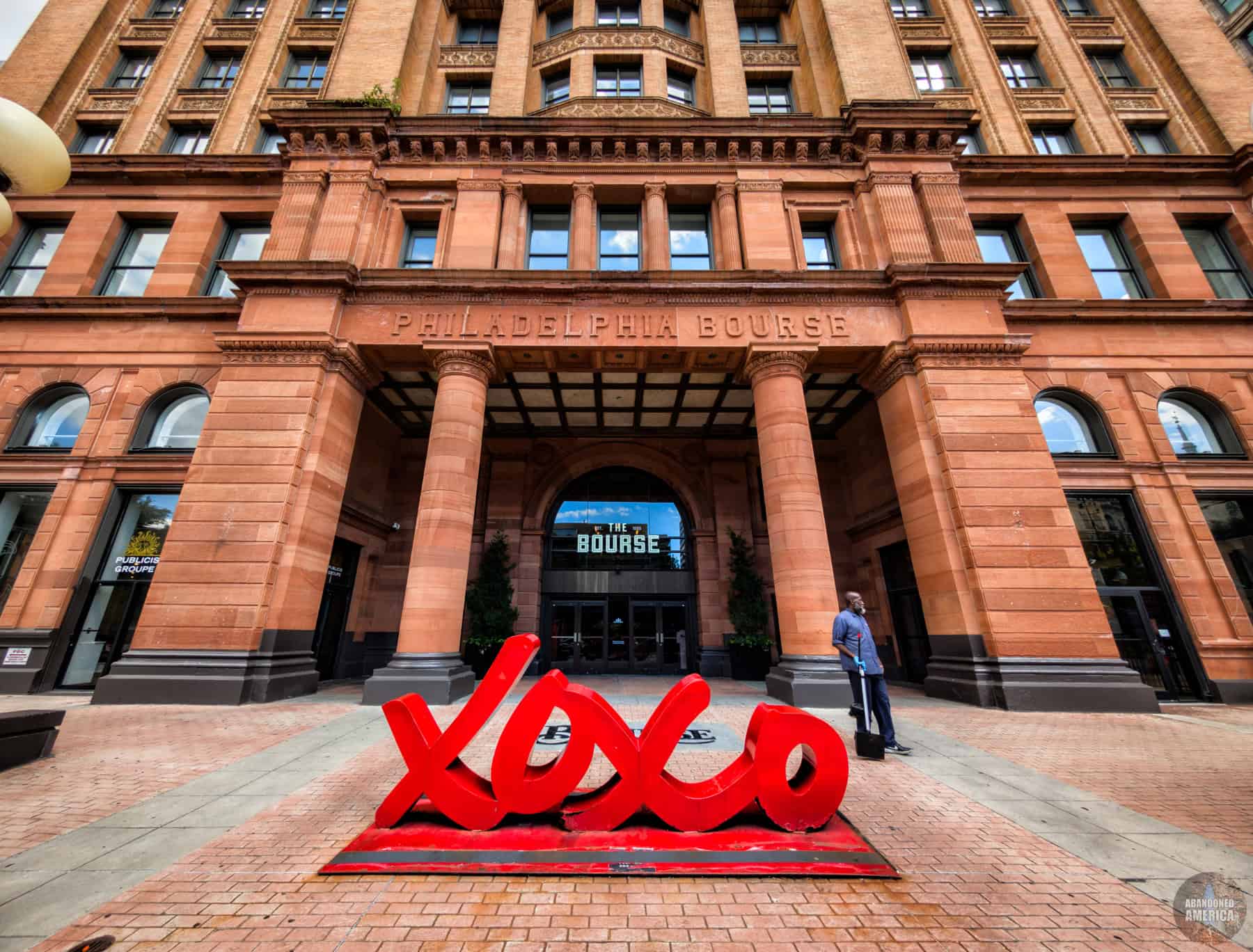
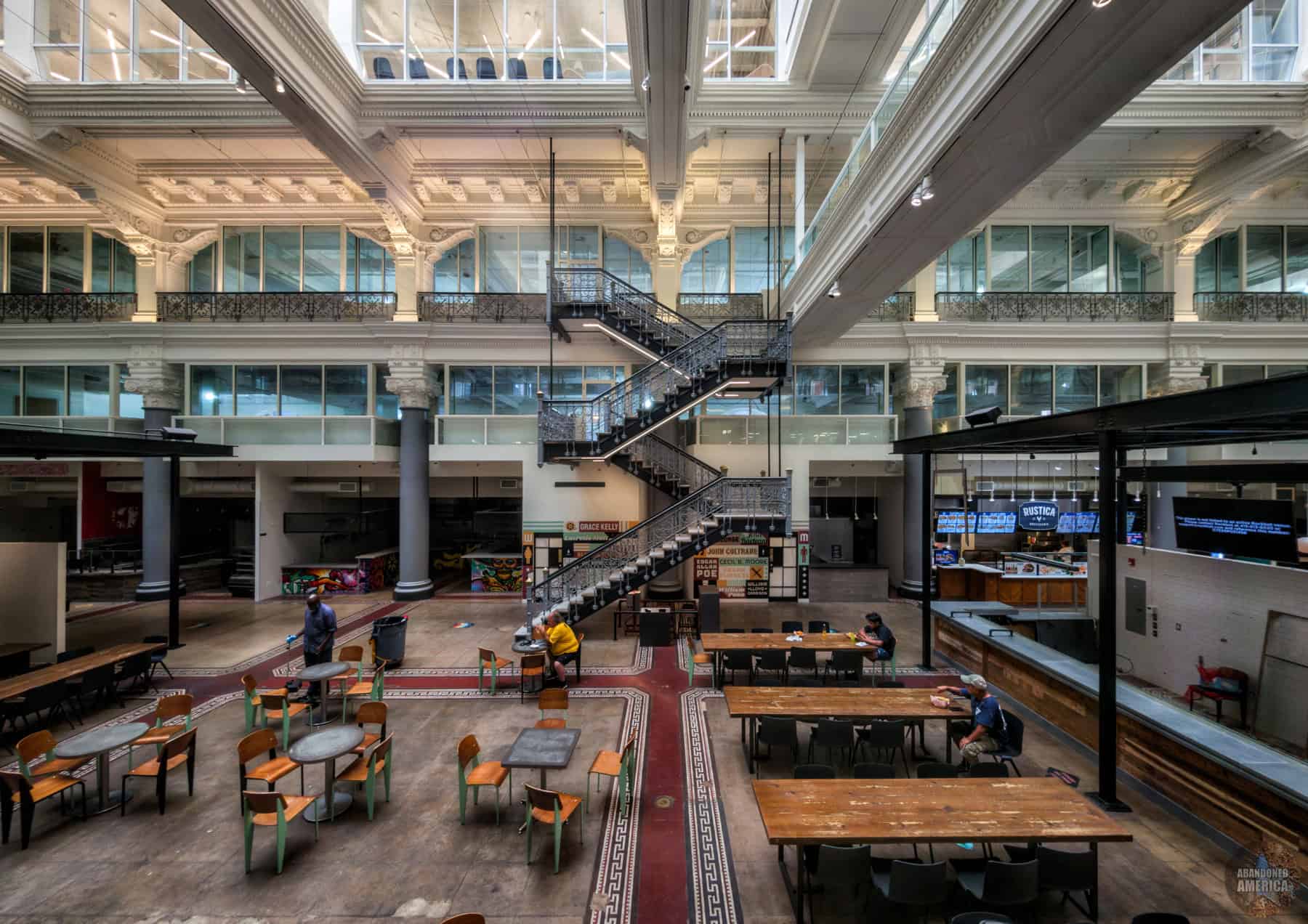
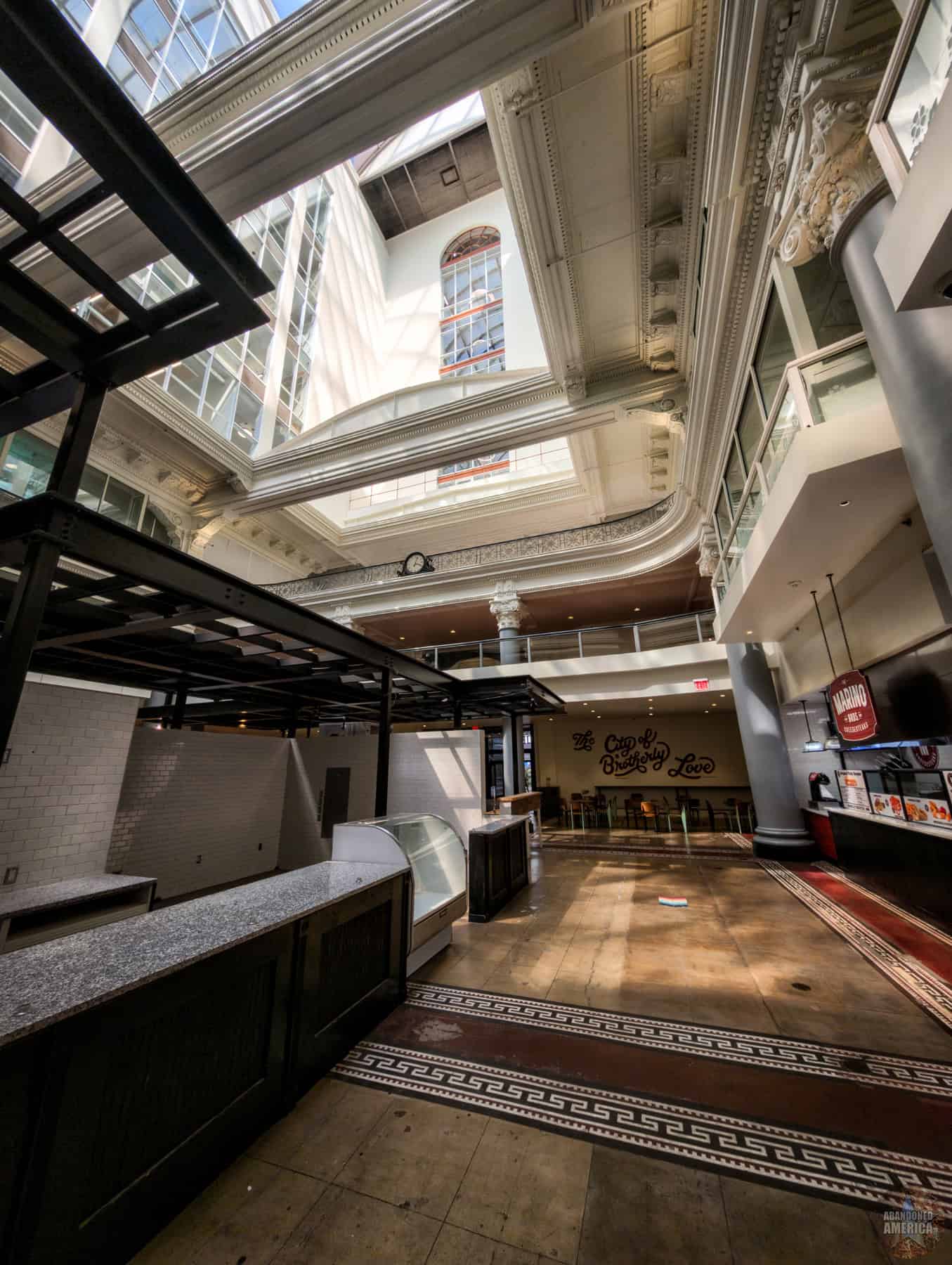
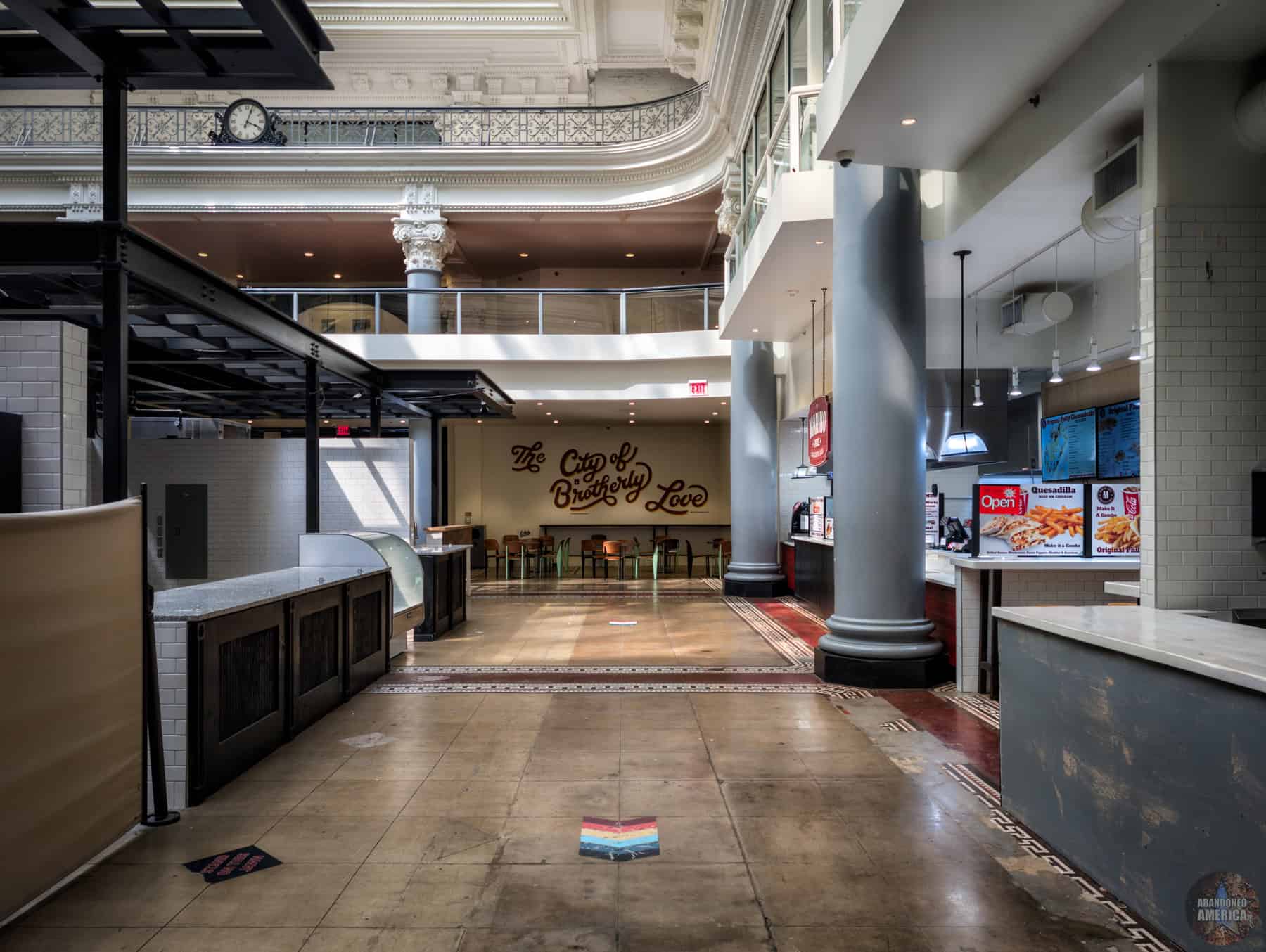
The Bourse in Philadelphia, a landmark of architectural and historical significance, traces its origins back to 1895. Founded by George Bartol, a prominent grain and commodities exporter, the Bourse was initially established as a commodities exchange. Its creation marked an important moment in Philadelphia’s economic history. It was modeled after the Bourse in Hamburg, Germany and distinguished by its innovative steel-frame construction, a cutting-edge feature for its time.
The building’s design, embodying the Beaux Arts style, was the work of architects G. W. & W. D. Hewitt, who also crafted notable structures such as the Bellevue-Stratford Hotel in Philadelphia and St. Peter’s Episcopal Church of Germantown.
For more than six decades, the Bourse served as a hub for commodity trading, playing a critical role in the city’s commercial landscape. However, in 1960, its function as a commodities exchange ceased, leading to a period of transformation for the building.
In 1979, the Bourse was acquired by the Kaiserman Company, which undertook a significant renovation. This update included converting the ground floor into retail space, aiming to revitalize the building and adapt it to modern needs. Despite these efforts, the Bourse’s evolution continued to reflect the shifting demands of Philadelphia’s urban landscape.
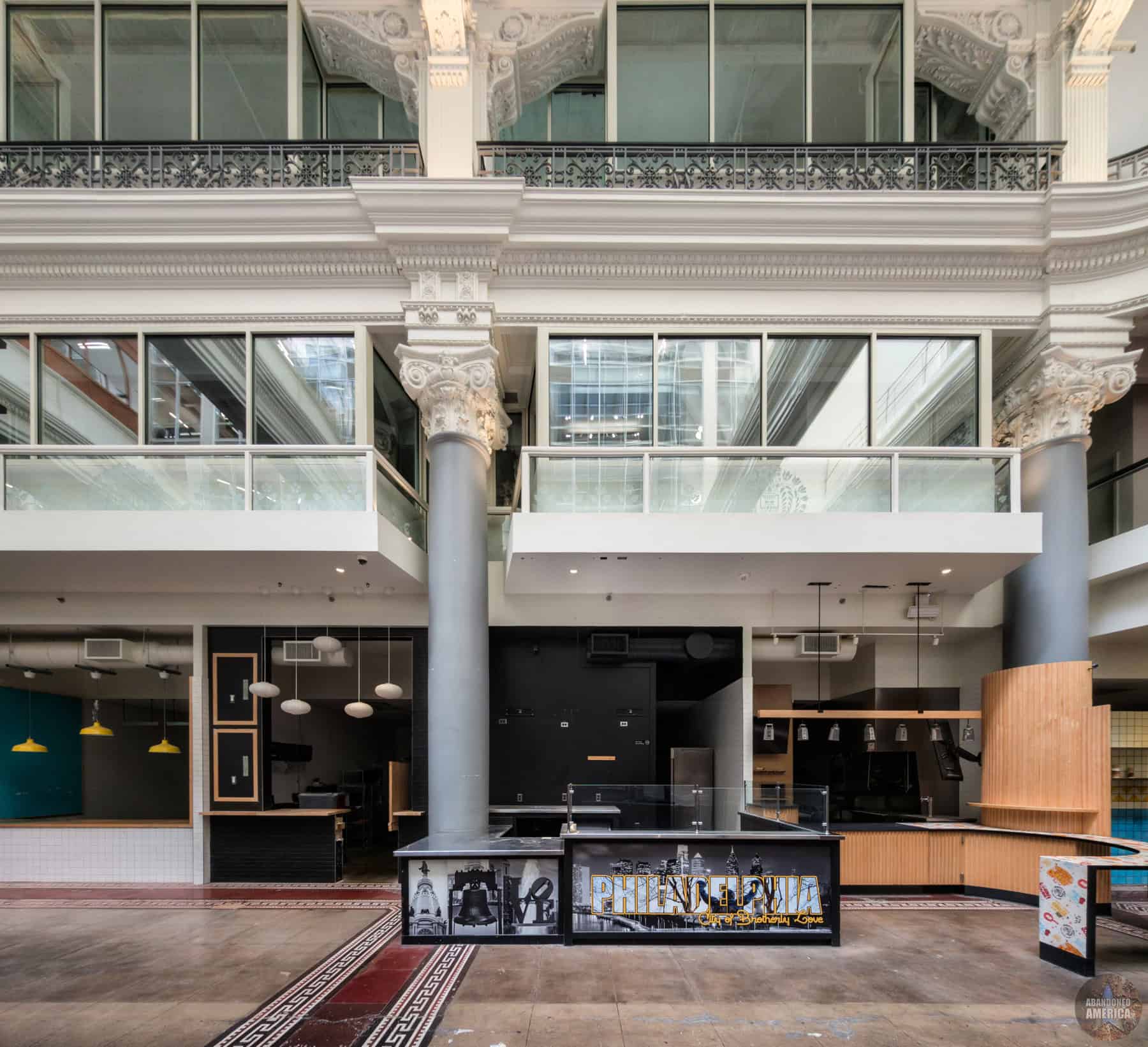
A major turning point came in 2016 when MRP Realty acquired the Bourse and invested $40 million in a comprehensive renovation. This transformation was designed to modernize the building while preserving its historic charm. A key feature of the renovation was the conversion of the first floor into a food hall, which opened in 2018 and housed 30 diverse vendors, offering a bustling culinary destination for both locals and visitors.
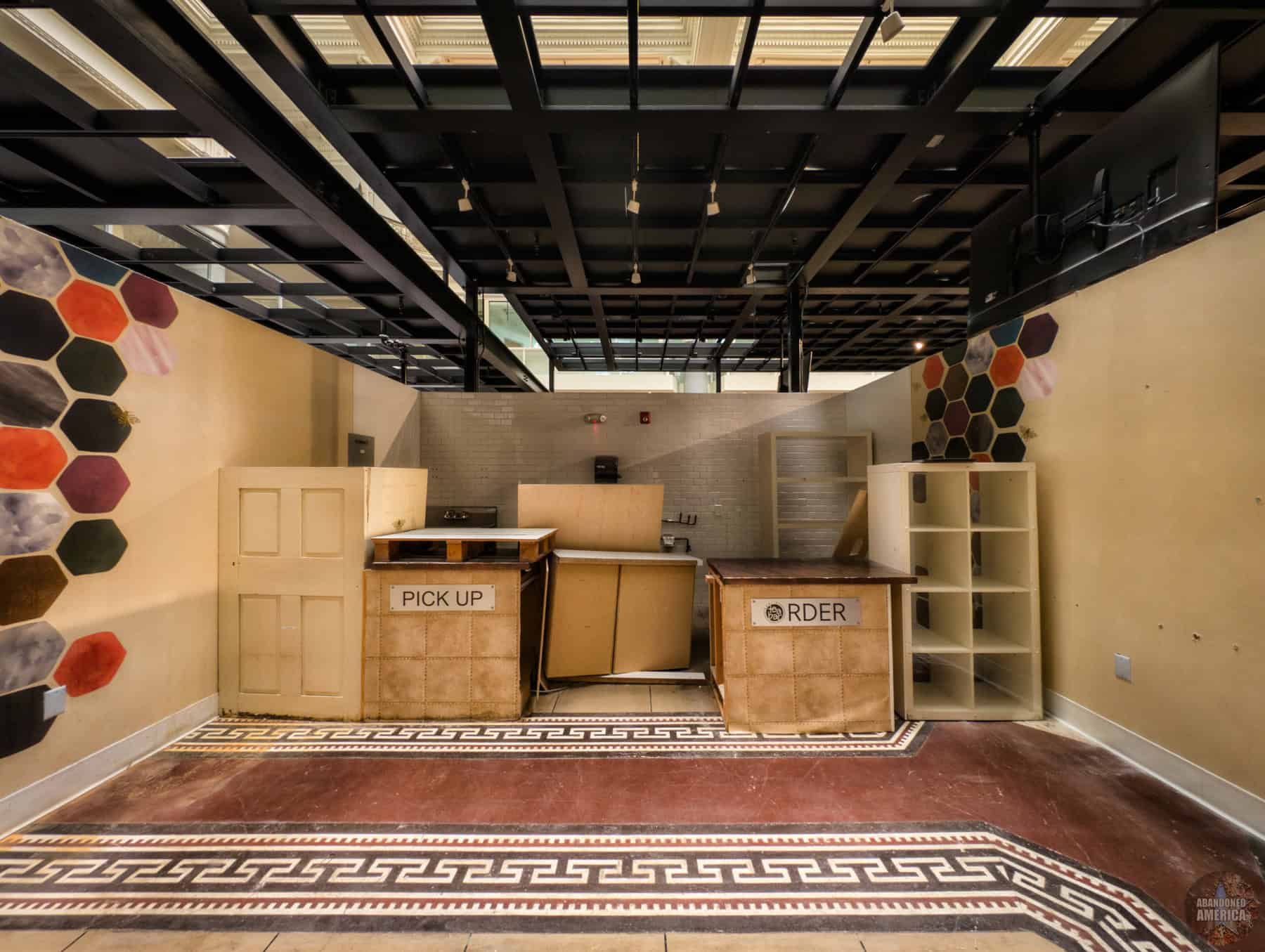
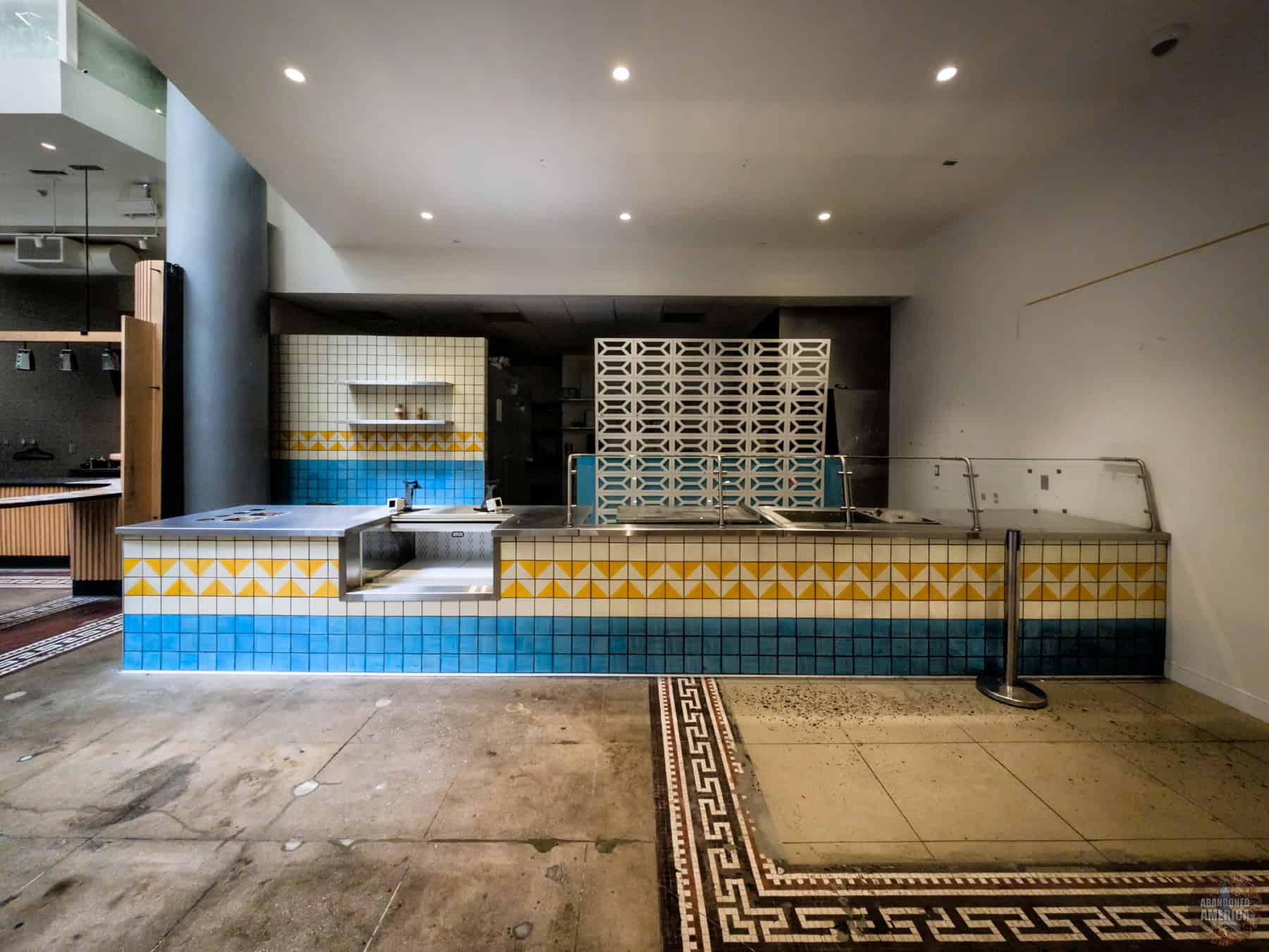
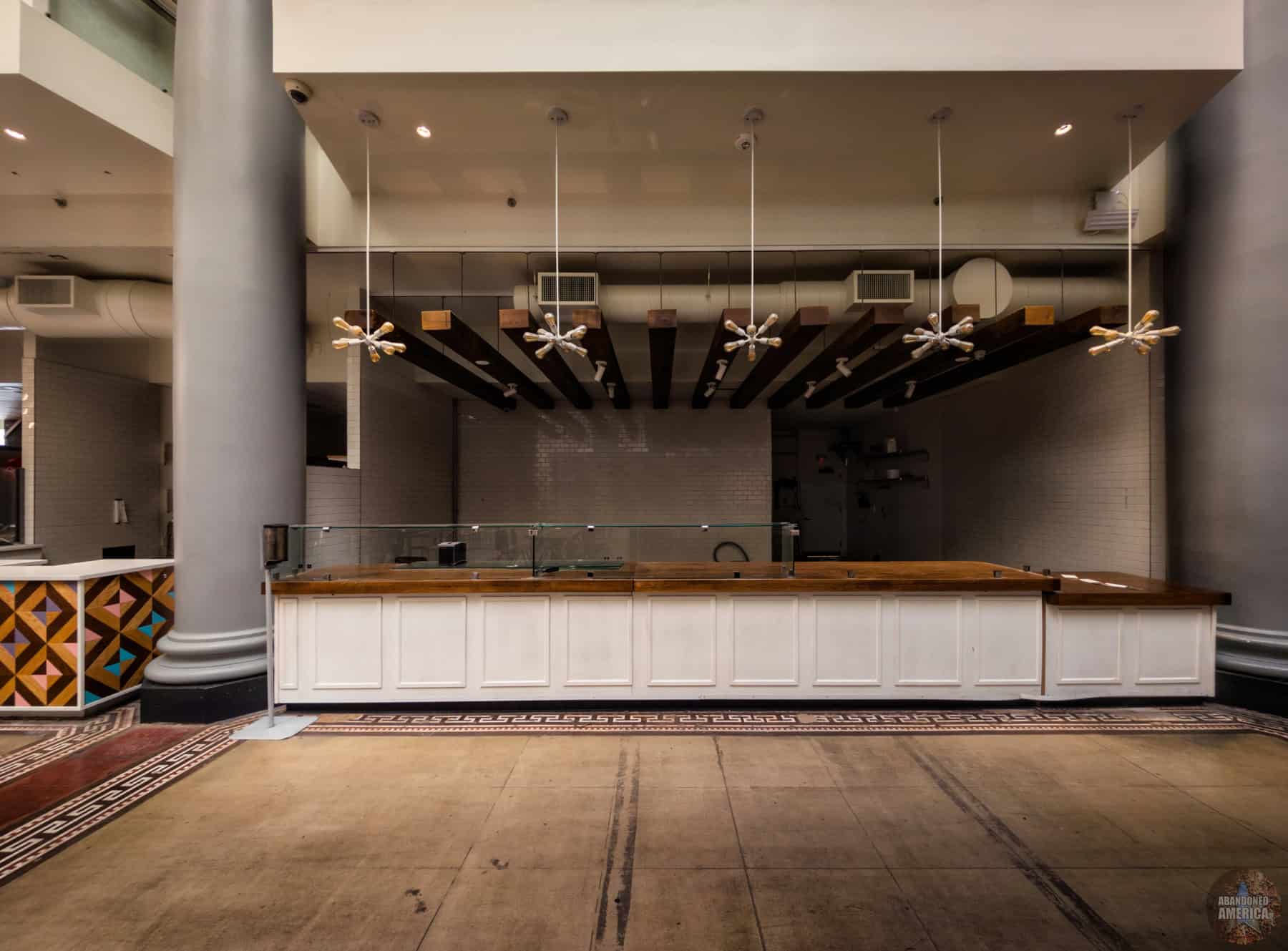
Despite these ambitious renovations, the Bourse has faced challenges in recent years. While the original tile work, including stall numbers from the 1890s, remains a testament to its historic past, the food hall, which was once a focal point of activity, now faces a starkly diminished presence with many vendors having left and the space largely empty. My last visit to the Bourse was in 2019, and it had been exciting to see all the new food stalls. It was quite sad to see they were almost all closed. One employee remarked that the reduced traffic during Covid, combined with an expectation that rent payments would be made with no reductions, was what led to the closures.
Today, the Bourse stands as a multifaceted building with nine floors of office space, including hosting the Mexican Consulate in Philadelphia. Its storied past and architectural grandeur continue to make it a significant piece of Philadelphia’s historical and cultural fabric, even as it navigates the evolving demands of urban redevelopment.











 Continue with Google