

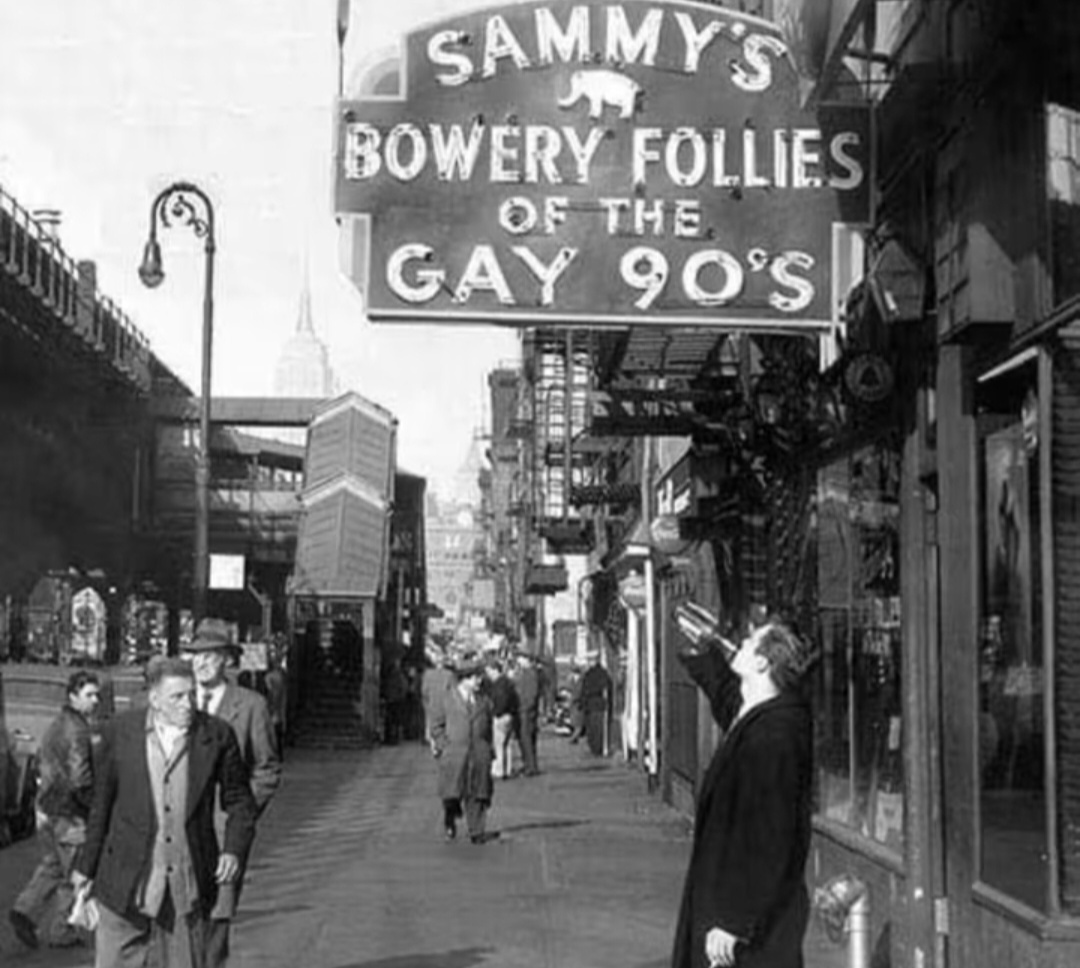
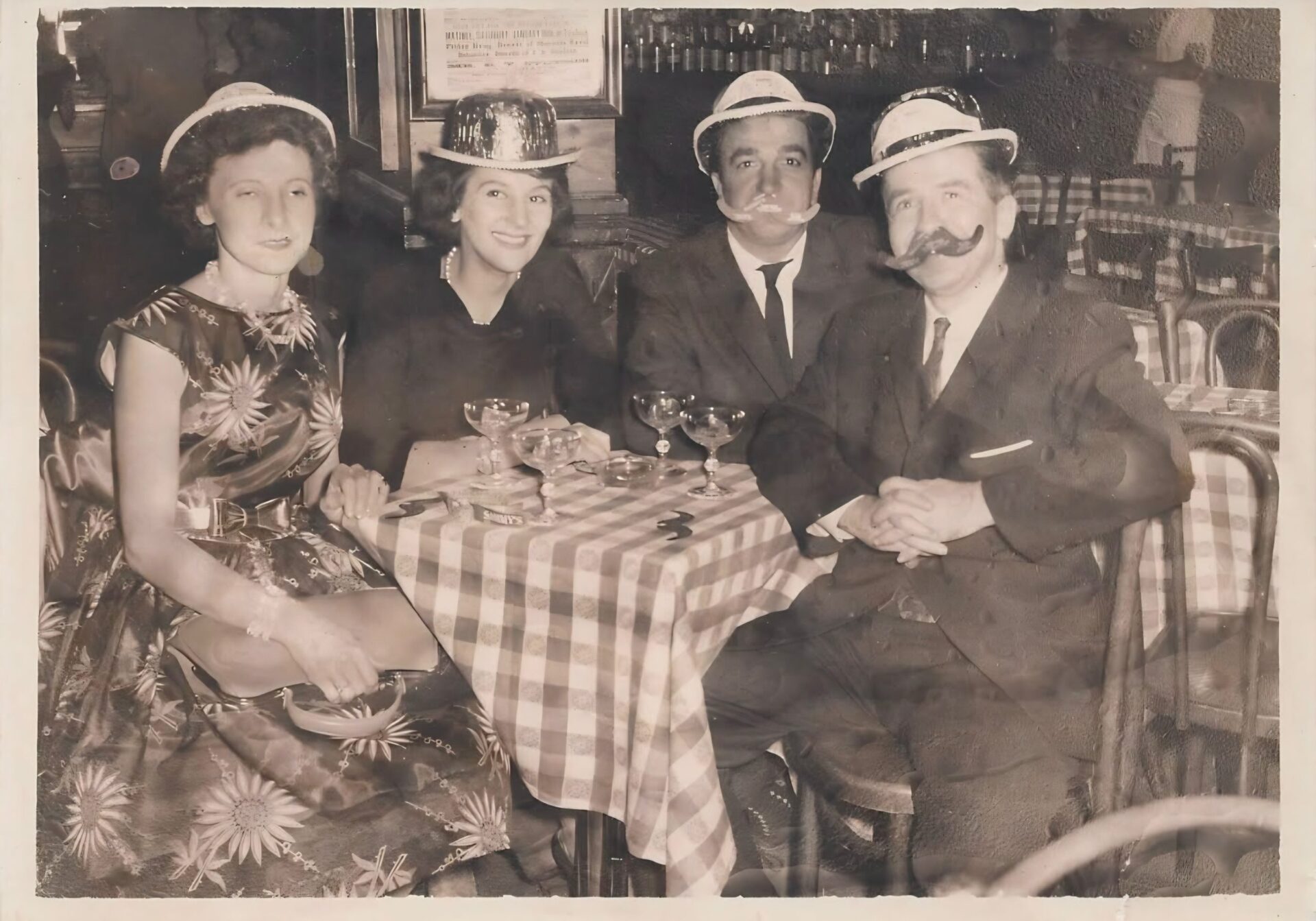
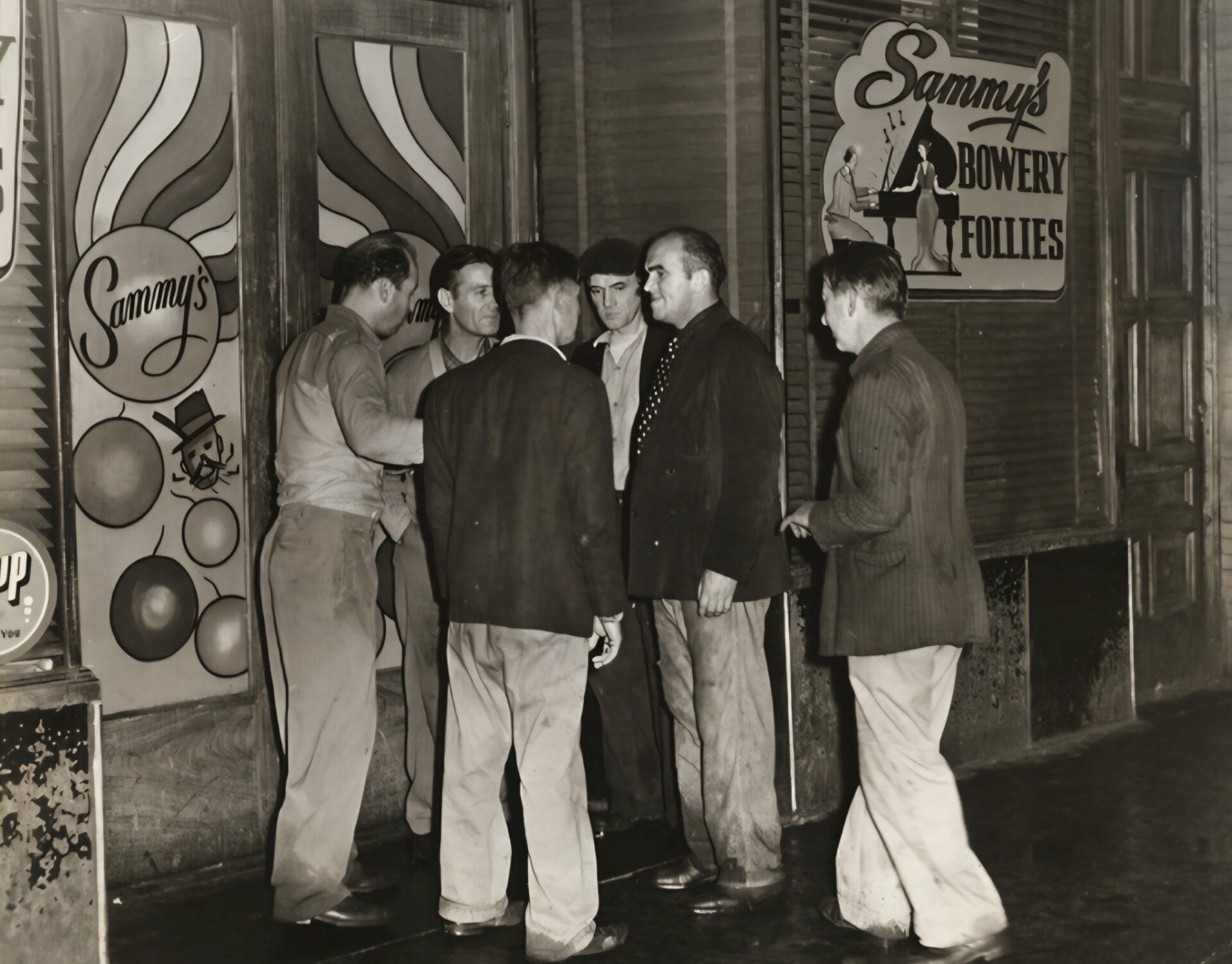
Like a Tom Waits sound, slightly crooked, worn, wry, full of humor, an alcoholic haven with an unpredictable and slightly chaotic crowd was Sammy’s Bowery Follies.
You just had to be there.
During the Great Depression the Bowery located on Manhattan’s lower East side absorbed wave after wave of men who had run out of options: farmers, laborers, dock workers, finance types and clerks that once wore ties.
The pavements were permanently sticky with old rain and regret while men slept in flop houses and missions handed out soap and scripture.
It was a place where people just ended up.
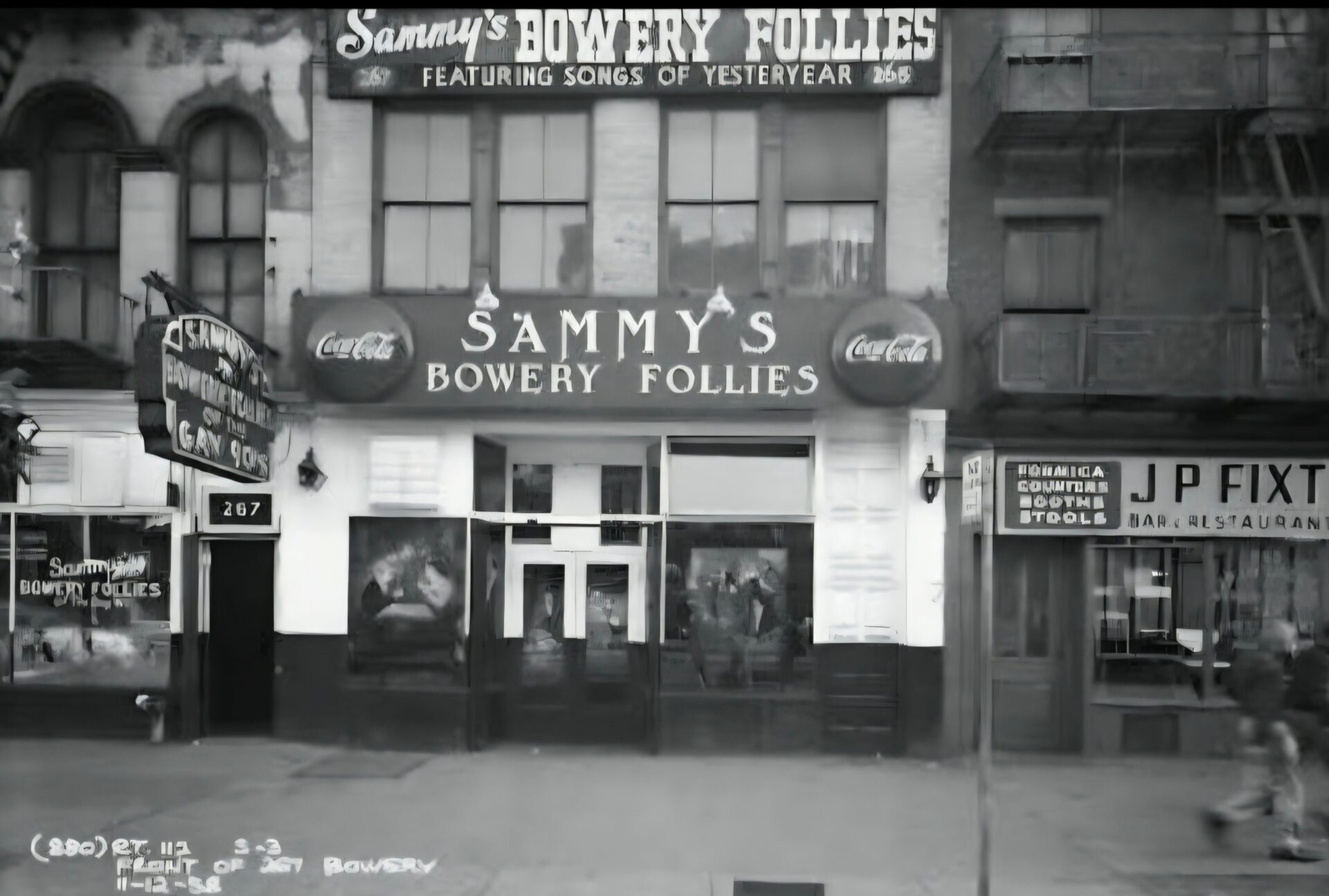
In 1934 Sammy Fuchs took over a grungy dive saloon with cheap beer located at 267 Bowery Street which attracted old school bums slumming it for a night.
Legend has it that it’s transformation began when a British Lord eager to escape the formality of Uptown establishments wandered through its doors. Inspired by his unlikely patron, Fuchs rebranded the venue as Sammy’s Bowery Follies, marketing it as the Stork Club of the Bowery, a playful nod to the exclusive Manhattan nightclub.
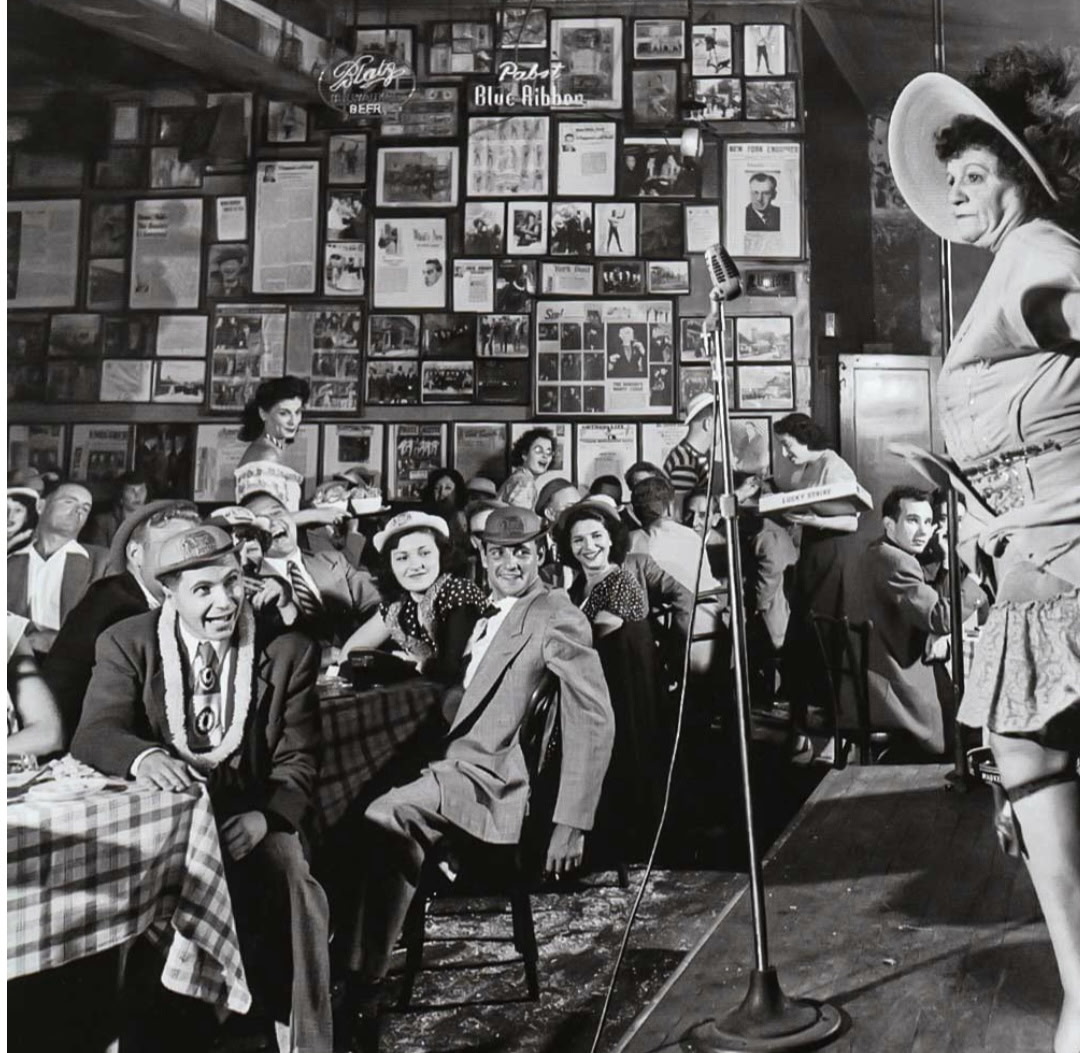
In the 1940s he acquired a cabaret license and the bar adopted a Gay 90s theme with a lineup of aging vaudeville performers that sang and danced for the crowds on sawdust covered floors.
Sammy didn’t try to civilize any of this he simply just gave it a stage.
Wild partying with zany variety shows where waiters delivered drinks while bellowing corny show tunes and cabaret sing-alongs with outrageous acts as celebrities and politicians came to sing and dance with hobos and experience the Bowery without committing to it long-term.
Society figures arrived in evening wear and sailors on longshore leave arrived in uniform and everyone drank together.
Most of the performers who had not heard applause in years suddenly found themselves center stage with names like Prune Juice Jenny, Boxcar Gussie and Tugboat Ethel, who was grandly known as the Oueen of the Bowery.
At Sammy’s a good nickname was better than a birth certificate. He kept these characters well fed and well-lubricated in return they provided the atmosphere tourists could not stop talking about. One regular said “Sammy never asked us to perform he just made sure we stayed”.
Sammy’s was open from 8 in the morning till 4 the next morning for the derelicts whose presence made the Bowery a universal symbol of poverty and futility.
New York travel guide books recommended it with a mixture of fascination as bus loads of tourists flocked there.
Sammy wasn’t a bad guy either, he became known as the “Mayor of the Bowery” where he established a “Bum of the Month” club helping to feed, clothe and sober up some of his most downtrodden customers and he even established a dental clinic for poor kids.
It became an easy hangout for photographers too, because nobody there was trying to be anything other than what they were.
Fuchs died in 1969 and the nightclub closed in 1970.










 Continue with Google