

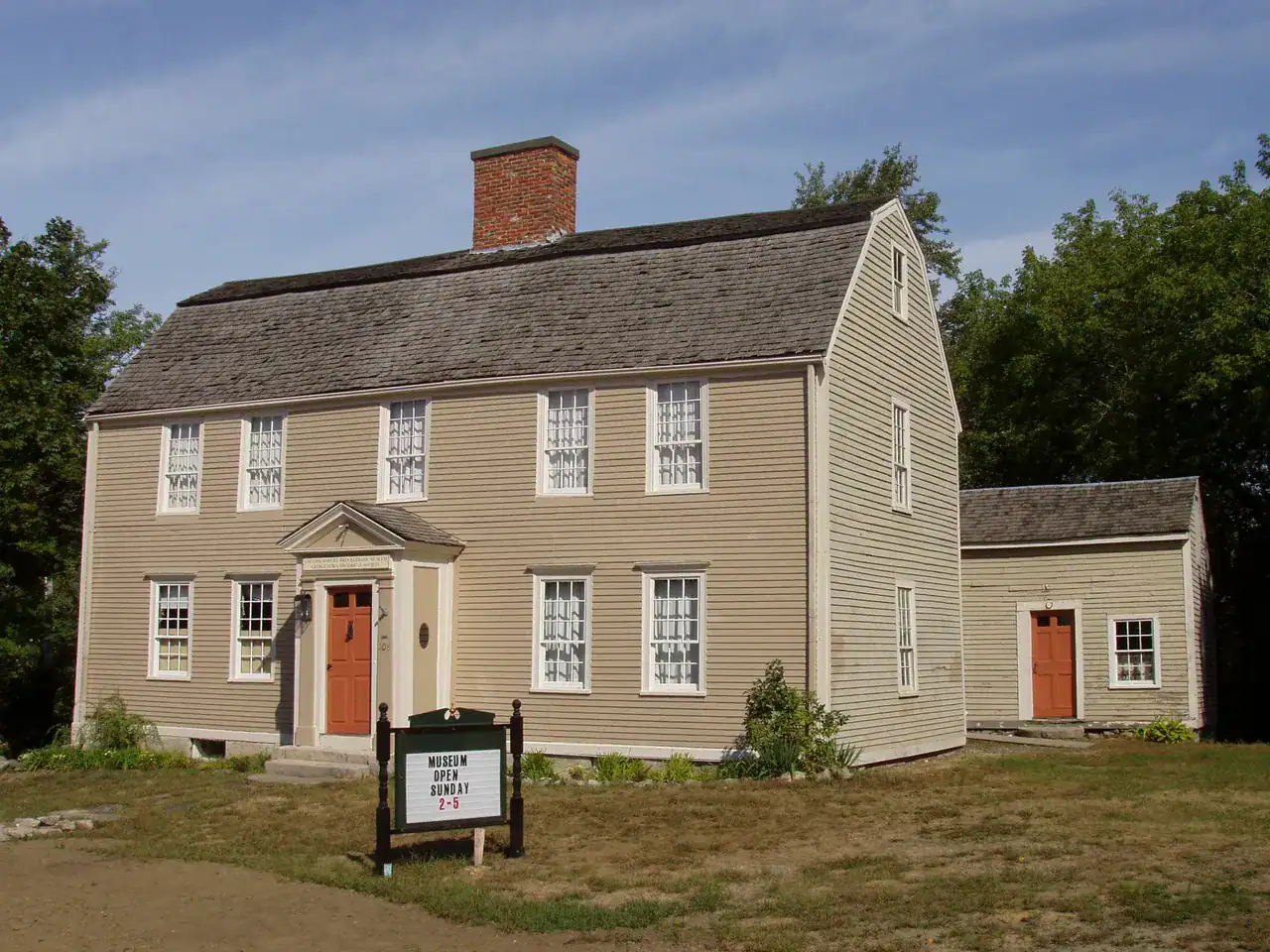
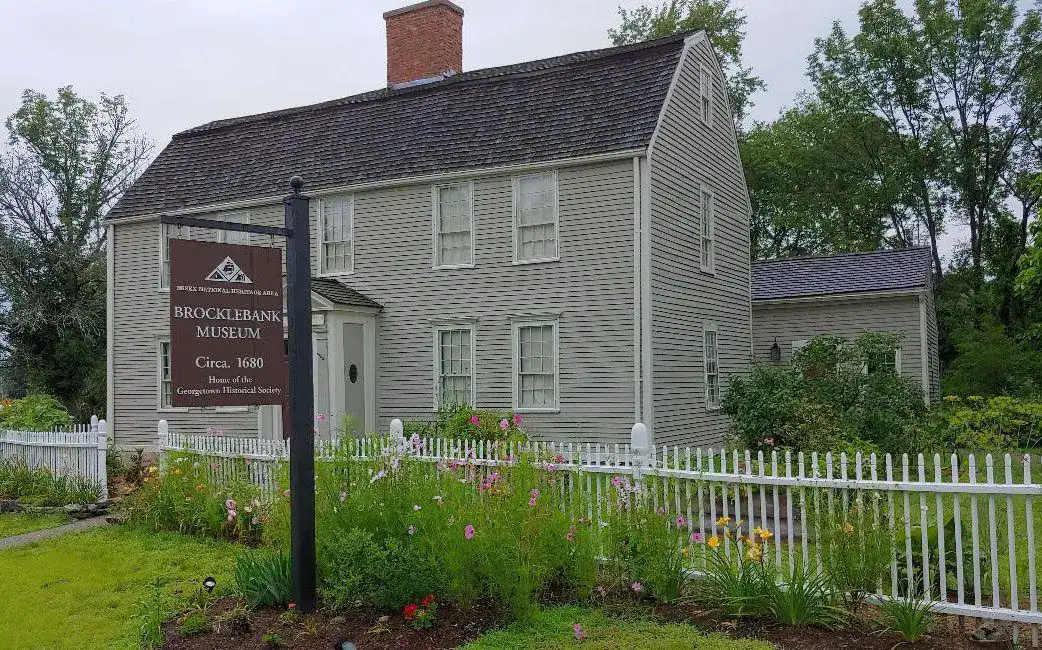
The Brocklebank Museum occupies the Brocklebank House, one of the oldest surviving structures in Georgetown. The core of the building dates to the late 17th century, widely cited as circa 1690, and is attributed to John Brocklebank, an early settler whose family played a significant role in the area’s colonial development. The house stands on Brocklebank Hill, a location that remained tied to the family name for centuries.
The structure reflects early New England domestic architecture, with a central chimney plan and timber framing typical of the period. Over time, the house was expanded and modified, but its early form remains legible. Surviving elements include exposed beams, wide plank floors, and low ceiling heights consistent with 17th- and early 18th-century construction. These features place the Brocklebank House firmly in the first generation of permanent English settlement architecture in the region.
The house later became a museum under the stewardship of the Georgetown Historical Society, preserving both the building and its connection to local history. Furnishings and artifacts displayed inside focus on daily life in colonial and early American Georgetown, rather than grand narratives or decorative excess. The emphasis remains on continuity, occupation, and survival in a working agricultural community.
Today, the Brocklebank Museum functions as a rare physical record of Georgetown’s earliest years. Unlike larger or more heavily restored historic houses, the Brocklebank House retains a restrained, utilitarian character. Its survival offers a direct architectural link to the town’s 17th-century origins, standing largely unchanged in scale and intent while the surrounding landscape evolved.








 Continue with Google