

Sunflower Field in Raleigh Brings Healing
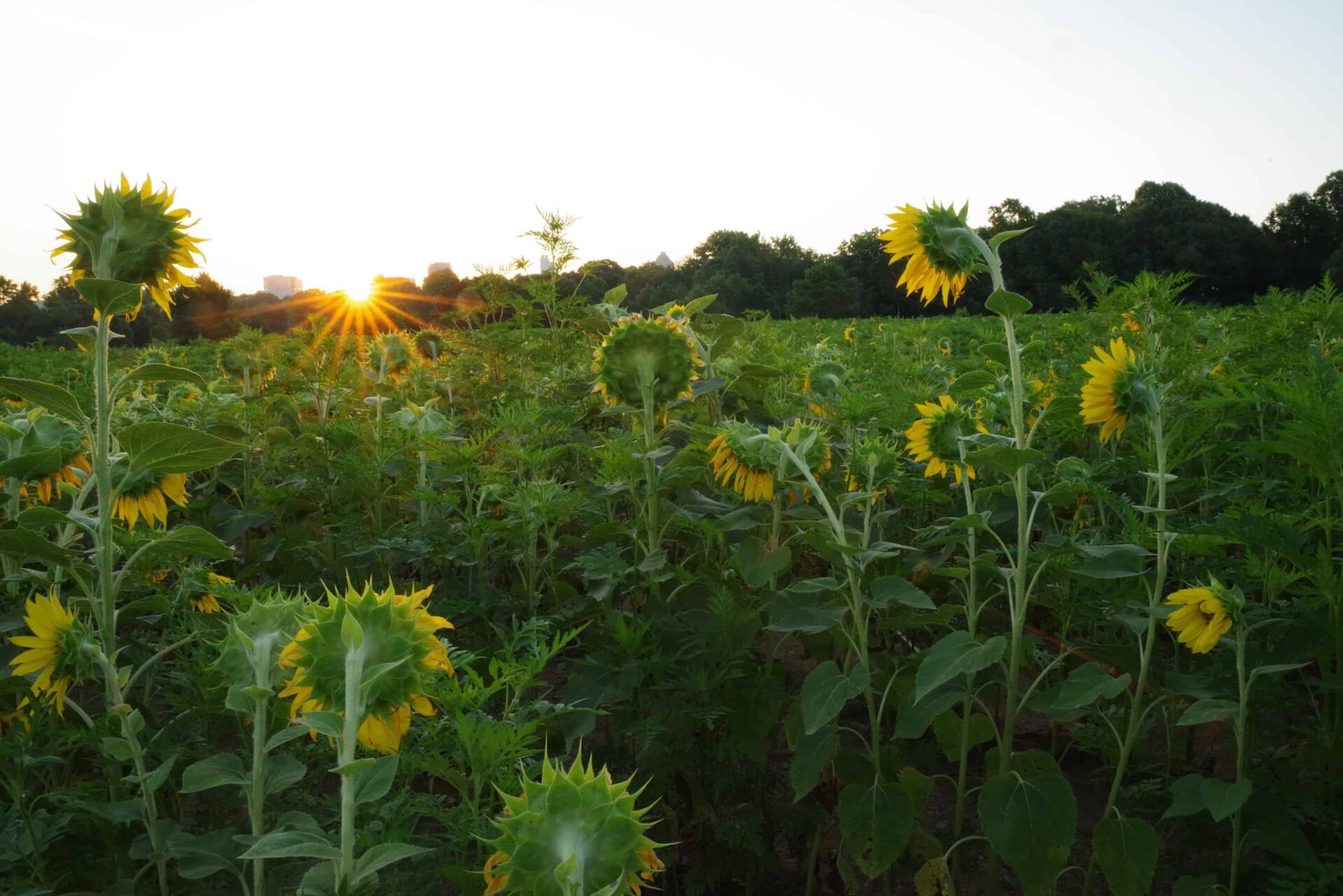
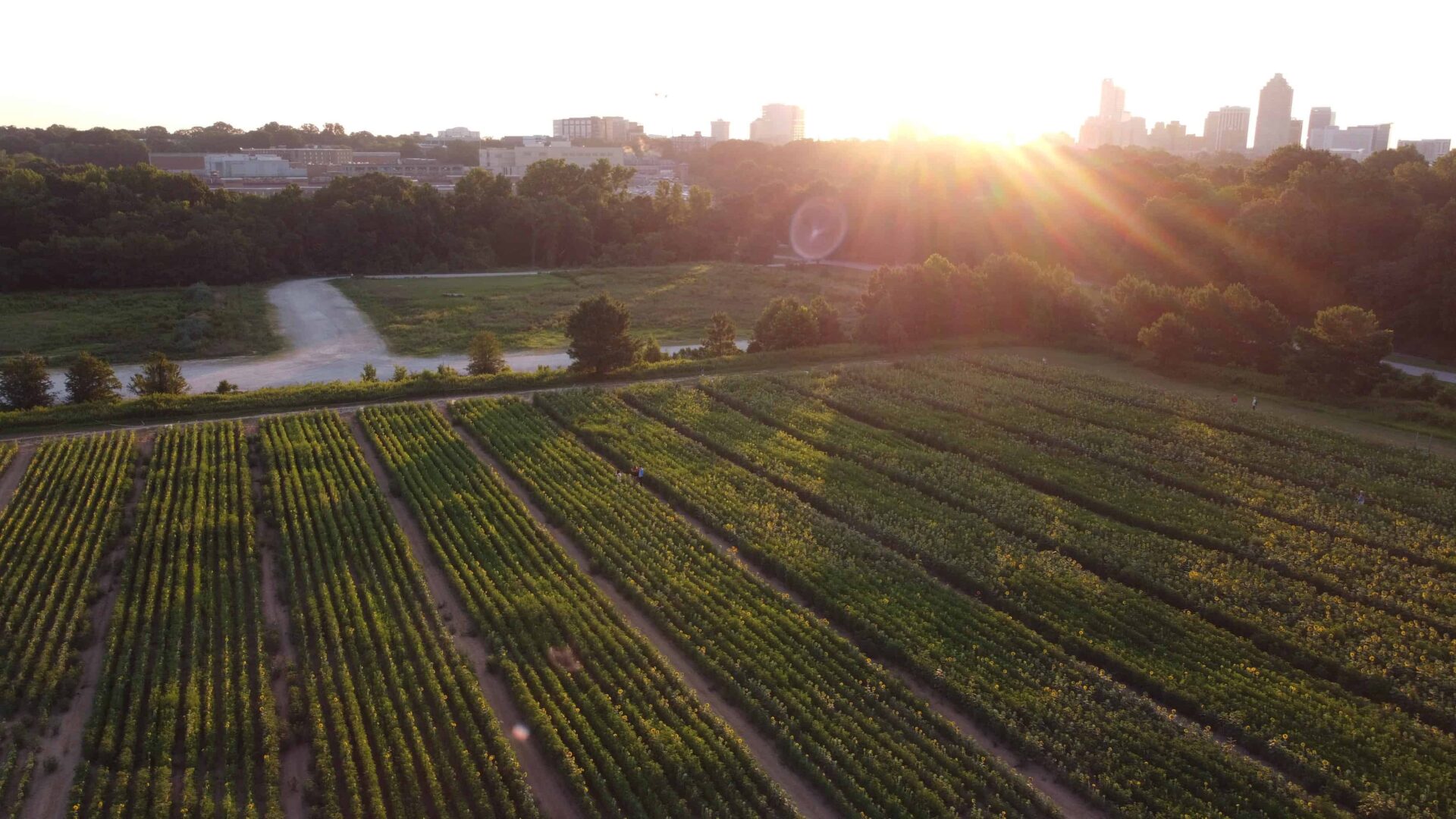
At Dorothea Dix Park, 198,000 sunflower seeds were planted and maintained this year by the Raleigh Water utility. The results were impressive! Initiated in 2018, but paused in 2020 and 2021 for COVID, the Sunflower Field initiative is a draw for city dwellers and tourists like me. Mothers take photos of their children in front of the massive blooms. Lovers take selfies with their arms around one another in a sea of yellow. People come dressed for formal portraits. Photographers prize the golden hours around dawn and dusk to get their perfect shots. Dog walkers pause as they pass through on their way to the Dog Park just to take in the spectacle.
After they fade, the sunflowers are harvested to process biodiesel for educational programs and demonstrations. Beyond biofuel, the benefit of sunflowers is the way they attract pollinators along with the human gawkers. Five acres of sunflowers in the field at Dix Park is a massive magnet for bees and butterflies! Appropriately, the sunflowers start to bloom during National Pollinator Week in June. The field even attracted a pair of rare scarlet tanagers and an even rarer pair of indigo buntings to town on successive days when I visited, leading the birders to fall all over themselves to get a photo, hear a song and marvel at their unmistakable avian colors.
Dorothea Dix Park served as 160 years as North Carolina’s first “Asylum” (Mental Hospital), was renamed named in Dorothea Dix’s honor in 1956. Prior to that, the land was occupied by the Spring Hill Plantation, where farm labor was done by slaves from Africa, enslaved indigenous people, and their offspring. Now the Park is run as a public private partnership between the City of Raleigh and a 501-C-3 that supports programming, takes the lead on publicity and outreach, and raises funds for major initiatives. Because of the legacy of the “Asylum”, the Park is also the Headquarters of the NC Department of Health and Human Services, and houses many of its branches on more than 500 acres.
Parts of the history of the place are dark and regrettable, but rather than turn away or ignore the past, Dorothea Dix Park “strives to turn memory into action in ways that let (it) draw on the past to paint a better future”.The DHHS campus architecture is also regrettable, with windows that were welded with metal bars to prevent escape, barbed wire in the courtyards, and a gloomy and brutal utilitarianism found all too frequently in state-run facilities. It will take decades to slowly dismantle those design and aesthetic failures.
Dorothea Lynde Dix was a tireless reformer for mental health in the 1840s until her death in 1887. She was one of the first to attribute mental illness to natural causes, rather than supernatural ones. “Lunacy Reform” was made more difficult for her because many vested interests at the time coveted the profitability of displaying lunatics to the paying public, and Dix’s inability to vote or hold office as a woman. The theme of planting sunflowers in the Park where so many awful acts took place seems a brilliant way to begin to “paint a better future”.
Peter Evans Jul 21, 2022 Raleigh NC Agriculture History Parks

Jul 21, 2022

SHARE