

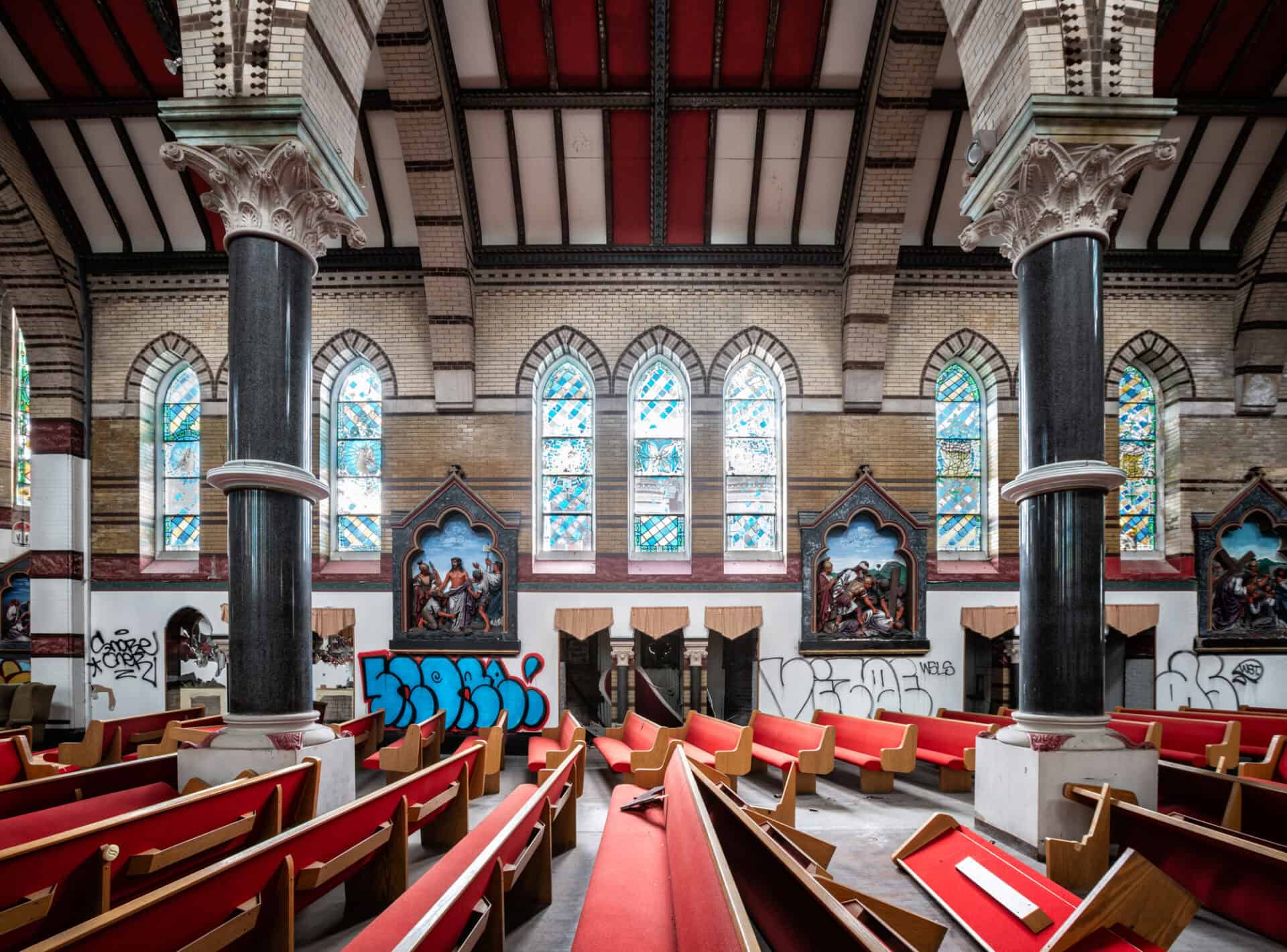
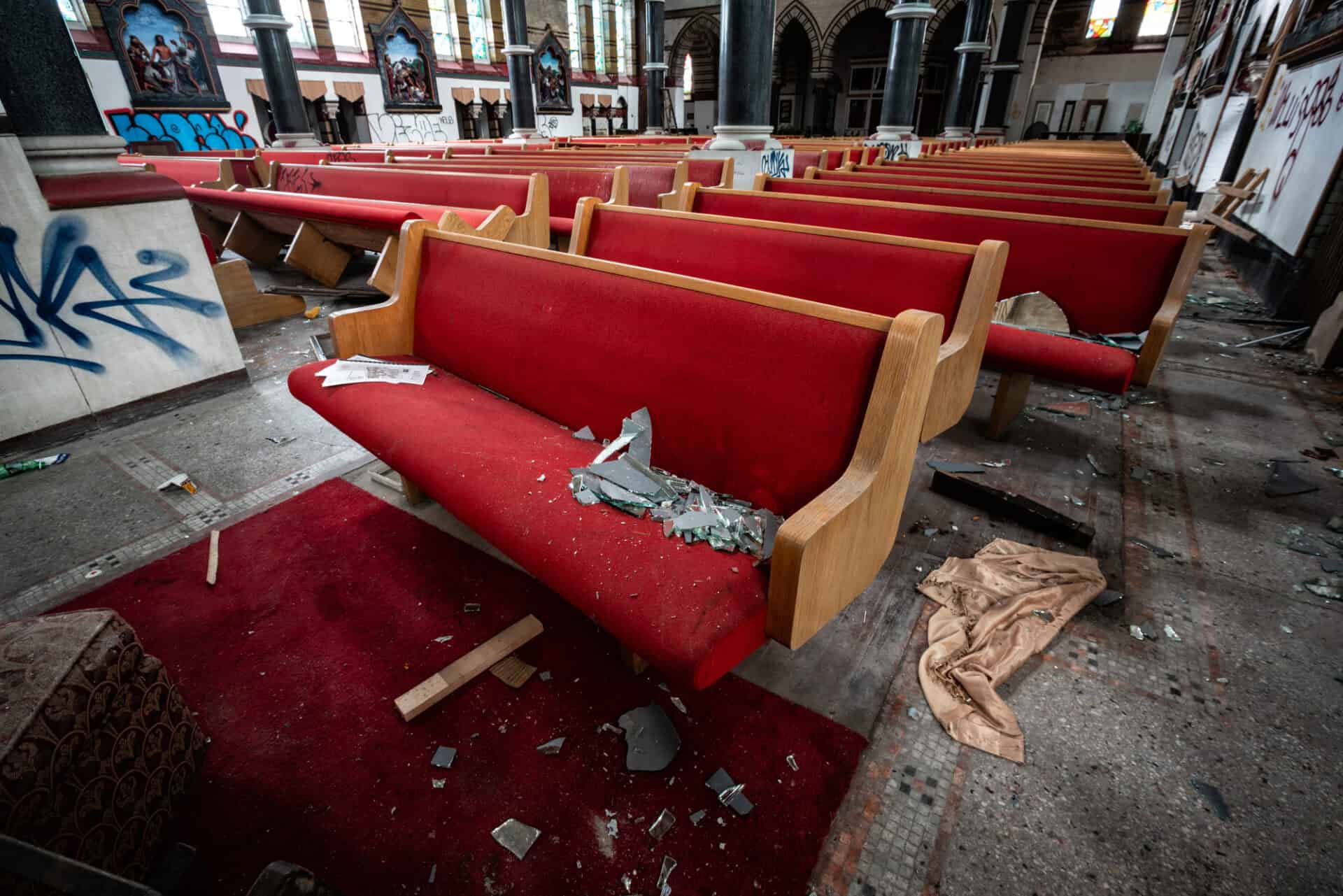
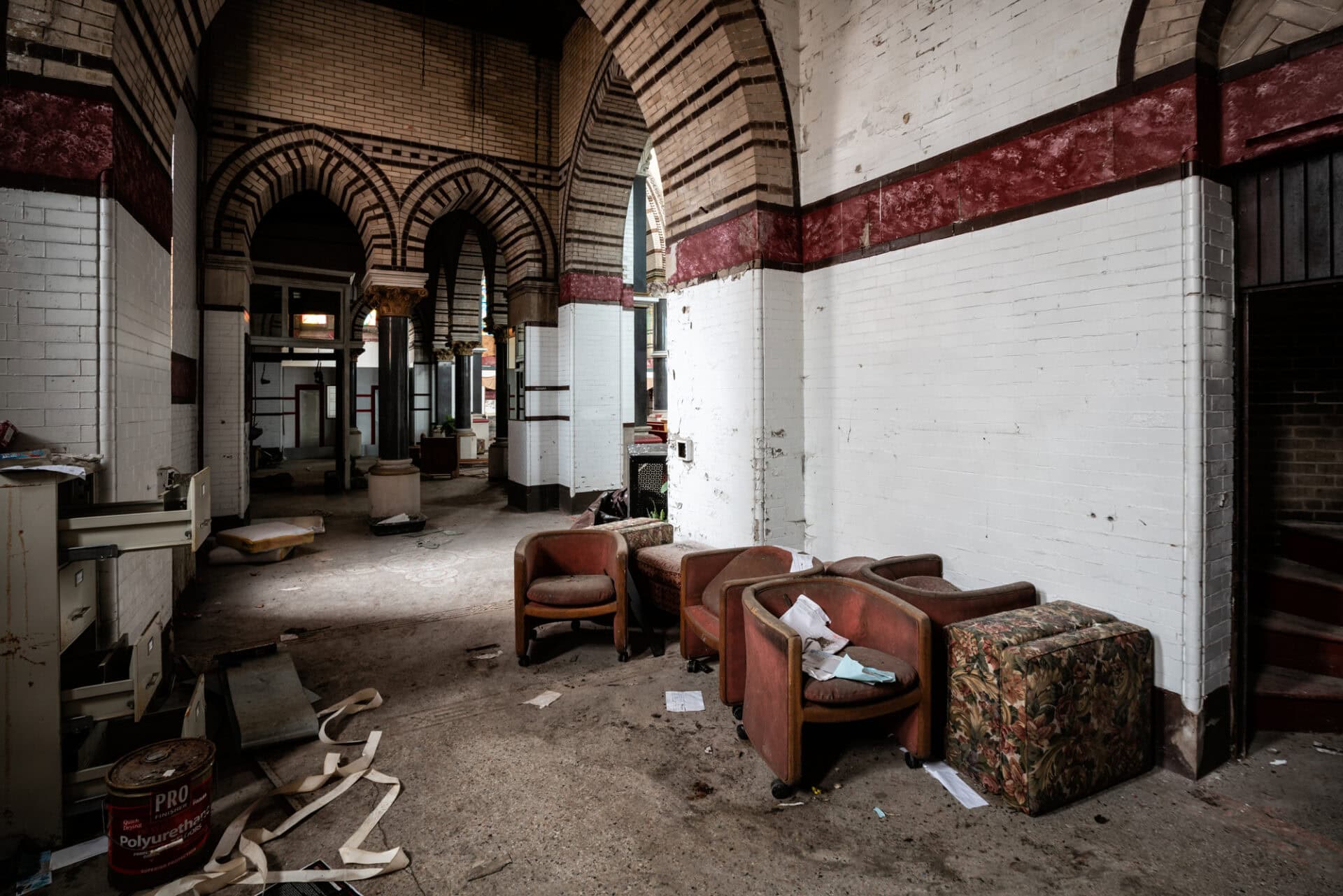
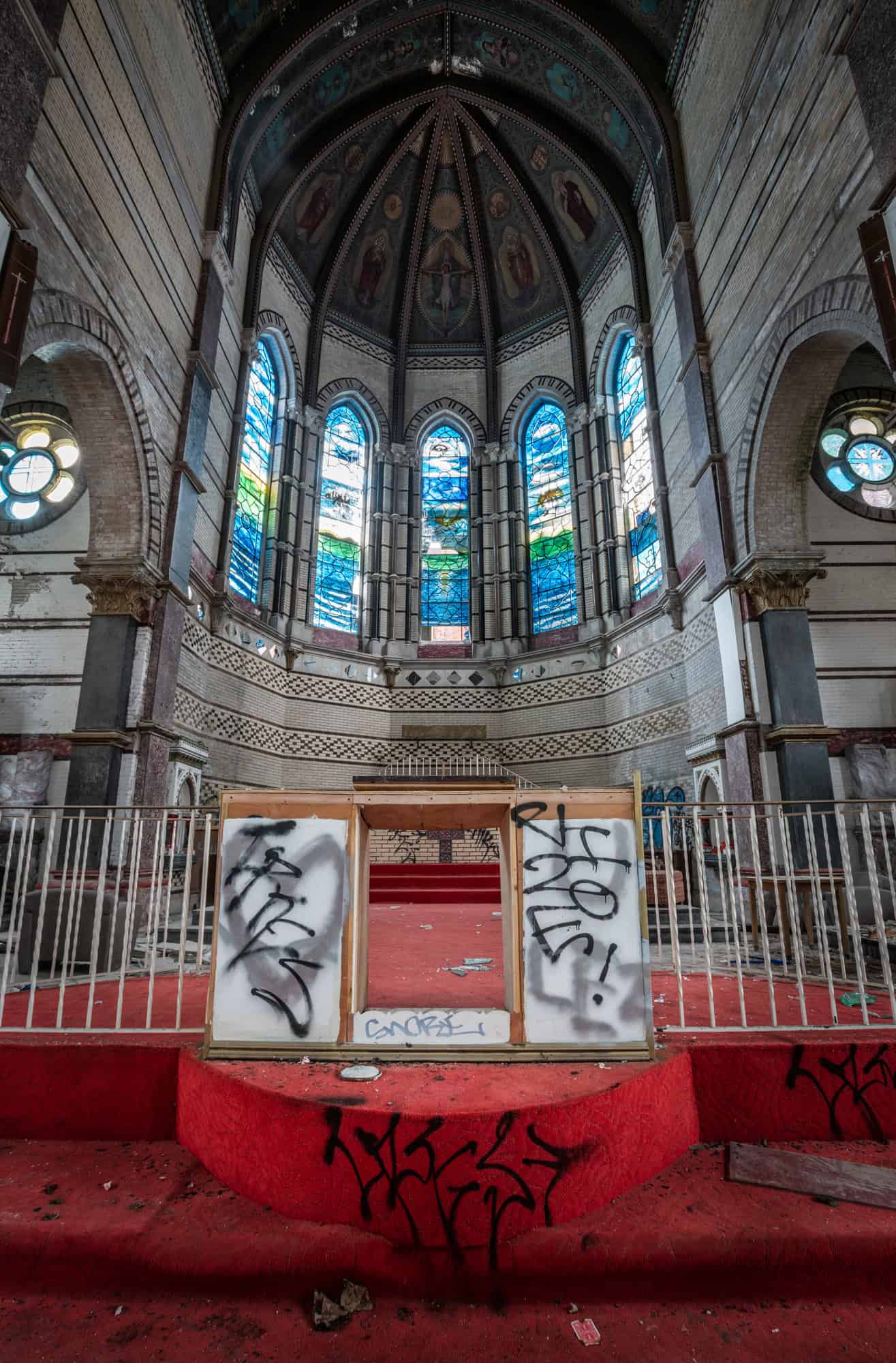
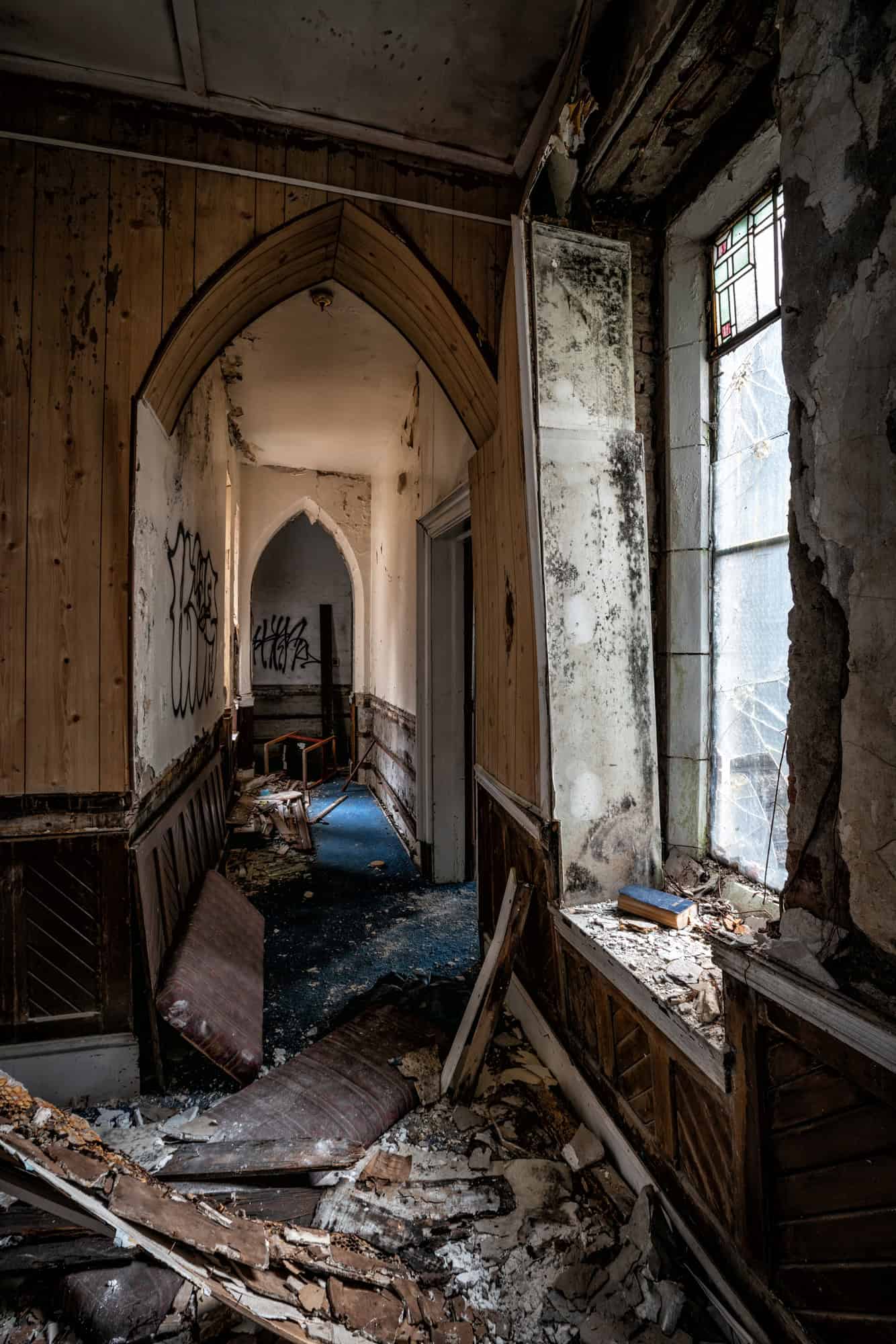
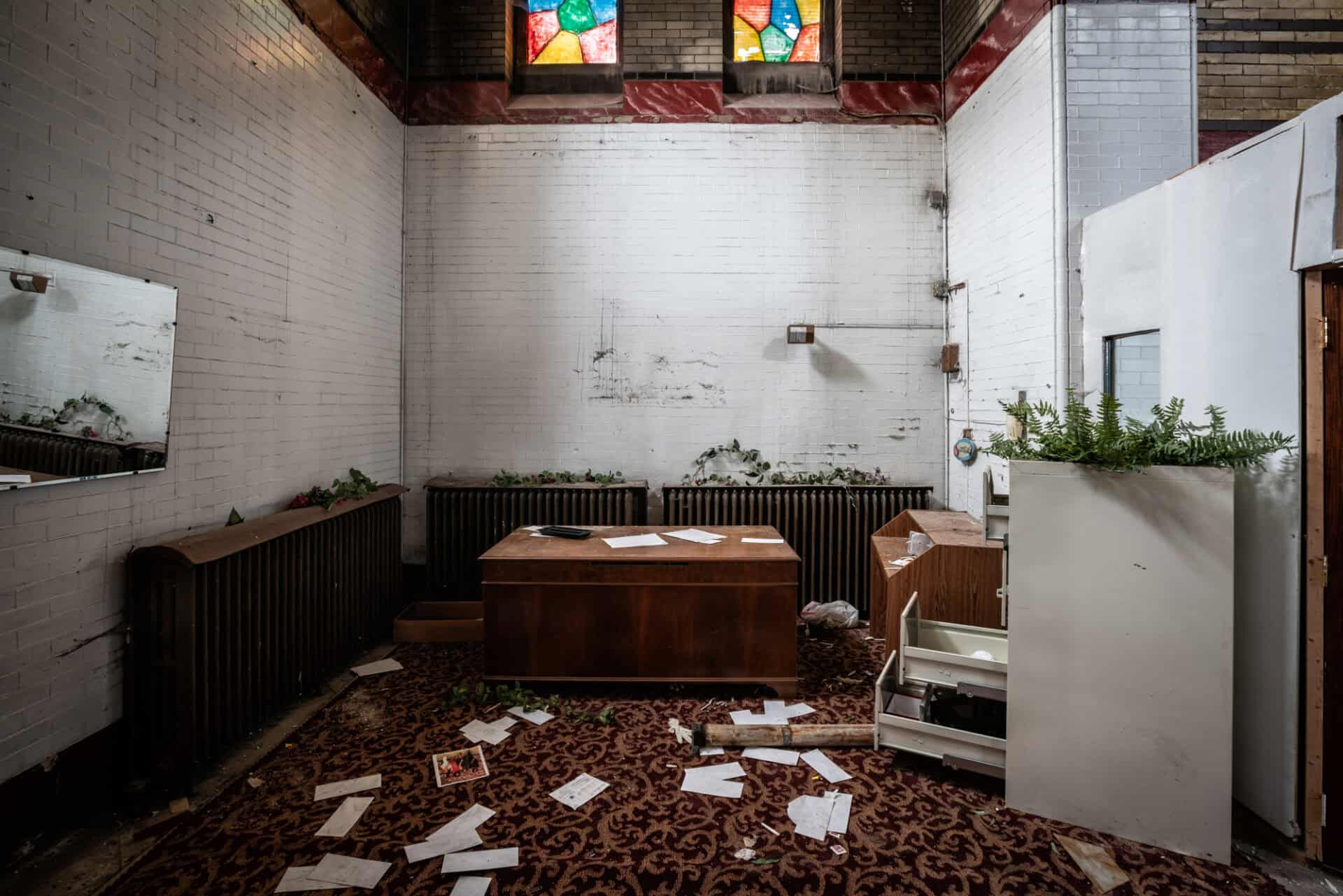
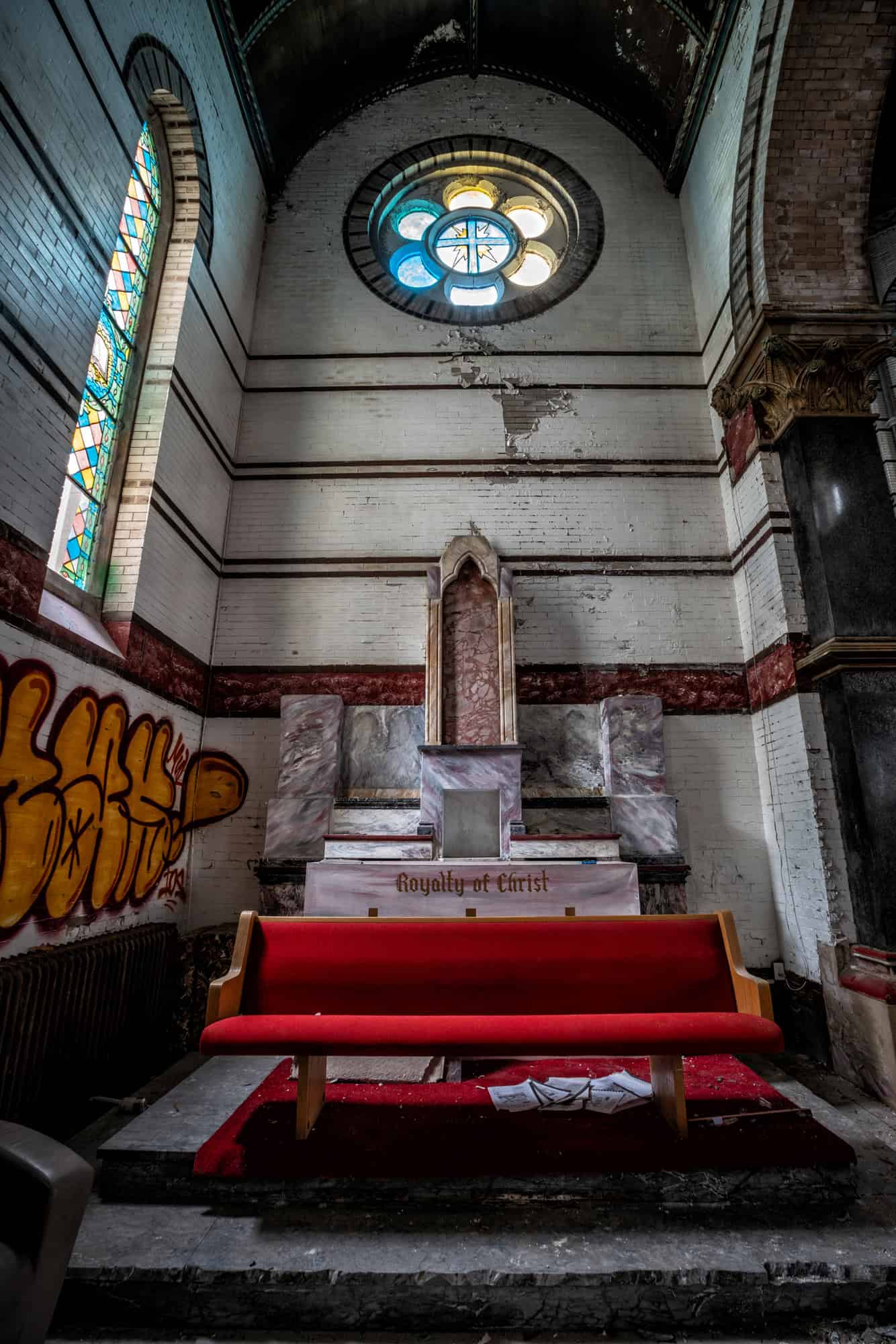
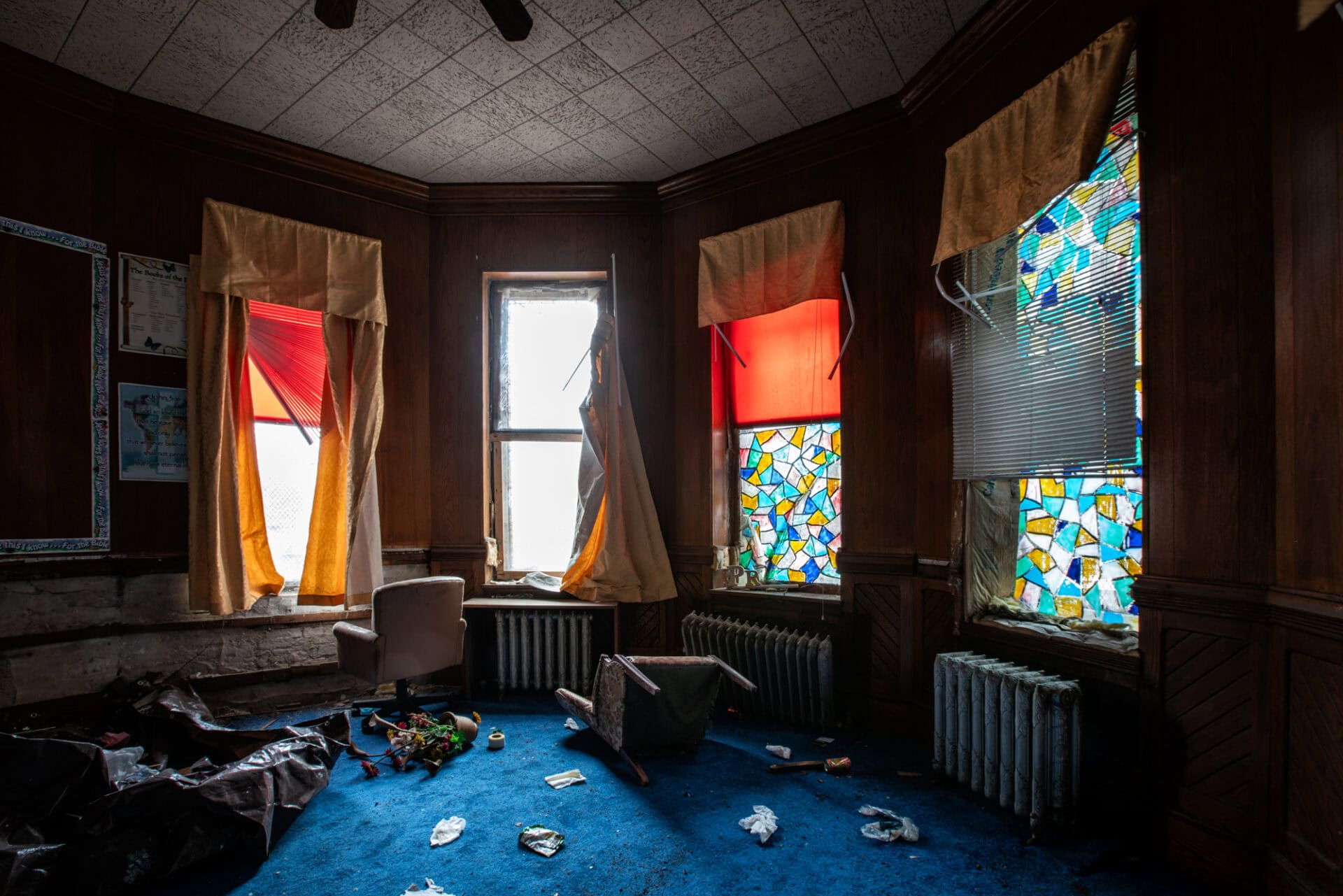
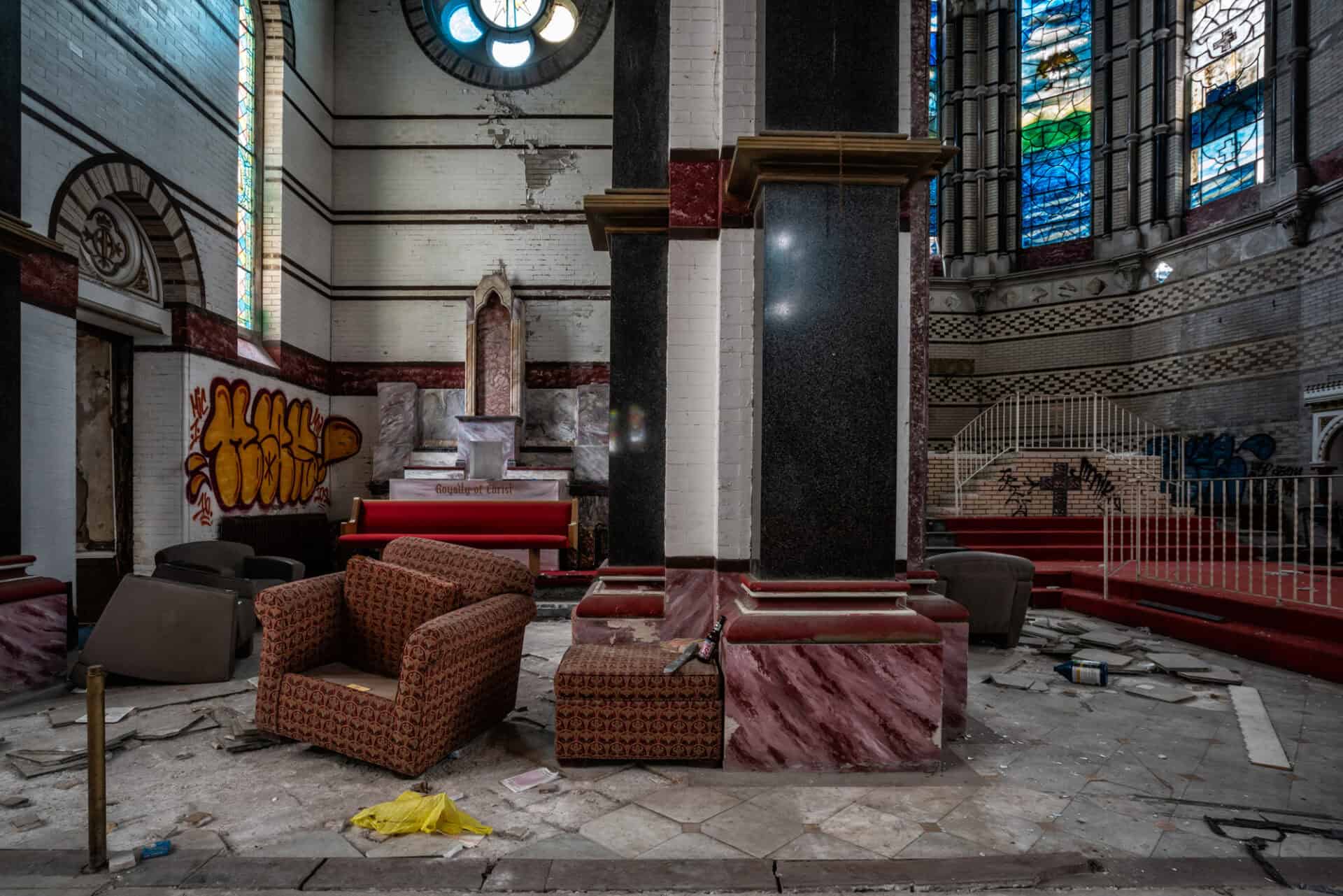
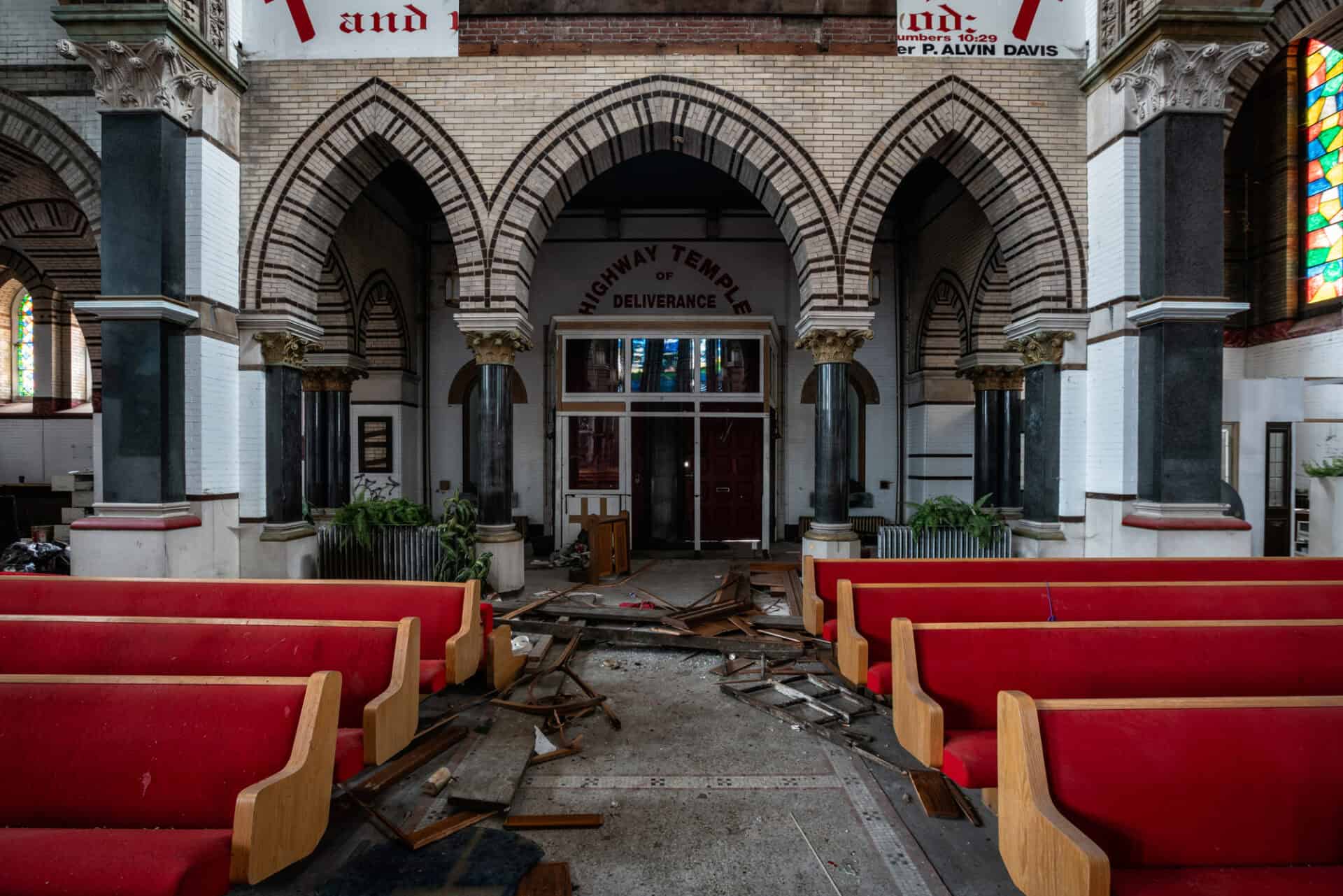
Located at 8th and York Streets, the Church of St. Edward the Confessor has long stood as a defining feature of North Philadelphia’s religious and architectural landscape. Though the site originally held an Episcopal church, it was acquired by the Catholic Archdiocese in the late 19th century to meet the spiritual needs of a growing immigrant population. In 1903, the current church was built to replace the earlier structure. Designed by Scottish-American architect George Ashdown Audsley, the building reflects the Neo-Gothic style common among churches of its era, with a soaring 137-foot tower, a central rose window, and three grand entrances (source). The design also features a traditional layout of nave and side aisles, intended to evoke the grandeur of medieval cathedrals.
Role in the Community
Once completed, St. Edward quickly became a center of community life in the surrounding neighborhood. In 1913, it hosted a local chapter of the Holy Name Society, emphasizing its commitment to faith-based charity and fellowship. Like many Catholic parishes at the time, it also operated a parochial school. Run by the Sisters of the Holy Child Jesus, the school saw peak enrollment in 1970 with over 1,500 students—a number that dropped dramatically within a few years as demographic shifts and economic challenges affected the area.
Legacy of the Name
St. Edward the Confessor Church is named after Edward the Confessor, one of the last Anglo-Saxon kings of England, who ruled from 1042 until his death in 1066. Deeply pious and known for his gentle nature, Edward was called a “confessor” because of his saintly life, not martyrdom. His reign was relatively peaceful, though he died without an heir, setting off a succession crisis that led to the Norman Conquest.
Edward was canonized by Pope Alexander III in 1161, and for centuries, he was regarded as a national saint of England. His legacy as a spiritual king made him a symbol of Christian virtue and devotion. His feast day, October 13, is still observed by both the Catholic and Anglican churches.
By naming the church after Edward, the parish aligned itself with a figure known for humility, justice, and unwavering faith—qualities that resonated with the immigrant community it served. In a rapidly changing city, the choice reflected a desire for spiritual continuity and moral grounding.
Cultural Significance and Decline
Beyond its religious function, the church earned wider cultural recognition. In 1982, it served as a filming location for Fighting Back, a movie that depicted urban struggles in Philadelphia. Yet by the early 1990s, like many inner-city parishes, St. Edward faced dwindling attendance and financial strain. The Archdiocese closed the parish in 1993, part of a broader consolidation effort.
Reinvention and Uncertain Future
After closure, the building became a site for activism and shelter. Anti-homelessness advocates occupied the church in the mid-1990s and again in 2020, calling attention to housing insecurity in the city. Though a Pentecostal congregation briefly took over in the late 1990s, they ultimately couldn’t maintain the structure, and the property went back on the market in 2013. It remains privately owned, its future uncertain.










 Continue with Google