

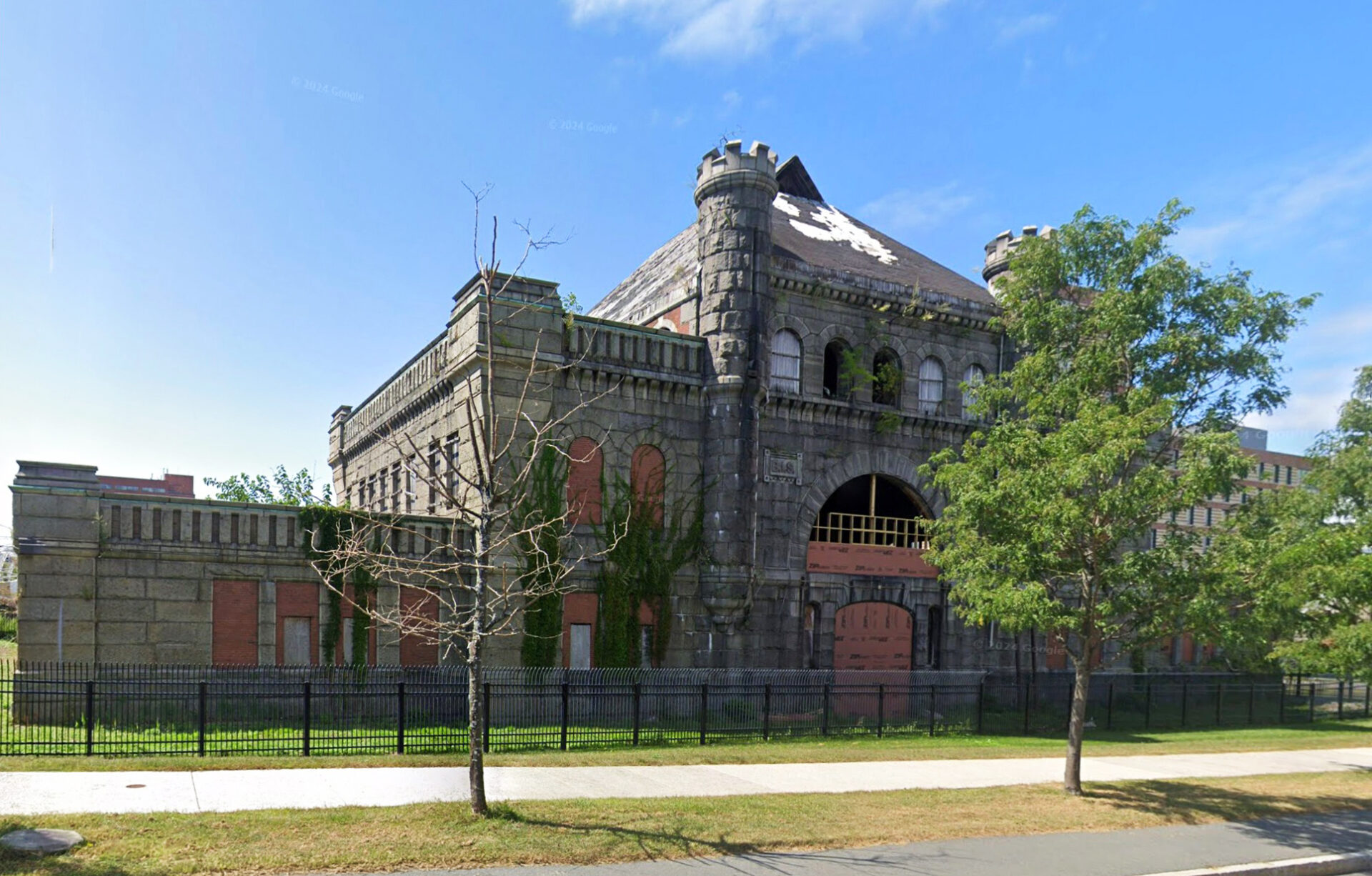
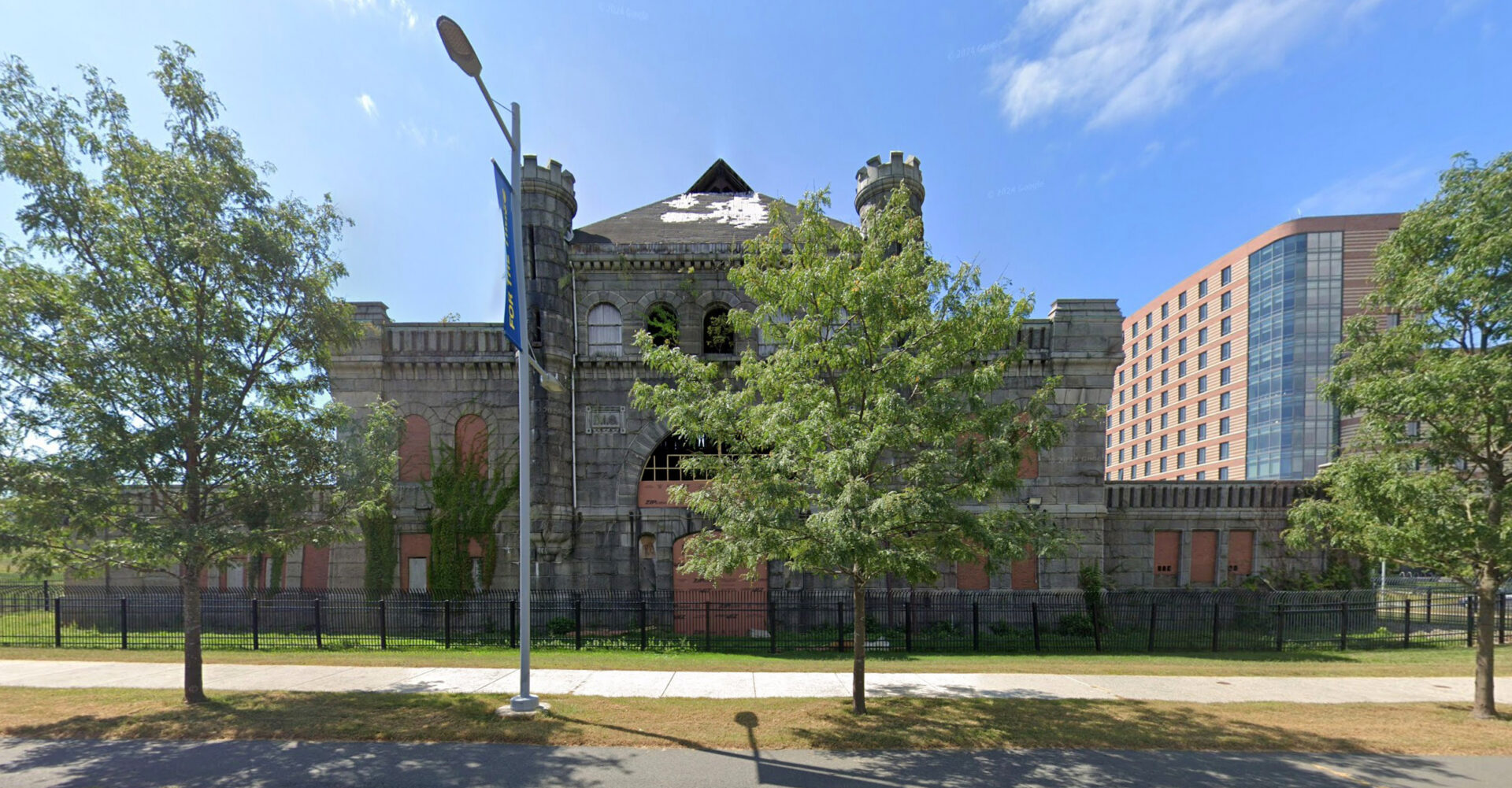
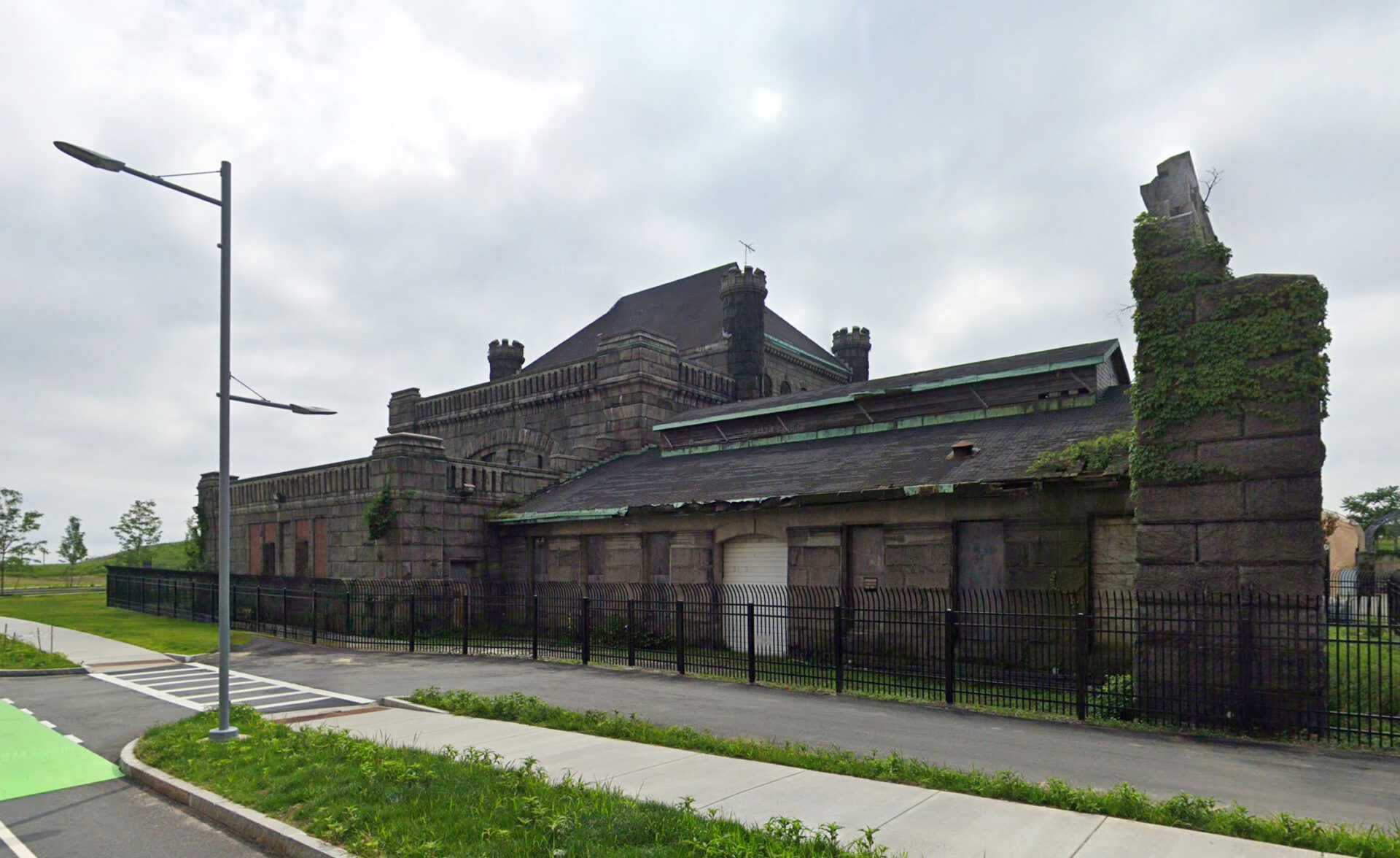
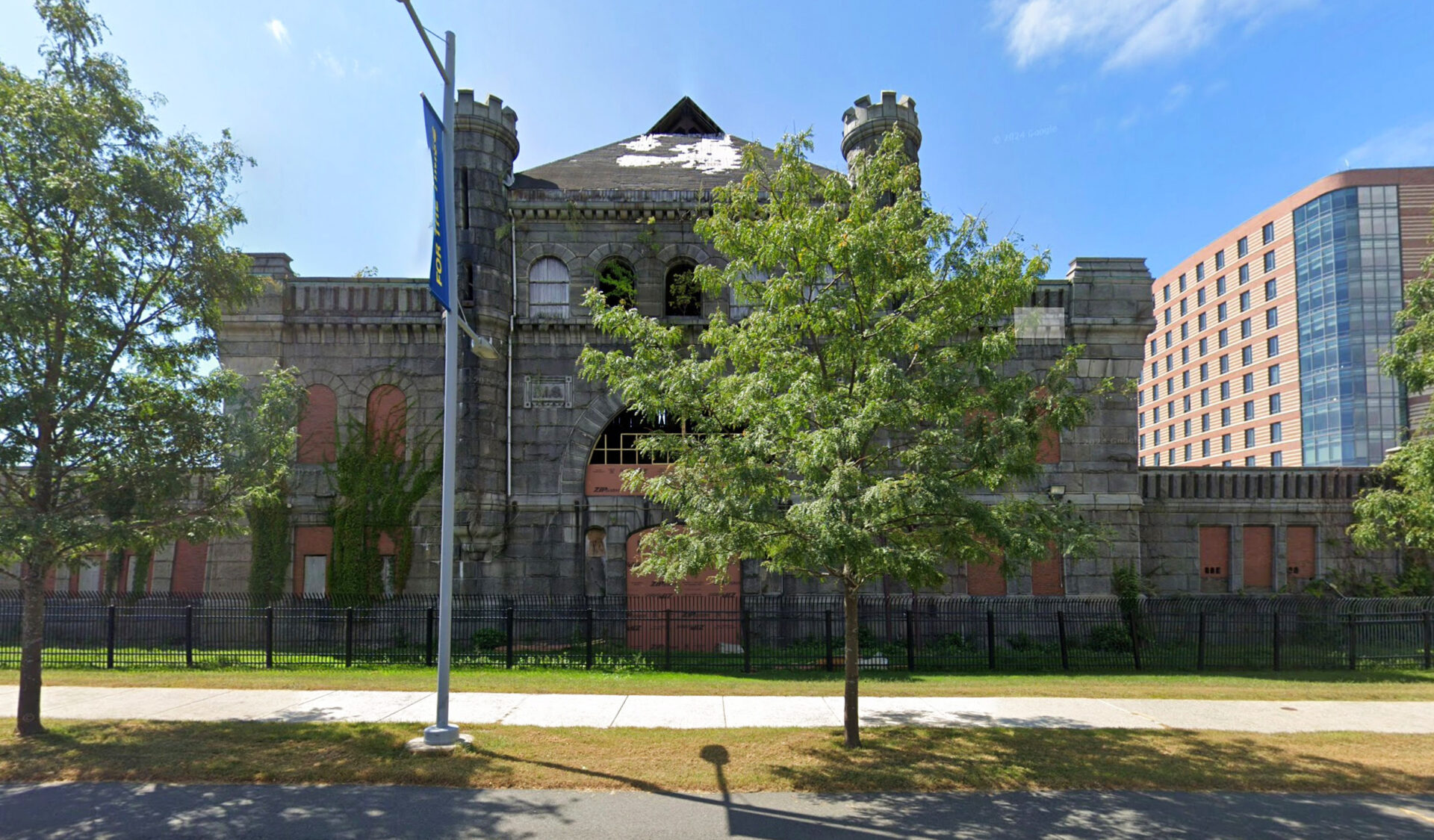
The Calf Pasture Pumping Station was completed in 1883 on what was then a largely undeveloped section of Columbia Point. Designed by Boston City Architect George A. Clough, the complex included the main pumping station, a gate house and filth hoist, and a separate shaft entrance on the waterfront. All three were designed in the Romanesque Revival style and formed part of Boston’s first comprehensive sewerage system.
Before the system opened, Boston’s growing population had overwhelmed its old patchwork of sewers. Raw sewage emptied along the shoreline, backed up during high tides, and created serious public health problems. The new $6.5 million drainage system collected sewage from around the city and carried it to Calf Pasture, where the pumping station raised it about 35 feet before gravity carried it through a tunnel to Moon Island. There, it was stored in reservoirs and released into Boston Harbor with the outgoing tide. Not a perfect solution by modern standards, but a major improvement over leaving it along the city’s shoreline.
The station originally used two enormous steam-powered Leavitt engines for daily operation and two Worthington engines for storm service. The Leavitt engines were among the largest in the world when installed. Each had a 36-foot flywheel weighing more than 72 tons and was rated to pump 25 million gallons per day. The station remained in active service until 1968, when the Deer Island treatment plant took over the system, though Calf Pasture continued serving as a backup during heavy storms.
The complex was listed on the National Register of Historic Places in 1990 and is now owned by the Commonwealth of Massachusetts and managed by UMass Boston. The buildings remain vacant. In November 2024, the Boston Landmarks Commission voted to designate the complex as a Boston Landmark. After more than 140 years, the old pumping station still looks slightly out of place on the modern UMass campus, which is part of what makes it worth stopping for.











 Continue with Google