

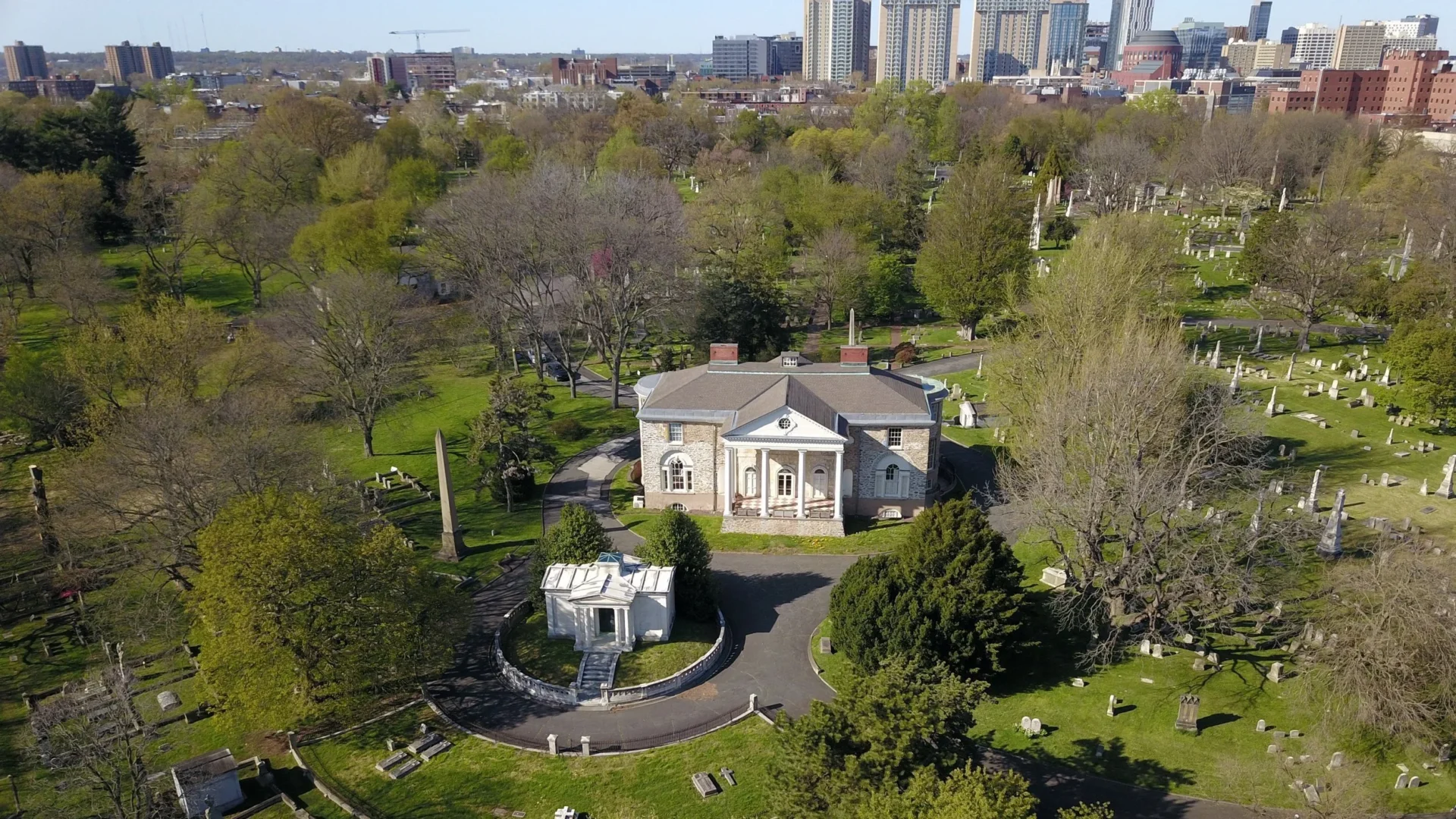
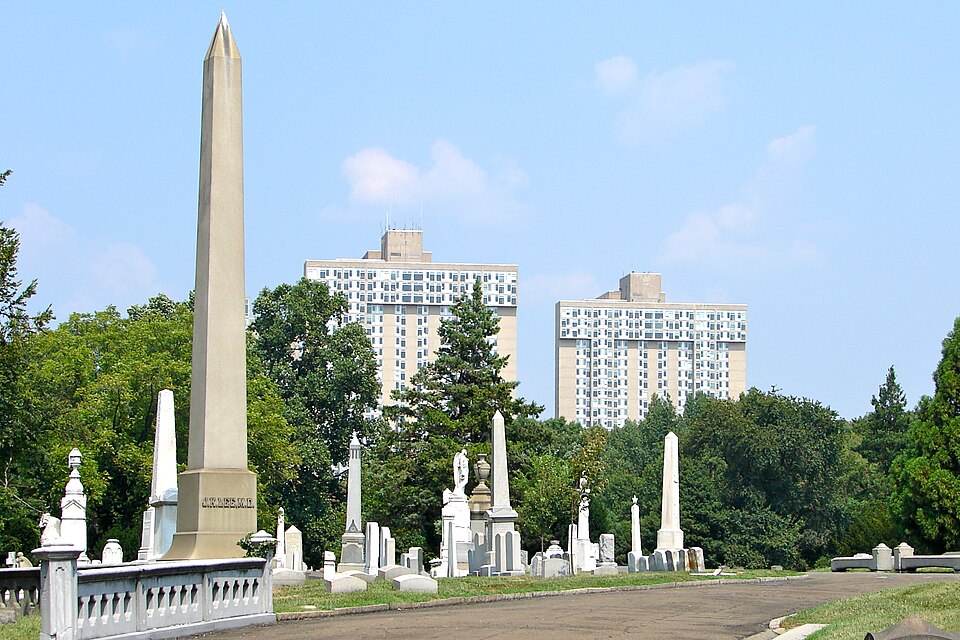
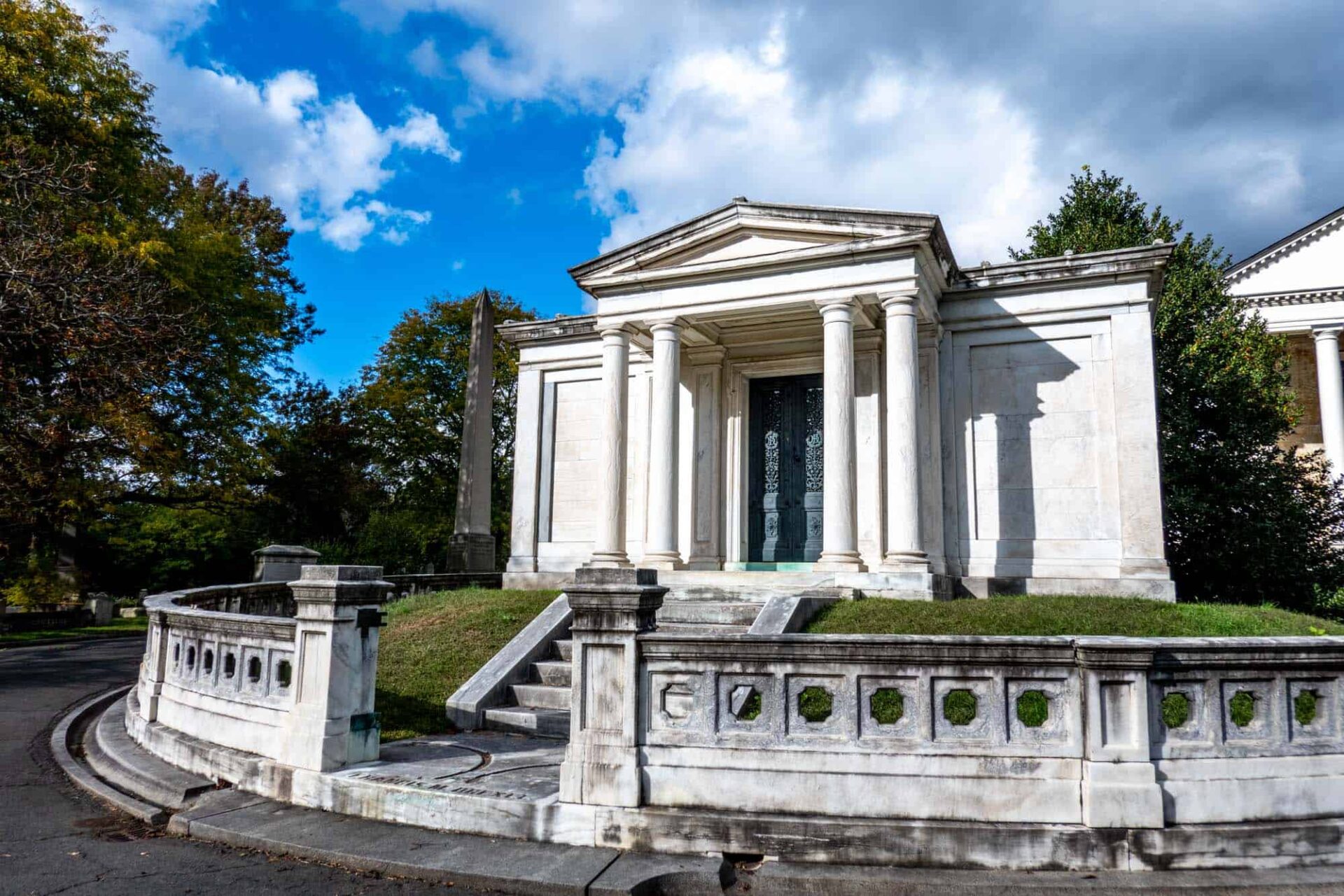
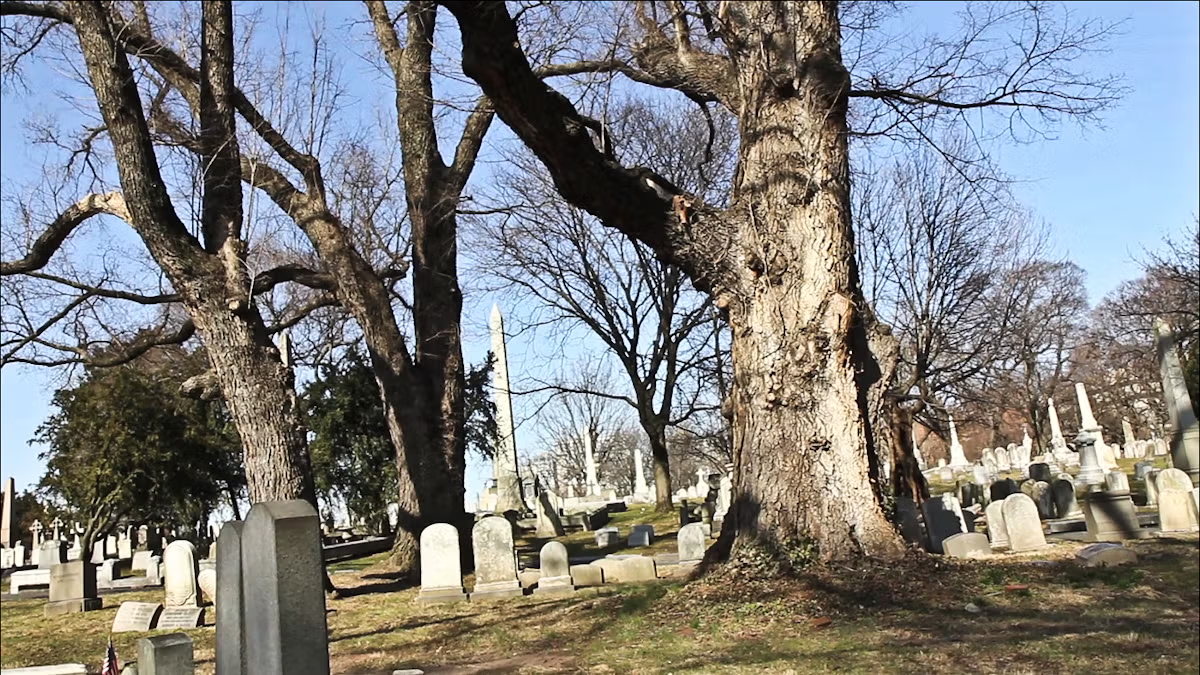
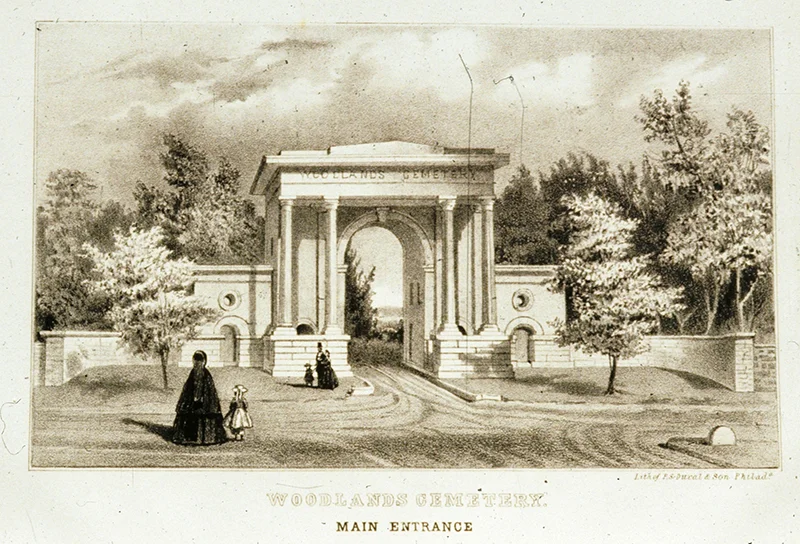
Positioned right on the Schuylkill River, on the western side of Philadelphia, sits a large 18th century Neoclassical mansion surrounded by a scattered array of headstones. The mansion was built in 1770 by William Hamilton, grandson of the famous Philadelphia lawyer Andrew Hamilton. The Woodlands Mansion became a symbol of American prosperity following the American Revolution and would inspire architectural trends in the coming century. Hamilton was a botanist and collector of rare plants. Greenhouses on the Woodlands property once boasted a collection of ten thousand different species. At its maximum, the estate covered six hundred acres of land, encroaching onto what is now center city Philadelphia.
Following Hamilton’s death in 1813, much of the Hamilton estate was sold off. At the same time, the surrounding area of West Philadelphia underwent a rapid urbanization, as the area grew in popularity during the early 19th century. In 1840, in order to save the Hamilton estate from demolition, The Woodlands Cemetery Company, in which the property gets its name, purchased 95 acres of land which included the Woodland Mansion. The cemetery company viewed the imposing property, with its exotic flora collection, to be an ideal location for what, at the time, rural cemetery.
The Woodlands Cemetery would over the centuries attract renowned industrialists, artists, writers, and common visitors. Many individuals have been entranced by the cemetery’s unique location and history. Much of the cemetery’s modern appeal comes from their large amount of notable burials. The cemetery currently has over 32,000 internments and still accepts new internments. But some of their most notable burials are the following:
John Joseph Abercrombie (1798-1877): a decorated Civil War Brigadier General
Tatsui Baba (1850-1888): a Japanese political advocate for the democratic movement in Japan.
Robert Beath (1839-1914): Lieutenant Colonel commander of African-American Union troops during the Civil War
Anthony Joseph Drexel (1826–1893): founder of Drexel University
Joseph William Drexel (1833–1888): banker, trustee of the Metropolitan Museum of Art and the U.S. National Academy of Sciences, and director of the Metropolitan Opera house
Thomas Eakins (1844–1916): Notable American realism painter
Rembrandt Peale (1778–1860): Prolific portrait painter
Thomas Alexander Scott (1823–1881): president of the Pennsylvania Railroad
Samuel Waugh (1814–1885): Painter of both Abraham Lincoln and Ulysses S. Grant’s presidential portraits
William Williams Keen (1837–1932): first U.S. brain surgeon
And this list is quite limited, as it contains only a fraction of notable burials at the Woodlands Cemetery, you can find the rest by visiting their website. Today the cemetery is open for visitation from dawn till dusk, seven days a week, with free admission. If necessary, their office hours are available from 9am-5pm Monday-Friday.










 Continue with Google