

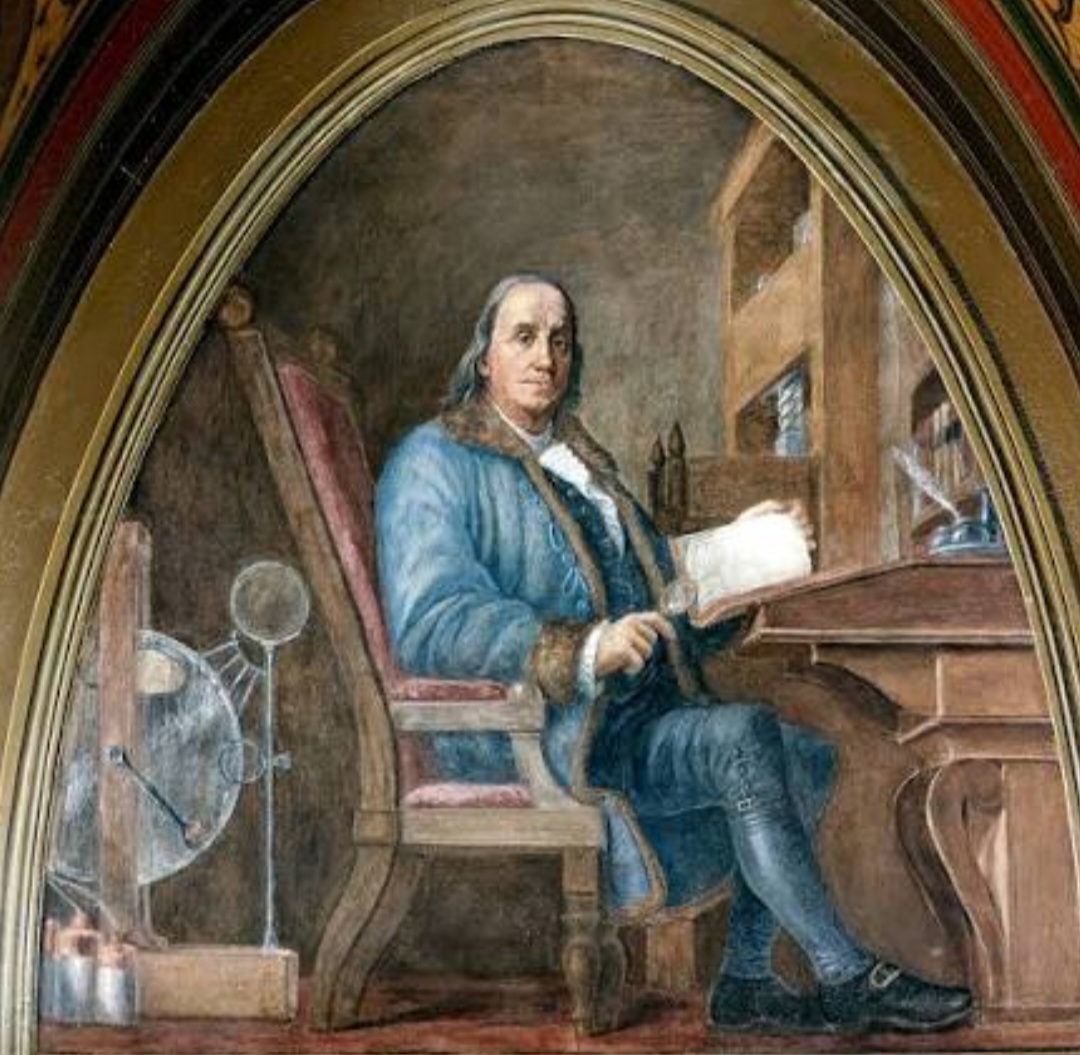

Most people today know Benjamin Franklin from his face on the $100 bill that honors his massive role as a Founding Father, diplomat, writer, scientist and thinker, even though he was never a United States President.
His inventions include the lightning rod, bifocal glasses and the Franklin stove, but he also founded civic institutions such as America’s first public library and the US Postal Service.
His writings in Poor Richards Almanac reflect his wisdom, shaping the ideals of self reliance that defined the American spirit.
Since we are celebrating the 250th anniversary of the Declaration of Independence in 1976 and the birth of the United States of America, it seemed fitting to bring a little attention to Benjamin Franklin because he was in fact, the only Founding Father to have signed all three foundational documents of the United States, where he played an instrumental role in drafting the Declaration of Independence, the Treaty of Paris and the U. S. Constitution.
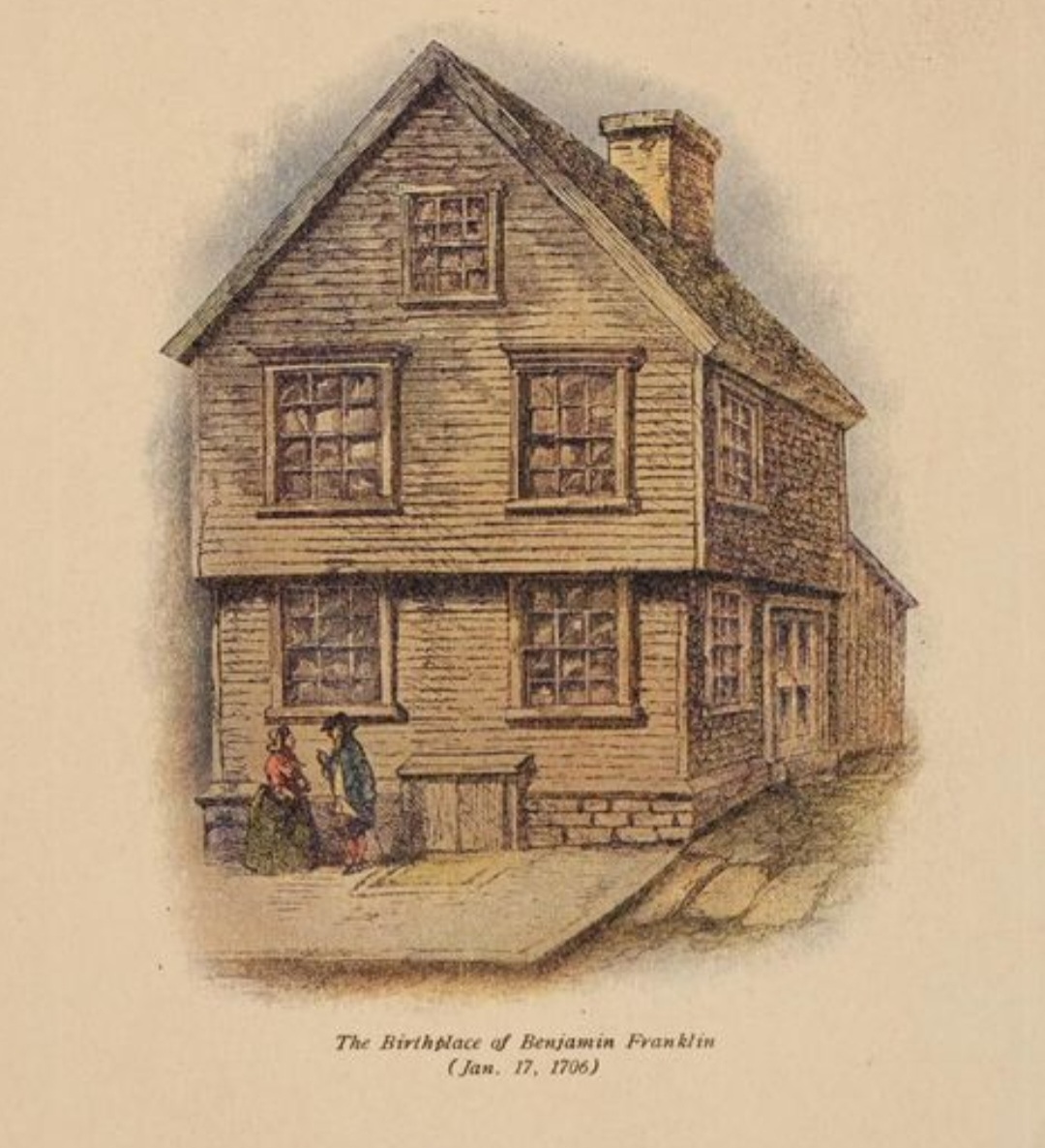
He was born at 17 Milk Street in Boston on January 17 1706, the 15th of 17 children. He started working at his father’s candle shop at the age of 12 before being an apprentice to his brother, James as a printer.
Always a voracious reader, he taught himself to write and started writing articles and essays for his brother’s newspaper.
In 1723 Franklin ran away to Philadelphia to become a journeyman printer and in 1724 made his first trip to London.
Although he lived the majority of his adult life in Philadelphia, he also lived in London and Paris almost two decades, during his diplomatic missions.
While his wife Deborah remained in Philadelphia, managing his affairs, Franklin engaged in heavy flirting and romantic associations with other women while away from his wife.
Both the United States and France declared mourning periods when he peacefully passed away at the age of 84 in 1790.
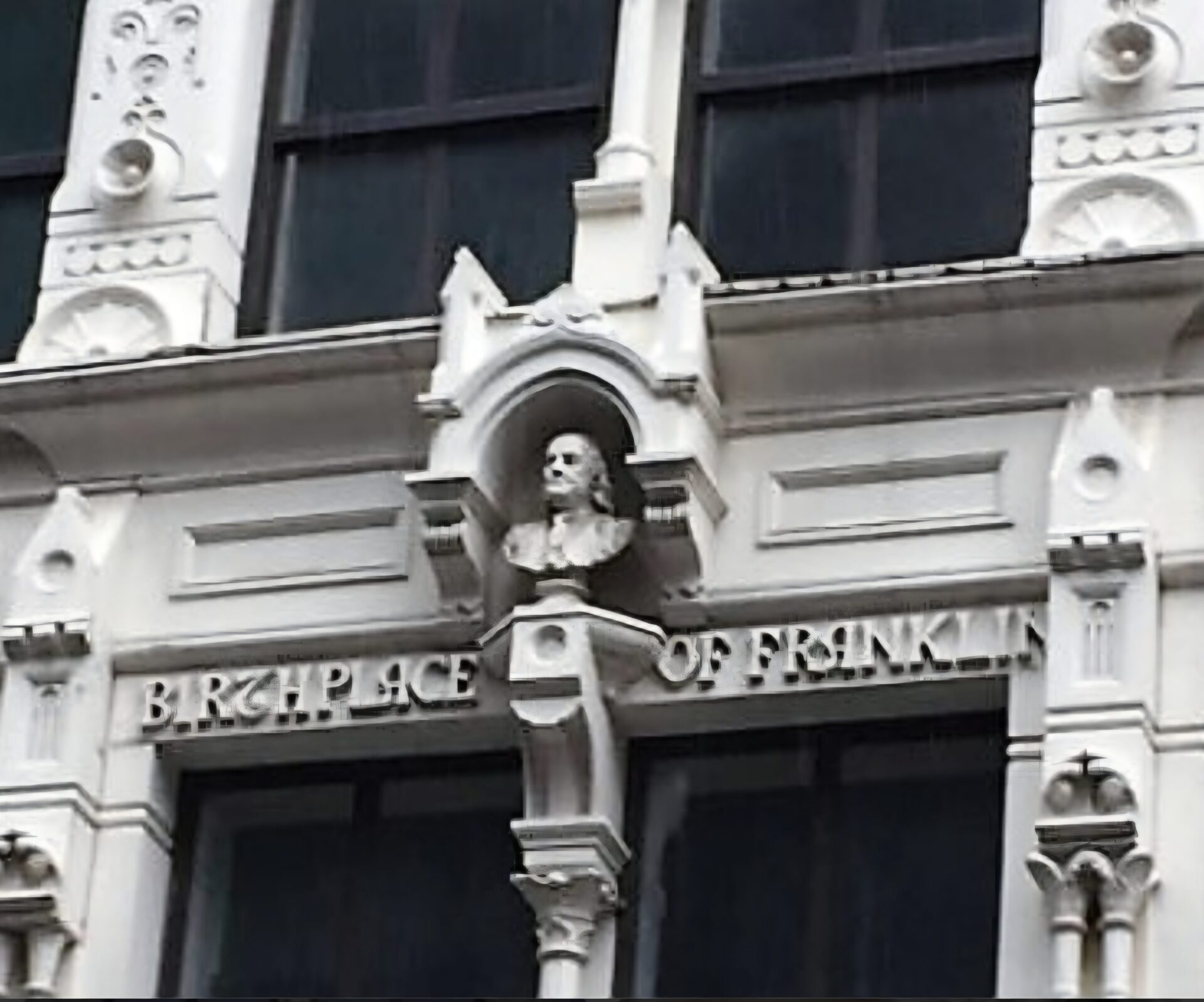
The original house burned down in the Great Boston Fire of 1872, where a bust marks the site on the second floor of a building constructed afterward.










 Continue with Google