

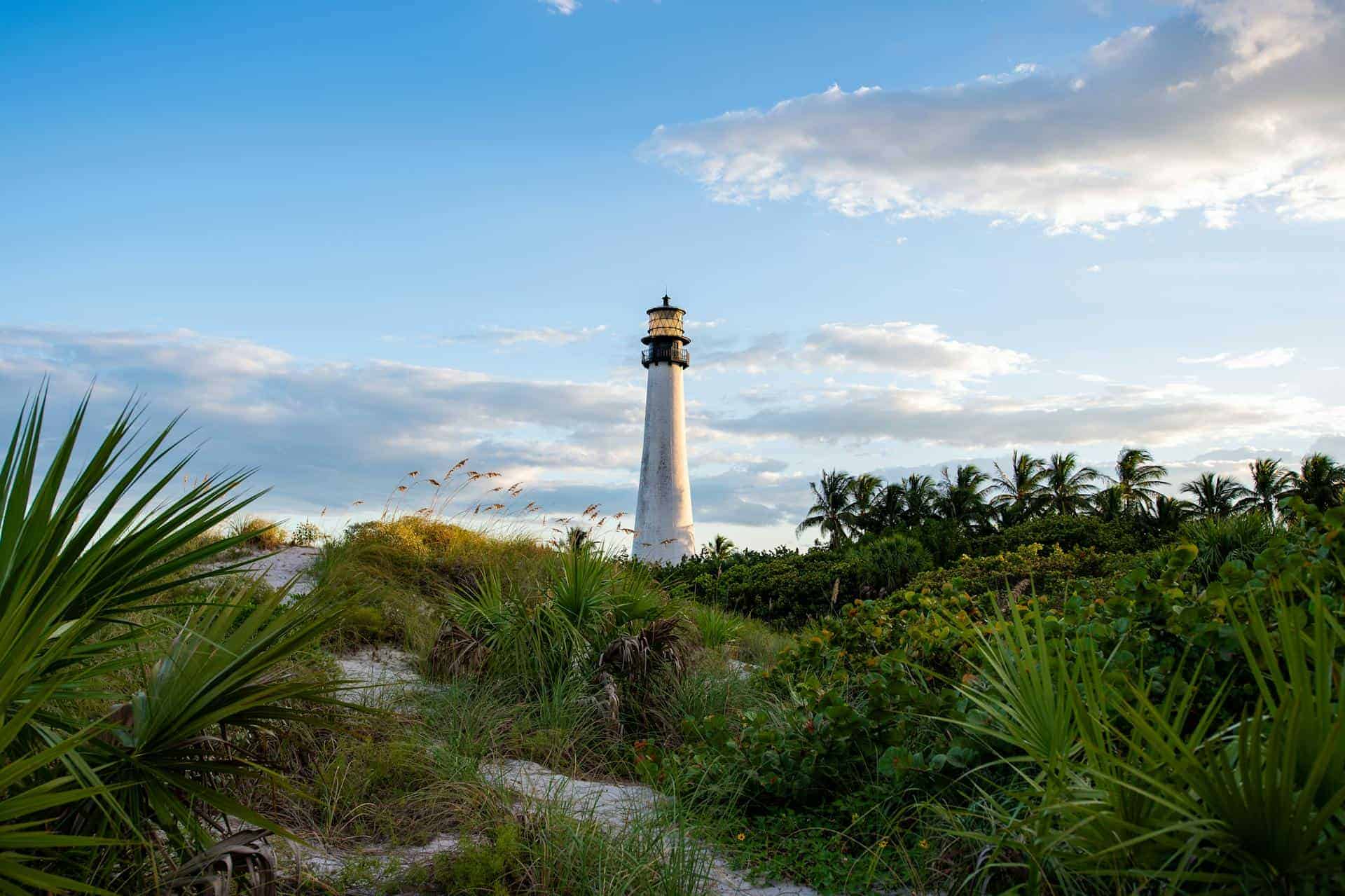
U.S. Route 1 ends here. Mile marker zero sits on a painted buoy at the corner of South and Whitehead in Key West, marking the southern terminus of a highway that runs 2,369 miles to Fort Kent, Maine. That’s the frame for this road trip: three days heading north from the end of the road, through the Overseas Highway, across the bridge to the Florida mainland, up the Gold Coast to Palm Beach. About 250 miles of driving. The kind of drive that earns it.
The Overseas Highway portion of Route 1 was built on the corridor of Henry Flagler’s Florida East Coast Railway, which a 1935 Labor Day hurricane destroyed. The state converted the railroad right-of-way into a road, opened it in 1938, and the Keys became driveable. Forty-two bridges connect the islands, with the Seven Mile Bridge between Marathon and Big Pine Key as the centerpiece. This is why people make the trip. Not the theme parks two hundred miles north. This.
Day 1: Lower Keys – Key West to Marathon
Start at the bottom and drive north. The lower Keys are the most remote stretch of the Overseas Highway, with wide open water on both sides and actual wildlife in the pines and mangroves off the road. Give yourself a full day for Key West before you push northeast toward Marathon.
Key West, FL (Southernmost Point)
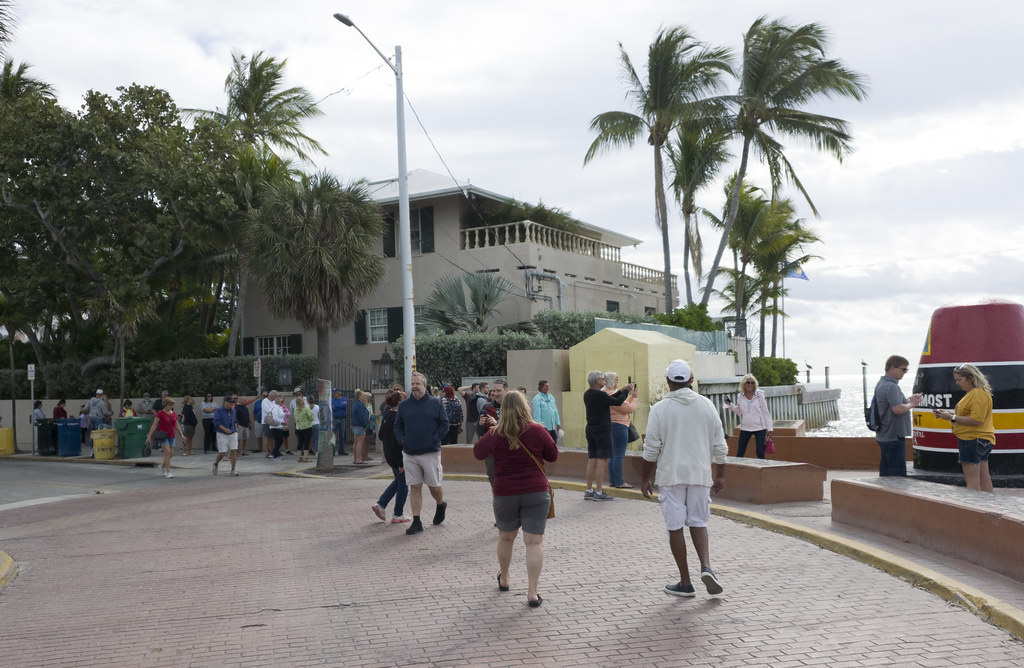
Launch your Florida adventure at America’s southernmost city, where mile marker zero meets 90 miles to Cuba and 2,369 miles to Maine.
Key West is where Route 1 stops. The Southernmost Point Buoy at the corner of South and Whitehead marks 90 miles to Cuba and 2,369 miles to Maine — the full length of the highway you’re about to drive north. Hemingway lived here from 1931 to 1939 and wrote “A Farewell to Arms” and “To Have and Have Not” in the house at 907 Whitehead Street, which is still standing and open for tours. Harry Truman used the Little White House at 111 Front Street as a working presidential retreat for 175 days across eleven visits. The depth of history on this small island is out of proportion to its size. Duration: 3-4 hours.
Activities include posing at the Southernmost Point Buoy, touring the Ernest Hemingway Home and Museum for literary insights, strolling Duval Street for shops and bars, watching the sunset at Mallory Square with street performers, and visiting the Truman Little White House for presidential history.
Big Pine Key, FL (Key Deer Refuge)
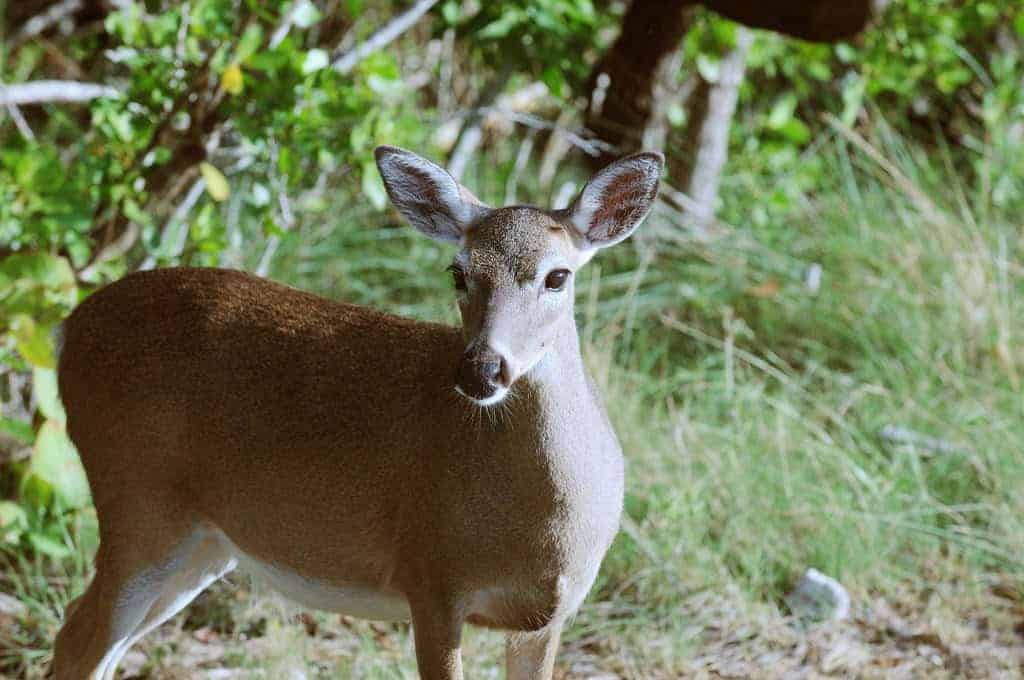
Encounter endangered miniature deer in this wildlife haven, where pine rocklands and mangroves showcase the Keys’ fragile ecosystems along Route 1.
Big Pine Key is the largest island in the lower Keys and home to the National Key Deer Refuge, which protects the Key deer — a subspecies of white-tailed deer that stands about 30 inches at the shoulder. The population dropped to fewer than 50 animals in the 1950s before federal protection turned it around. Today the herd is around 700 to 800. Slow down on Big Pine. The speed limit drops to 35 mph on Key Deer Boulevard for a reason. Duration: 2-3 hours.
Activities include spotting Key deer at the National Key Deer Refuge trails, hiking the Watson Trail for birdwatching, visiting the Blue Hole for alligator sightings, exploring No Name Pub for quirky history and pizza, and learning about habitat preservation at the refuge visitor center.
Marathon, FL (Seven Mile Bridge)
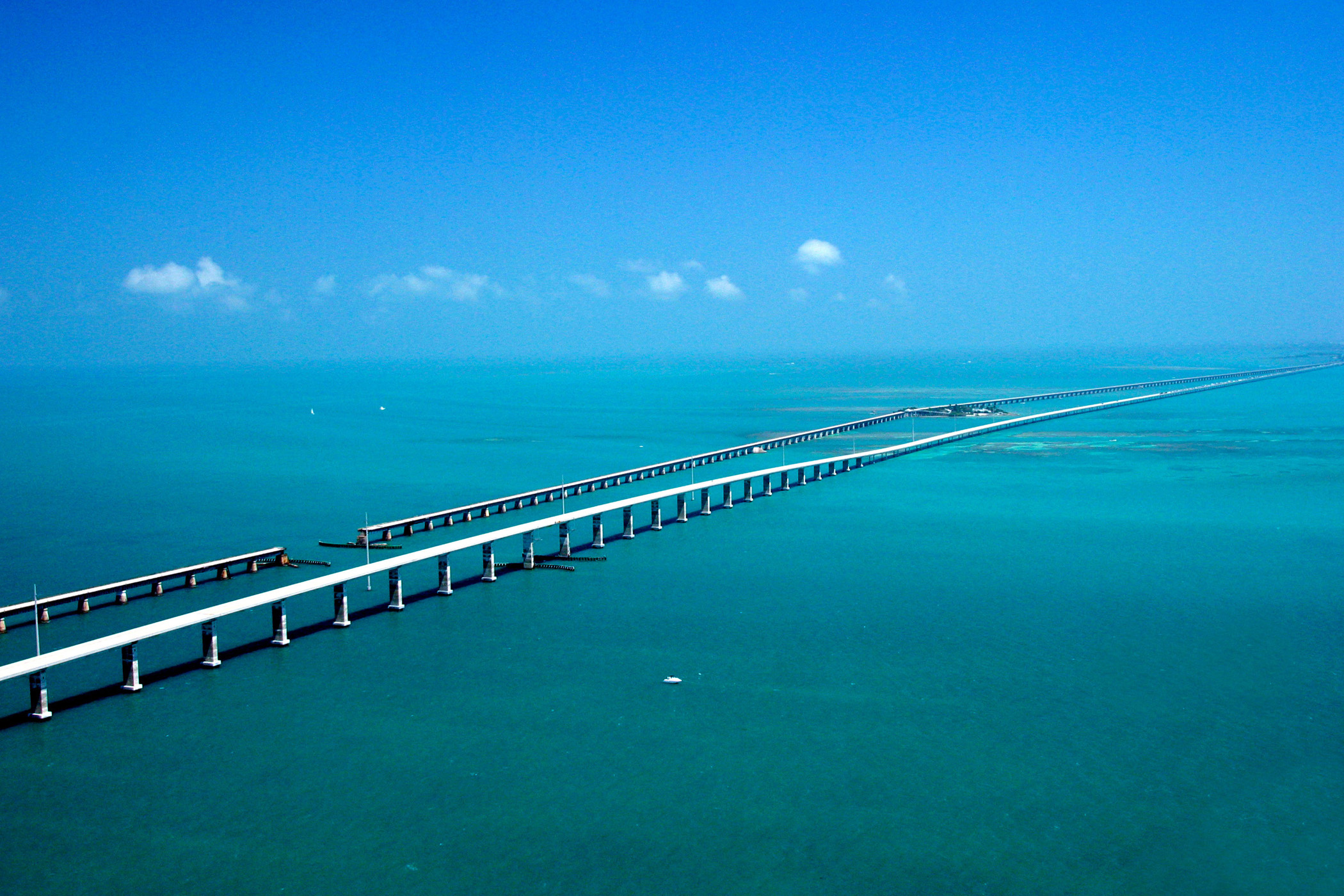
Cross the iconic Seven Mile Bridge in this mid-Keys hub, where engineering marvels meet marine life and a resilient island spirit.
The Seven Mile Bridge between Marathon and Little Duck Key is the longest of the 42 bridges on the Overseas Highway, running 6.79 miles over open water. The current bridge opened in 1982. The original, built by Flagler’s railroad in 1912, runs parallel and is now a walking and fishing pier open to the public. Drive north from Marathon and you cross it. Stop on the old bridge, look back south, and consider what it took to build a railroad through open ocean in 1912. Duration: 3-4 hours (overnight recommended).
Activities include walking the old Seven Mile Bridge to Pigeon Key for historic tours, visiting the Turtle Hospital for sea turtle rehabilitation insights, snorkeling at Sombrero Beach, exploring Crane Point Museum & Nature Center for hammock trails and exhibits, and dining on fresh seafood with ocean views.
Day 2: Upper Keys – Marathon to Key Largo
The upper Keys get busier as you approach the mainland. More people, more boats, more restaurants. Also more reef — the Florida Reef Tract runs along the Atlantic side of the Keys, the only living coral barrier reef in the continental United States. Day 2 is about the water as much as the road.
Islamorada, FL (Diving Capital)
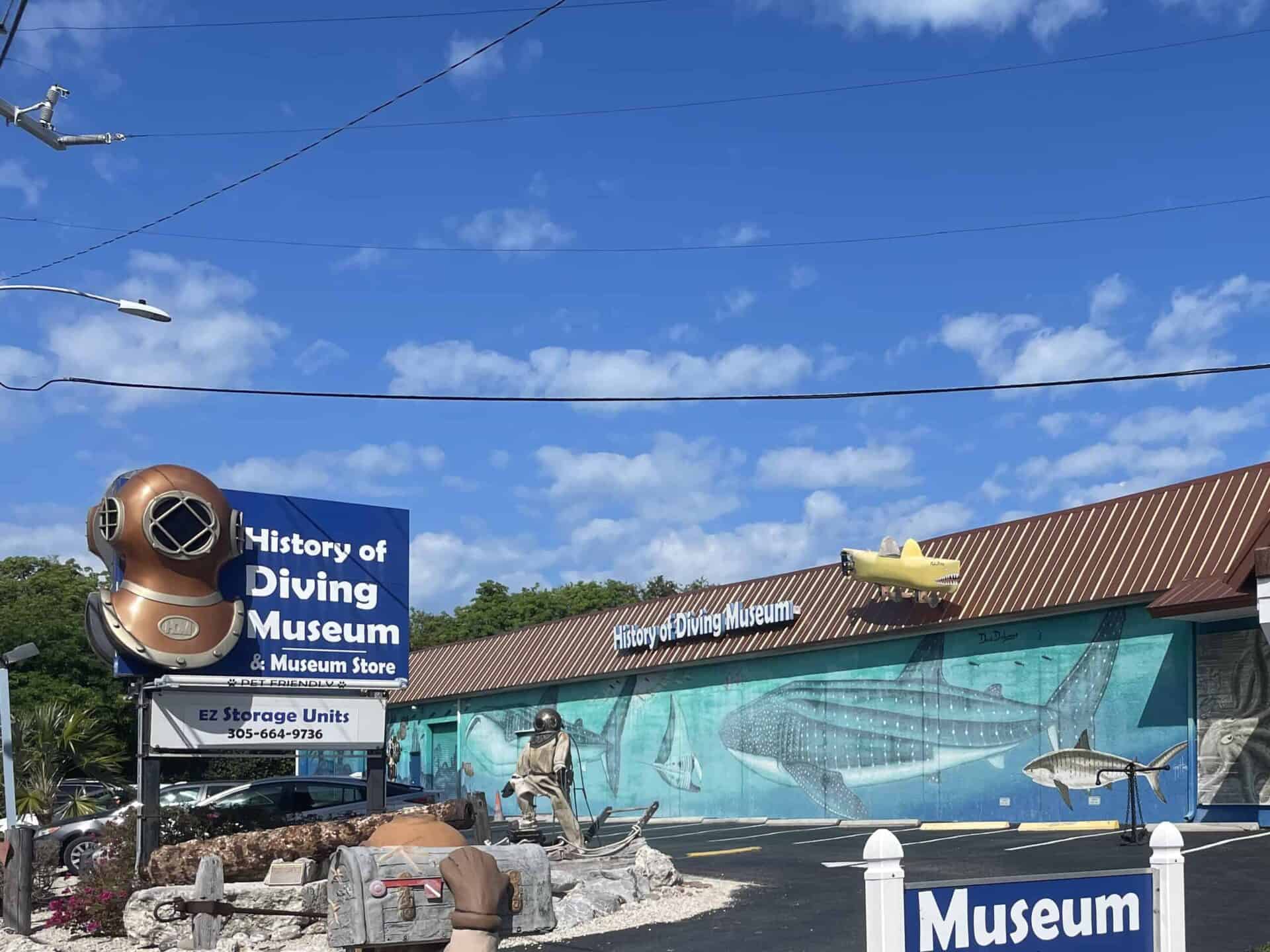
The Sport Fishing Capital of the World: six islands along Route 1 between MM 73 and MM 90, with charter boats, diving history, and tarpon at the docks.
Islamorada calls itself the Sport Fishing Capital of the World, a claim backed by the charter boat count at the marinas and the fishing tournament schedule that runs nearly year-round. It’s a municipality made up of six islands strung along Route 1 between MM 90 and MM 73. The History of Diving Museum on Overseas Highway has 4,000 artifacts covering 4,000 years of diving history. Robbie’s Marina on MM 77.5 is where you hand-feed the tarpon — they’ve been coming to the docks for decades and the fish are enormous. Duration: 3-4 hours.
Activities include exploring the History of Diving Museum for underwater artifacts, fishing from the piers or chartering a boat, visiting Founders Park for beaches and events, feeding tarpon at Robbie’s Marina, and sampling craft beers at Florida Keys Brewing Company.
Anne’s Beach, FL (Secluded Sands)
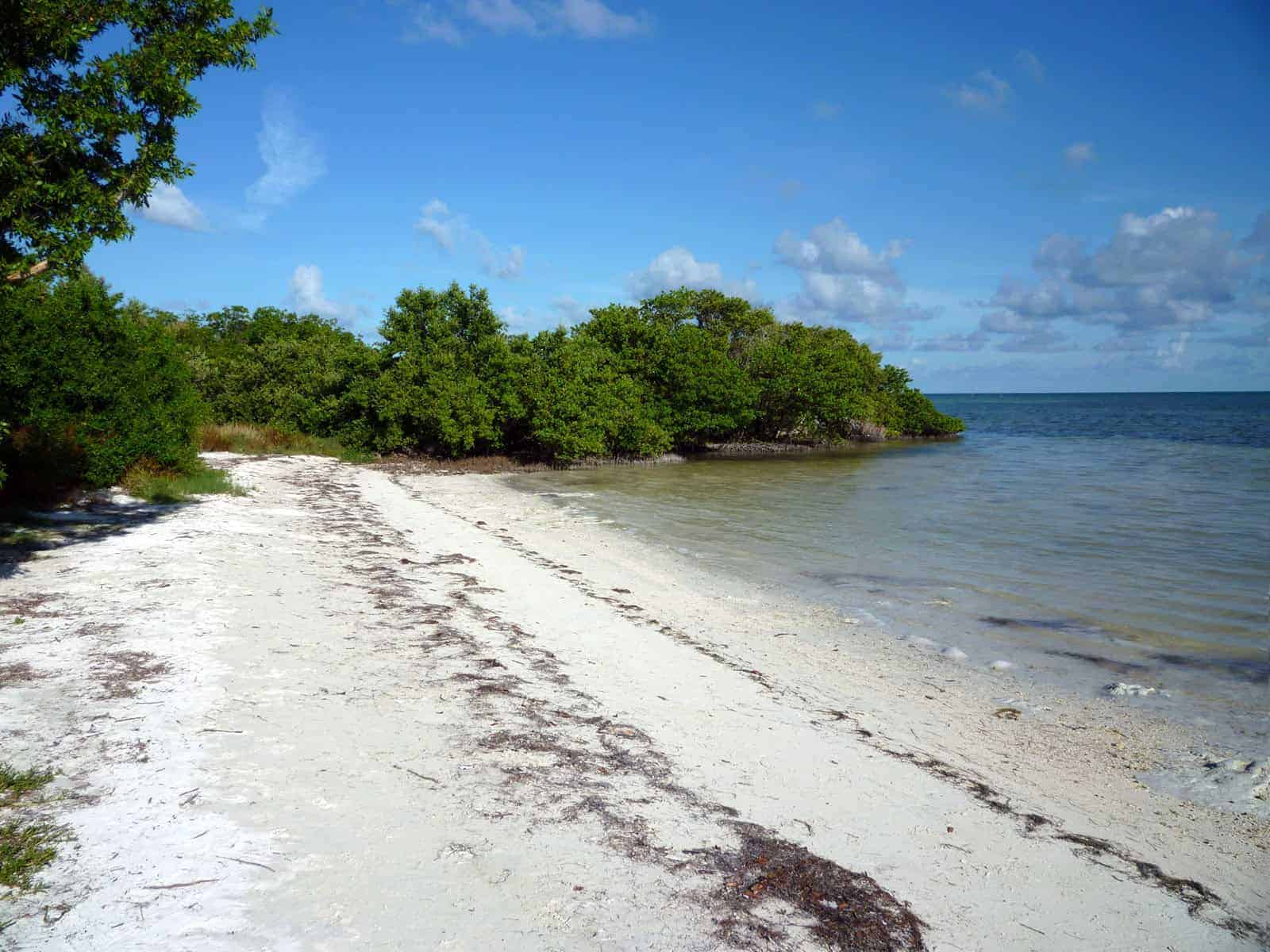
Relax on this quiet public beach, where shallow Atlantic waters and winding boardwalks offer a calm break from the road in the lower Keys.
Anne’s Beach on Lower Matecumbe Key is named for Anne Eaton, an environmental activist who fought to preserve the Florida Keys’ natural shoreline from development. It’s a free county park with a boardwalk through the mangroves, calm shallow water, and no crowds on weekdays. The lagoon bottom is sea grass rather than sand, so wade rather than swim. Pull off Route 1 at MM 73.5 and walk the boardwalk for twenty minutes. Duration: 2-3 hours.
Activities include wading in the calm, shallow lagoon, strolling the boardwalk through mangroves, picnicking under thatched huts, kiteboarding if winds allow, and birdwatching for herons and egrets in the serene surroundings.
Key Largo, FL (Underwater Paradise)
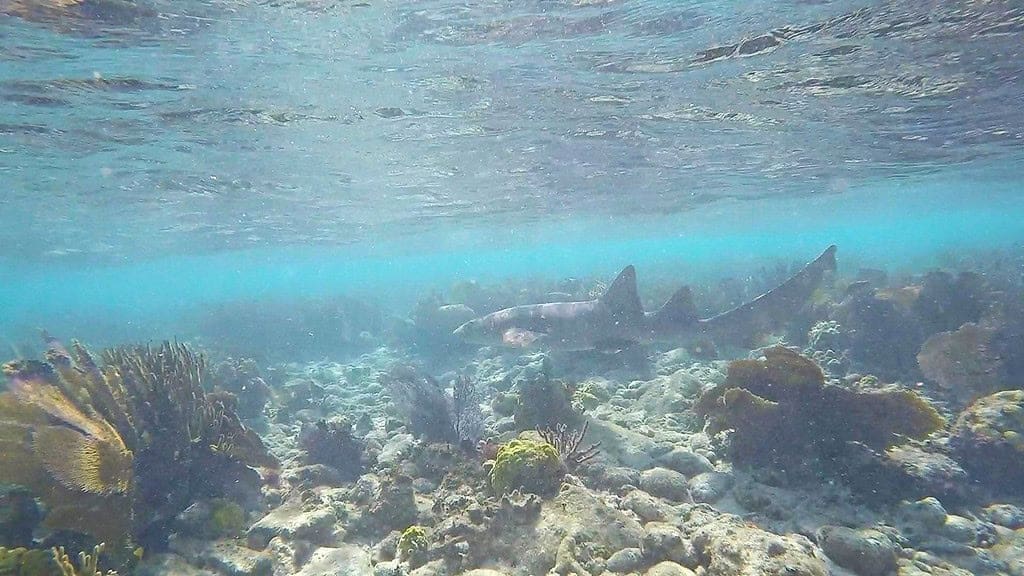
Dive into the first undersea park in the U.S., where the first underwater state park in the U.S. sits at Route 1’s gateway to the mainland.
Key Largo is the largest island in the Keys and the last significant stop before the mainland. John Pennekamp Coral Reef State Park, established in 1963, was the first underwater state park in the United States. It covers 70 square nautical miles of protected reef, seagrass beds, and mangrove swamps. The park rents snorkel and dive gear and runs glass-bottom boat tours. Key Largo is also where the African Queen — the actual steam-powered boat from the 1951 Bogart and Katharine Hepburn film — is docked at the Holiday Inn marina and available for canal cruises. Duration: 4-5 hours (overnight recommended).
Activities include snorkeling or glass-bottom boating at John Pennekamp Coral Reef State Park, hiking mangrove trails, visiting the African Queen Canal Cruise for film history, spotting dolphins at Dolphins Plus Bayside, and enjoying a tiki bar sunset.
Day 3: Mainland Coast – Key Largo to Palm Beach
Once you cross Card Sound Bridge or the 18-Mile Stretch back to the mainland, Route 1 shifts character entirely. The Keys behind you, the road runs north through Homestead and into Miami, then up the Gold Coast through Fort Lauderdale to Palm Beach. This stretch is urban, dense, and fast-moving. Plan 2 to 4 hours of driving depending on traffic in Miami.
Miami, FL (Vibrant Metropolis)
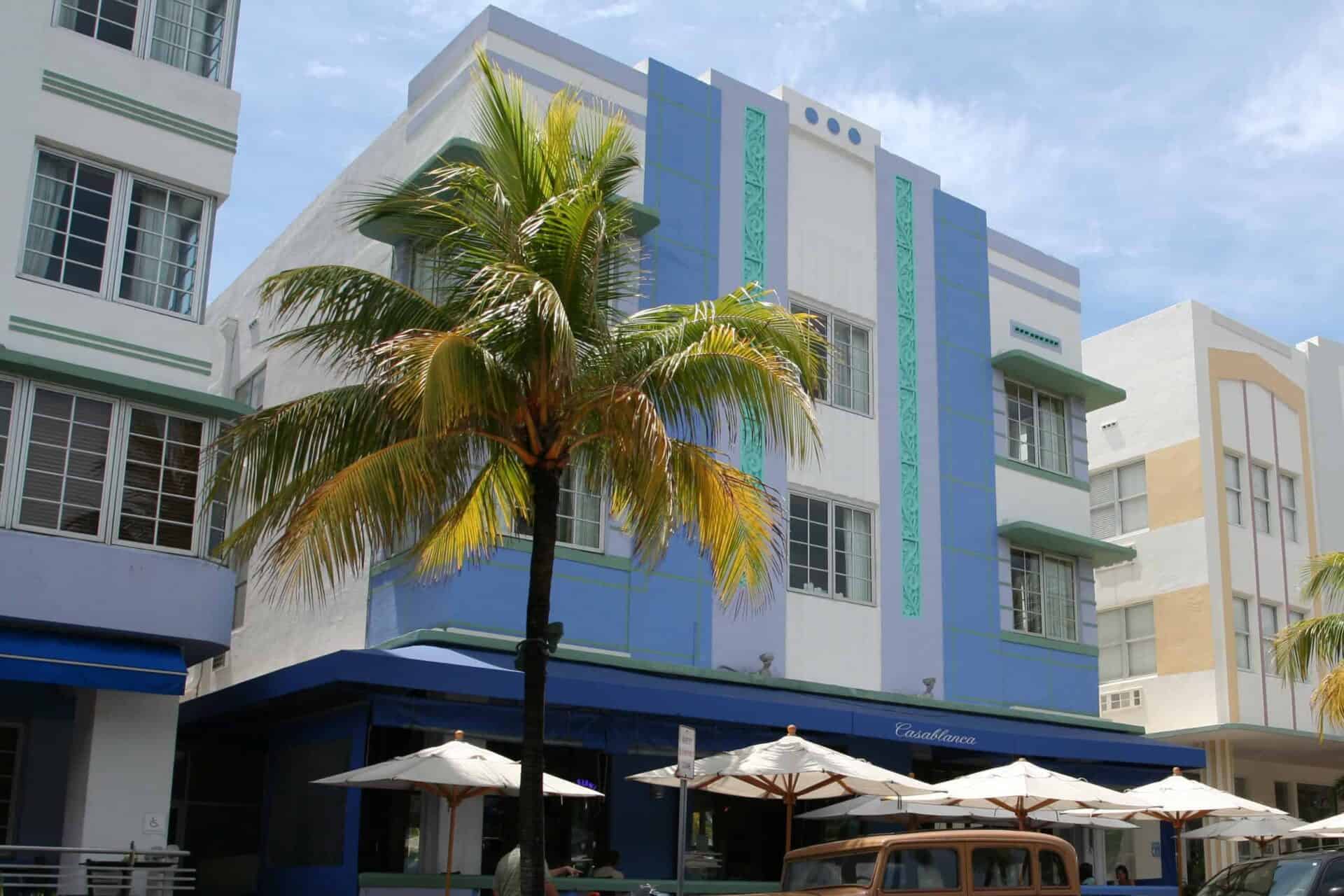
Latin flavors and art deco architecture define Route 1’s urban stretch, where Biscayne Bay meets the city skyline.
Route 1 runs through the heart of Miami along Brickell Avenue and then Biscayne Boulevard, with the bay on one side and the city rising on the other. South Beach is a short detour across the MacArthur Causeway — the Art Deco Historic District along Ocean Drive preserves over 800 buildings from the 1930s and 1940s, the largest concentration of Art Deco architecture in the world. Vizcaya Museum and Gardens on South Miami Avenue is the 1916 Italian Renaissance estate built by industrialist James Deering, sitting on 50 acres with formal gardens reaching Biscayne Bay. Little Havana is roughly a mile west of Route 1 on SW 8th Street — the coffee windows, the dominoes games in Maximo Gomez Park, and the handmade cigars reflect a neighborhood where 68% of Miami-Dade residents are Hispanic or Latino. Duration: 3-4 hours.
Activities include exploring South Beach for beaches and nightlife, visiting Vizcaya Museum & Gardens for Renaissance-style estates, strolling Ocean Drive for art deco icons, tasting Cuban cuisine in Little Havana, and cruising Biscayne Bay if time permits.
Fort Lauderdale, FL (Venice of America)
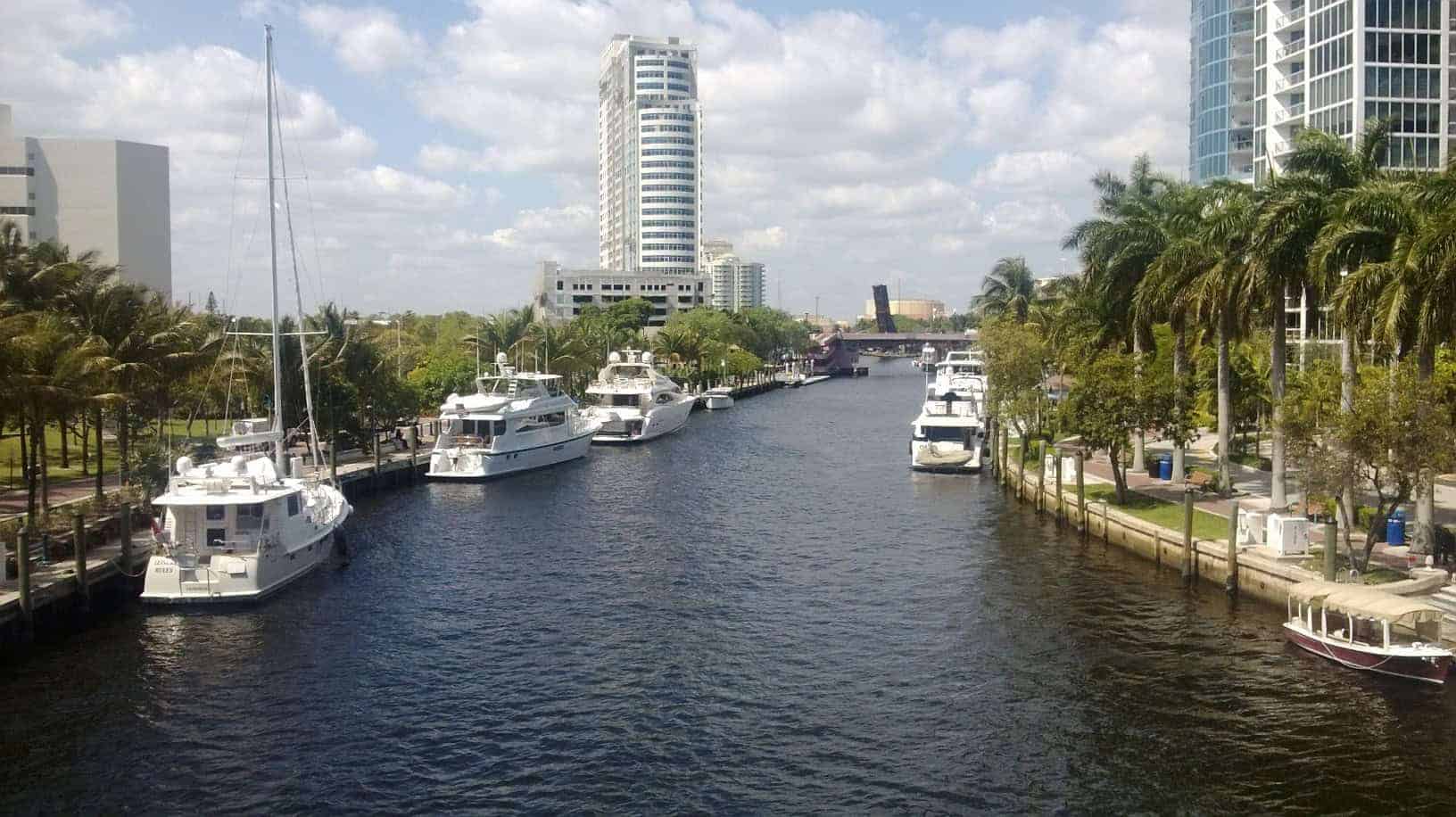
Cruise the canals in this yachting capital where Route 1 bridges luxury and laid-back beach life.
Fort Lauderdale has 165 miles of inland waterways and more registered boats per capita than any city in the United States — that’s the reality behind the “Venice of America” label. Route 1 (called Federal Highway here) runs straight through the city’s commercial spine. Las Olas Boulevard cuts east toward the beach and is worth a stop for restaurants and shops. The Bonnet House Museum and Gardens at 900 N. Birch Road is a 1920 plantation-style estate on 35 acres that survived surrounded by condominiums — the orchid collection inside is absurd in the best way. Fort Lauderdale tends to get skipped between Miami and Palm Beach. It shouldn’t be. Duration: 3-4 hours.
Activities include taking a boat tour on the Intracoastal Waterway, shopping and dining on Las Olas Boulevard, visiting the Bonnet House Museum & Gardens for historic estates and orchids, relaxing on Fort Lauderdale Beach, and exploring the NSU Art Museum for modern collections.
Palm Beach, FL (Opulent Escape)
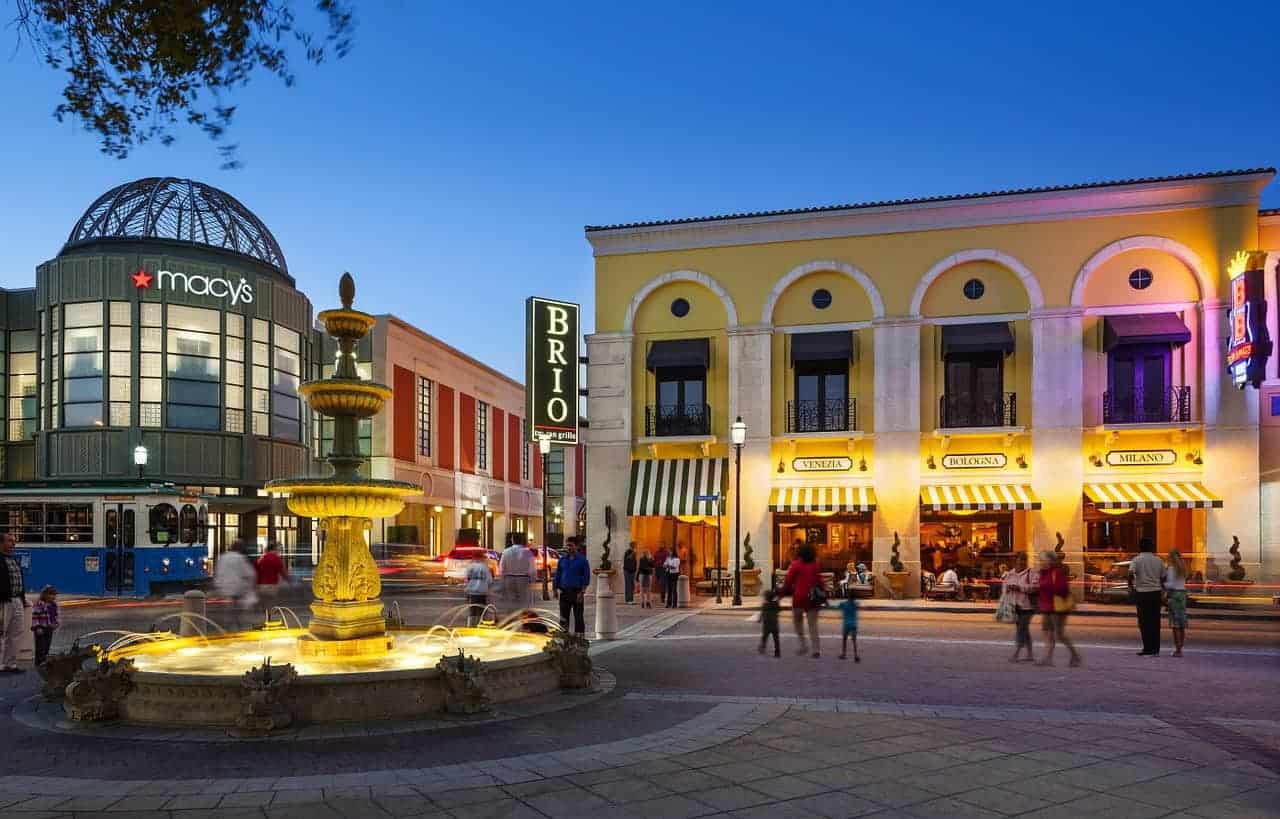
Indulge in Gilded Age glamour where palm-lined streets and mansions define Route 1’s ritzy finale.
Palm Beach is where Henry Flagler brought the Gilded Age to the tropics. He extended his Florida East Coast Railway to Palm Beach in 1894, built the Royal Poinciana Hotel (at the time the largest wooden structure in the world), and turned a barrier island into a winter destination for Rockefellers, Vanderbilts, and Carnegies. The Flagler Museum at Whitehall, his 1902 Beaux-Arts mansion, tells that story with original furniture and a private railroad car still on the grounds. Worth Avenue is four blocks of luxury retail designed in the 1920s by architect Addison Mizner in a Spanish Colonial Revival style — the architecture is genuinely worth seeing regardless of the price tags. Route 1 ends your trip here, 250 miles north of where you started. Duration: 4-5 hours (extend for more exploration).
Activities include shopping on Worth Avenue for high-end boutiques, touring the Henry Morrison Flagler Museum for opulent history, biking along Lake Trail for scenic views, relaxing on Palm Beach’s golden sands, and dining at a seaside café with ocean breezes.
Three days, 250 miles, two completely different Floridas: the island chain where Route 1 ends, and the Gold Coast where it turns urban. The Overseas Highway alone justifies the drive. You start at mile marker zero in Key West and work your way north through 42 bridges and the only living coral barrier reef in the continental United States. By the time you reach Palm Beach, you’ve driven one of the most distinctive road trip corridors in the country — and you’ve only covered the bottom 250 miles of a 2,369-mile highway.

 Continue with Google