

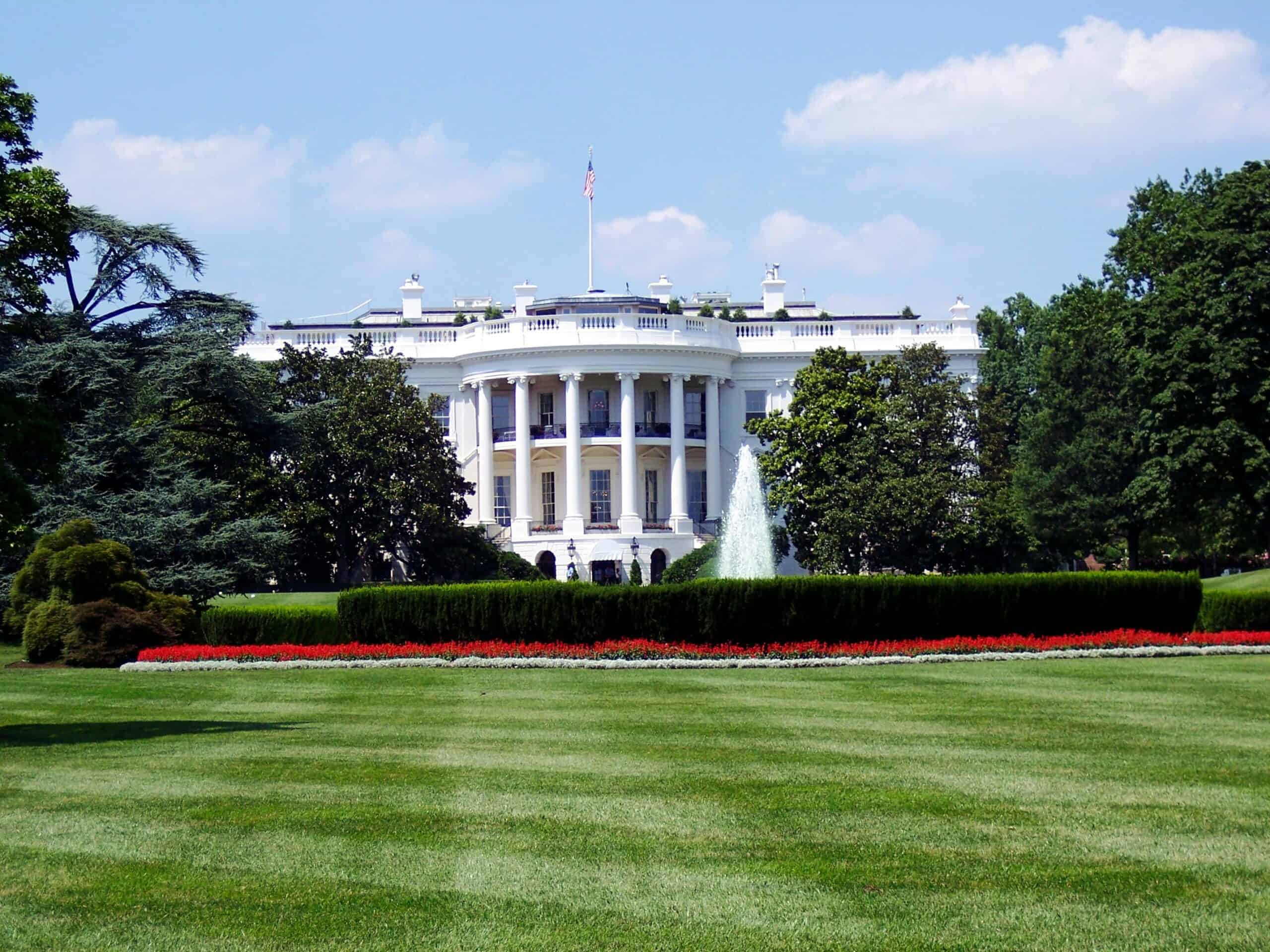
US Route 1 passes through Washington DC on roughly 7 miles of city streets: in from Virginia over the 14th Street Bridge, north through the monumental core, then out toward Maryland via Rhode Island Avenue NE. You’re not covering distance here. You’re covering ground. Three days gives you enough time to move through DC without rushing the parts that actually matter.
Spring cherry blossom season runs late March through mid-April and packs the Tidal Basin. Fall foliage peaks in October and the crowds thin out considerably. Both work. Pack comfortable shoes — the monuments require serious walking — a Metro card for days when parking becomes a waste of time, and an umbrella for the afternoon showers that roll through without warning.
Day 1: Southwest DC – 14th Street Bridge to National Mall
Route 1 enters DC from Virginia over the 14th Street Bridge, dropping you onto 14th Street SW amid federal buildings and the tidal basin. The first day stays in the monumental core, where the density of things worth stopping for is higher than almost anywhere in the country.
Arlington Memorial Bridge Area, DC (Gateway Views)
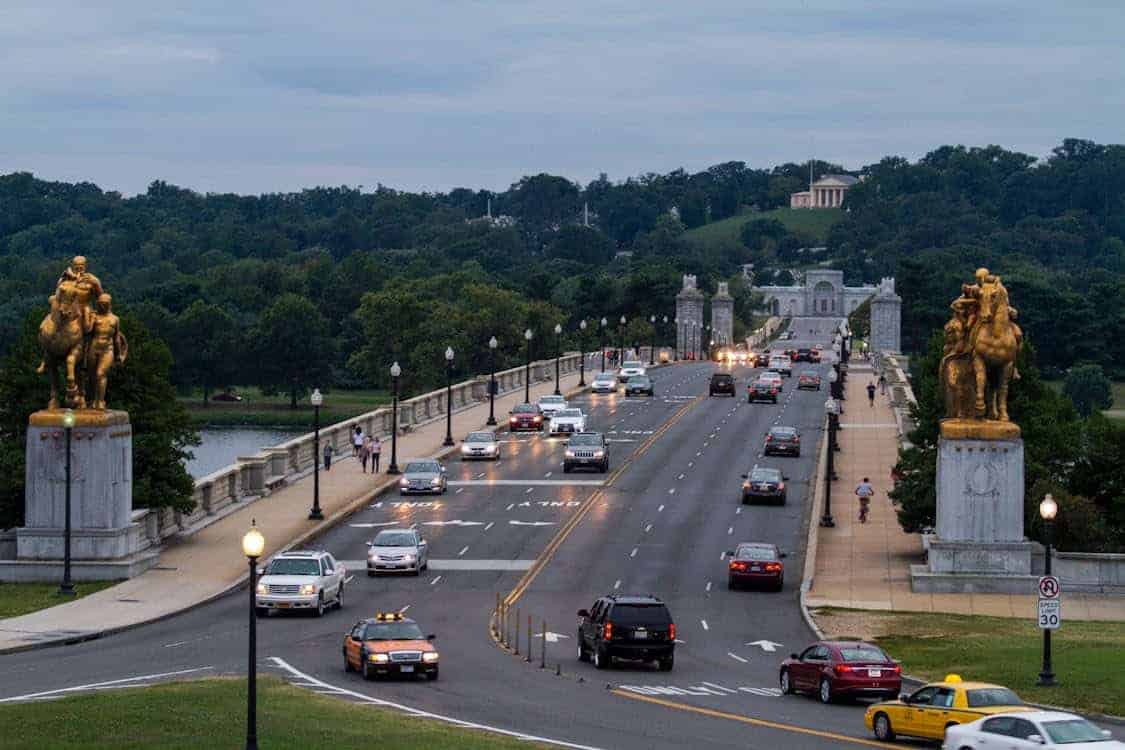
Cross into the capital with panoramic Potomac vistas, where Route 1’s DC leg begins amid symbolic arches and memorials.
Start just south of the main Route 1 bridge at this parallel span for a quieter entry to DC’s ceremonial landscape. Duration: 1-2 hours.
Walk the Arlington Memorial Bridge for views of the Lincoln Memorial and Arlington Cemetery. Stop at the Arts of War and Peace statues at the bridge approaches. The bridge itself, completed in 1932, was designed to symbolically reunite North and South by connecting the Lincoln Memorial to Arlington House, Robert E. Lee’s former home.
National Mall West End, DC (Monumental Core)
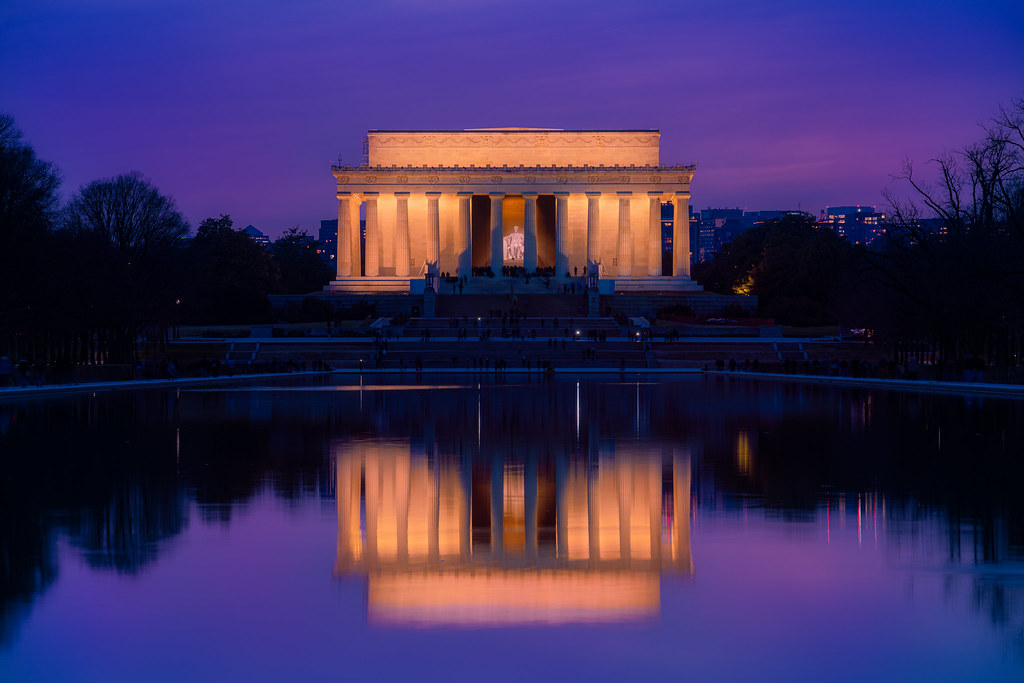
The Lincoln Memorial anchors the western end of the Mall, a short walk from Route 1’s southwestern approach.
End Day 1 at the western Mall. The monuments cluster here, and you need the late afternoon light for the Reflecting Pool. Duration: 2-3 hours. Overnight nearby recommended.
Climb the Lincoln Memorial steps. Stand where King stood on August 28, 1963, and look east down the Reflecting Pool toward the Washington Monument. Walk the Korean War Veterans Memorial’s nineteen stainless steel soldier figures. Read names at the Vietnam Veterans Memorial wall. Stroll the Constitution Gardens pond. The sunset reflection on the pool is the payoff for timing this right.
Jefferson Memorial & Tidal Basin, DC (Cherry Blossom Haven)
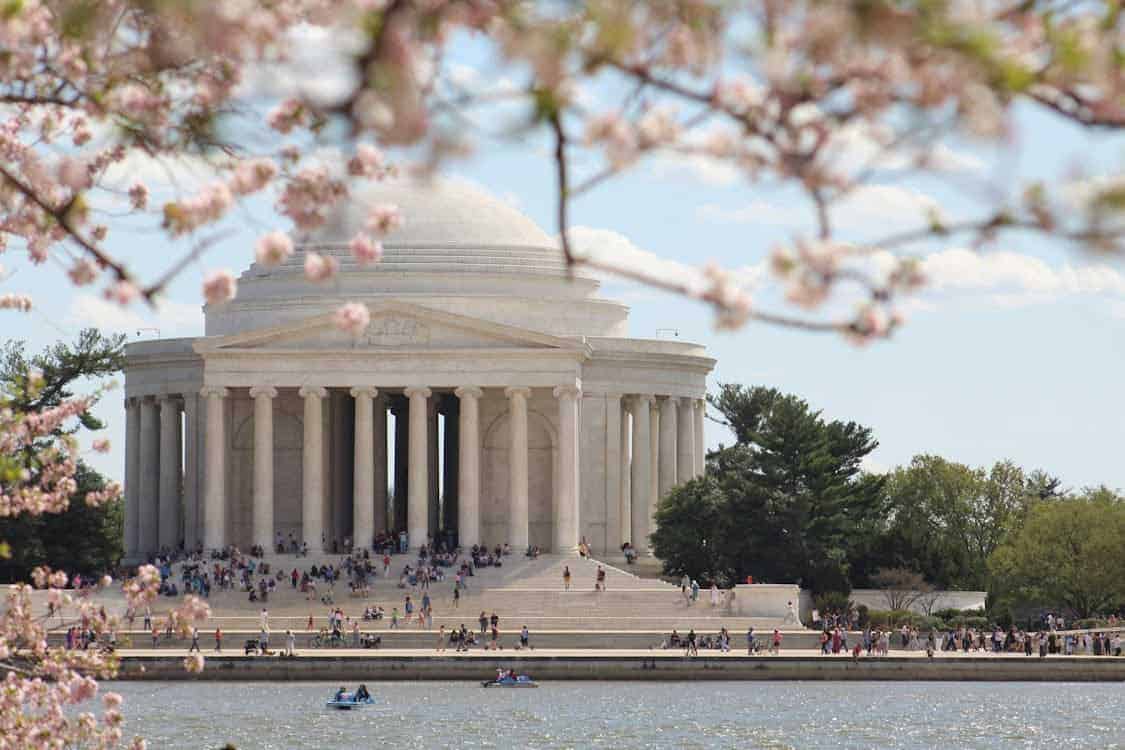
The Jefferson Memorial’s dome reflects in the Tidal Basin, a short detour west from Route 1’s 14th Street approach.
A short detour west from 14th Street, the Tidal Basin loop is manageable before dinner. Duration: 1-2 hours.
Tour the Jefferson Memorial’s interior inscriptions. In cherry blossom season, the 3,020 Yoshino cherry trees around the basin bloom for about two weeks in late March to mid-April. Outside of peak bloom, the east side paths past the Japanese pagodas are quieter than the main walkway. The FDR Memorial’s Room Four, a quiet waterfall alcove at the far end of the sequence, sees less foot traffic than the rest of the complex.
Day 2: Central DC – National Mall to Capitol Hill
Move east along Constitution Avenue NW, the ceremonial spine connecting the monument clusters to the Capitol. The Smithsonian museums line the Mall on both sides. Pick two or three and go deep rather than skimming all of them.
Smithsonian Museums, DC (Cultural Trove)
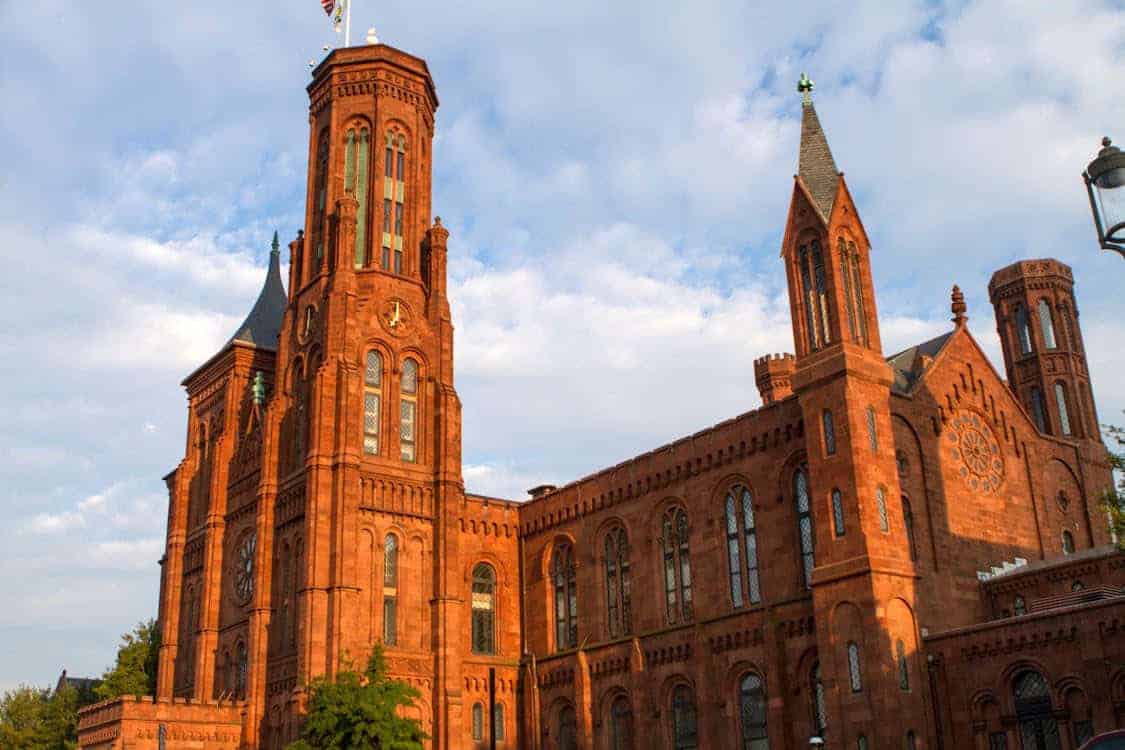
Free Smithsonian museums line Route 1’s Constitution Avenue segment on both sides of the Mall.
All Smithsonian museums are free. The question is which ones. Duration: 4-6 hours.
The National Museum of African American History and Culture requires timed entry passes booked in advance. The Air and Space Museum draws the biggest crowds. The Natural History Museum and the National Museum of American History are both underestimated in terms of depth. For something quieter: the Hirshhorn Museum’s sunken sculpture garden on the Mall’s south side, or the Einstein Memorial outside the National Academy of Sciences at Constitution and 22nd — a bronze figure of Einstein holding a paper with three equations, usually with kids climbing on it. Grab food truck lunch on the Mall rather than the museum cafeterias.
Capitol Hill, DC (Legislative Heart)
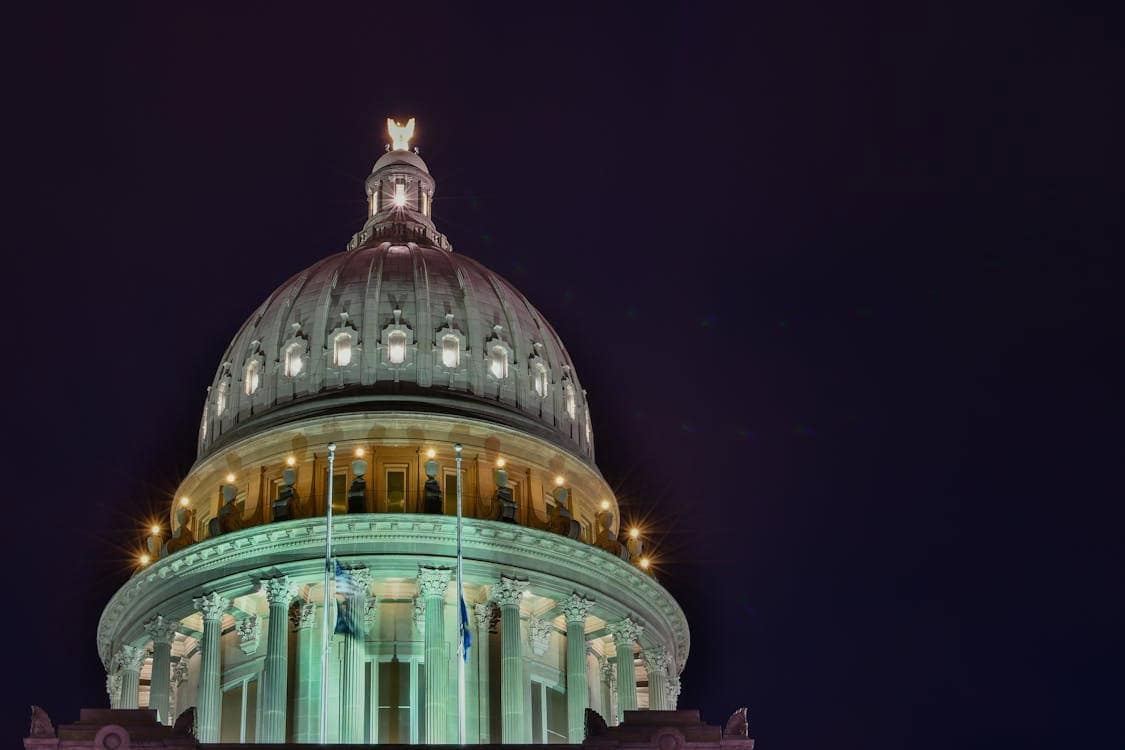
Capitol Hill sits a short detour east from Route 1’s path along Constitution Avenue.
The Hill is a short detour east from Route 1, and it rewards unhurried time. Duration: 3-4 hours.
Tour the U.S. Capitol with advance reservations for the rotunda and chambers. Next door, the Library of Congress Main Reading Room is one of the great interior spaces in the country: a 160-foot octagonal room with a painted dome, marble columns, and carved oak reading desks. Most visitors skip it. Don’t. Eastern Market on 7th Street SE runs Tuesday through Sunday and is busiest on weekends with local farmers and artists. Barracks Row on 8th Street SE has the neighborhood’s restaurants.
Day 3: Northeast DC – Capitol Hill to Rhode Island Avenue Exit
Route 1 exits DC via Rhode Island Avenue NE, running northeast through residential neighborhoods toward Maryland. Day 3 follows this corridor, the least-touristed section of the DC Route 1 alignment.
Union Market District, DC (Culinary Hub)
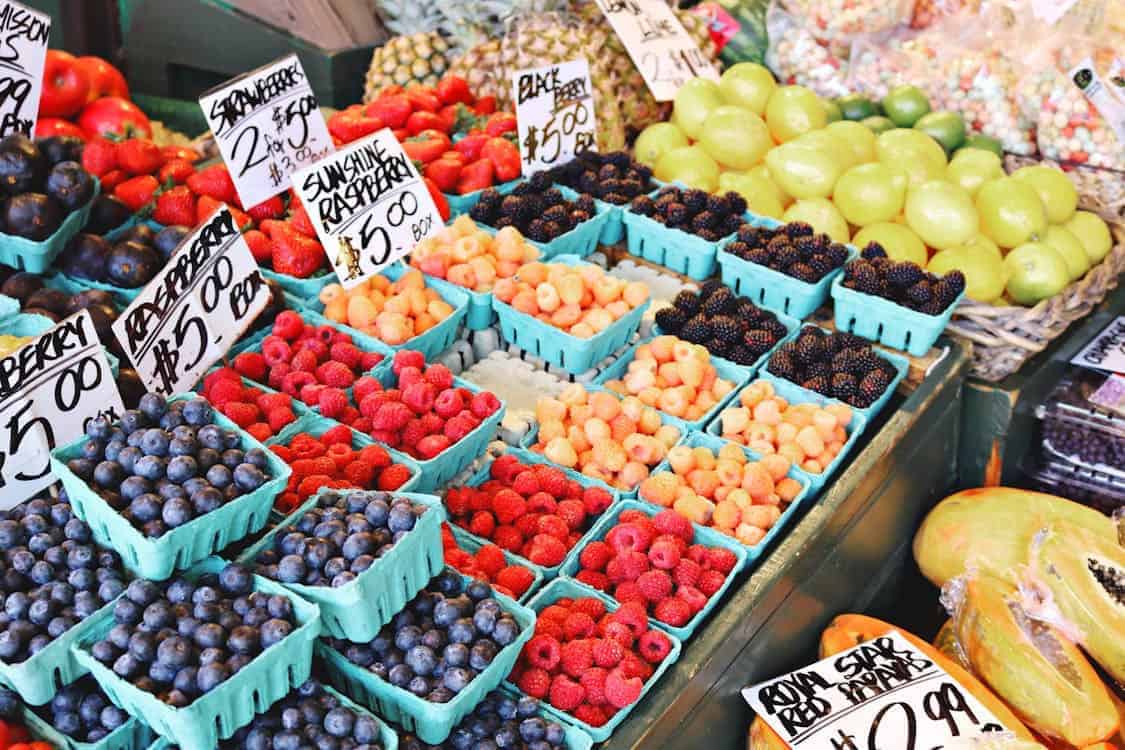
Union Market occupies a converted warehouse district just off Route 1’s northeastern route through DC.
Union Market is a few blocks off Rhode Island Avenue, easy to reach on Day 3. Duration: 2-3 hours.
Sample the stalls at Union Market for prepared foods and local vendors. La Cosecha next door focuses on Latin American products and restaurants. The neighborhood around it, NoMa, has built up considerably in the past decade and has rooftop bars with good city views. Gallaudet University, the world’s only university designed for the deaf and hard-of-hearing, is a short walk away.
Brookland, DC (Artsy Enclave)
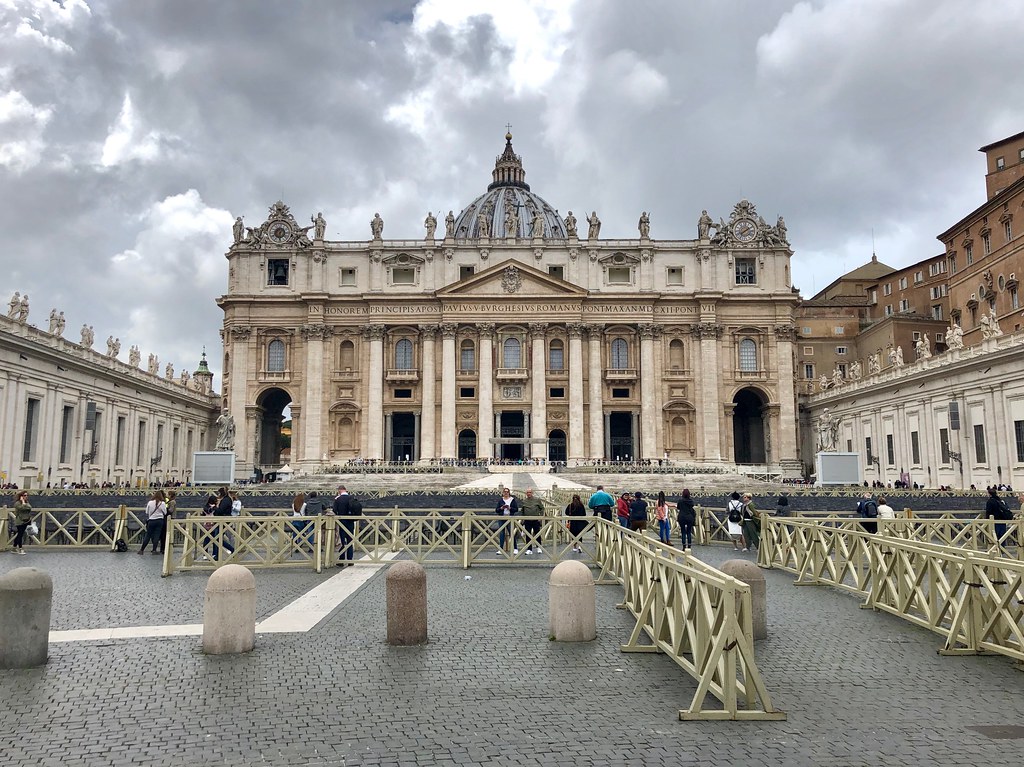
Brookland sits on Route 1’s Rhode Island Avenue alignment in northeast DC, home to the Basilica and the Franciscan Monastery.
Brookland is on Route 1’s Rhode Island Avenue corridor and has two stops worth time. Duration: 3-4 hours.
The Basilica of the National Shrine of the Immaculate Conception is the largest Catholic church in the US. The interior has 83 chapels and more than 80,000 square feet of mosaics. Free admission. The Franciscan Monastery of the Holy Land, two blocks away, recreates shrines from Jerusalem, Bethlehem, and Nazareth in a 44-acre garden complex with catacombs accessible by tour. Monroe Street Market nearby has artist studios. The Ethiopian restaurants along 12th Street NE are the area’s best dining option.
Hyattsville Border, MD (Gateway Transition)
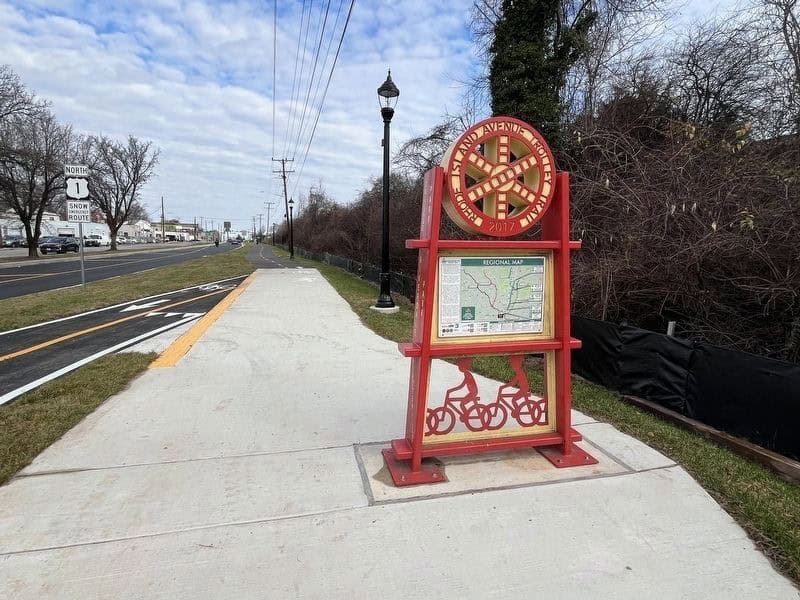
Route 1 crosses from DC into Maryland along Rhode Island Avenue, entering Hyattsville and the Gateway Arts District.
Rhode Island Avenue crosses the DC/Maryland line into Hyattsville with no dramatic fanfare — the road just continues. Duration: 1-2 hours.
The Rhode Island Avenue Trolley Trail follows the old streetcar right-of-way across the border. Hyattsville’s Gateway Arts District on Route 1 has murals and the Pyramid Atlantic Art Center, which runs printmaking and book arts workshops. Grab coffee and start planning the Maryland segment of the drive north.
Three days on Route 1 through DC covers the monumental core on Day 1, goes deep on the Smithsonian and Capitol Hill on Day 2, and exits through the residential northeast on Day 3 the way the highway actually runs. The monuments are the obvious reason to stop. Ben’s Chili Bowl on U Street, the Capitol Columns standing in a meadow at the Arboretum, the Adams Memorial sitting quietly in a cemetery in Petworth: those are the reasons to slow down.



 Continue with Google