

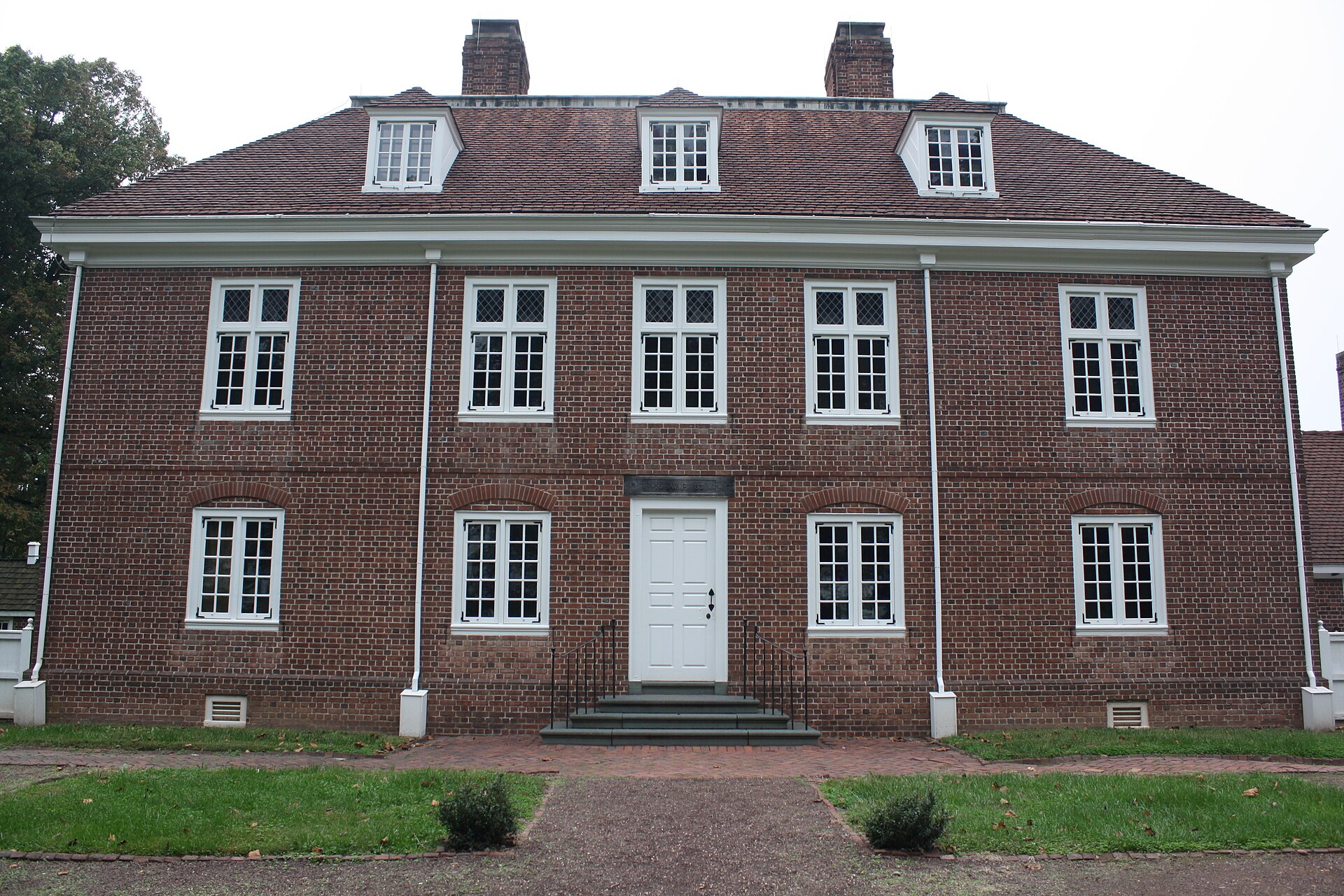
Once the spectacular estate of Pennsylvania’s founder William Penn, then to sitting in disrepair for hundreds of years, Pennsbury Manor has seen the whole of United States history. The manor was constructed on an 8000 acre land grant by the King of England to William Penn in 1682. Penn built his manor as his personal family home, as he oversaw the establishment of Pennsylvania. With the intent of creating a society free of religious persecution in the New World for his religious group, The Society of Friends, more commonly known as Quakers. The site featured a prominent manor house at its core, accompanied by dedicated structures for brewing and baking, an expansive stable, a boathouse, and a variety of agricultural buildings. Penn planned the estate to resemble his country estate back in England.
William Penn however would spend most of his time in Philadelphia, even renting a home there at a time. He would return to England twenty years later after a French claim to his land grant threatened his established colony. Penn would die in England in 1718 completely penniless, after being defrauded by English rent agents. The Pennsbury manor remained in the Penn family until 1792, which by that time the original buildings had all but completely fallen into complete disrepair. At sometime before 1820, a farmhouse was constructed over the Pennsbury manors foundation, which has since been moved to another location on the property.
It wouldn’t be until 1934 when Pennsbury manor would return to interest. When historian Albert Cook Myers would excavate the original foundation of the Pennsbury manor, serving as a blueprint for a reconstruction of the site. The reconstruction of Pennsbury manor was designed by local architect R. Brognard Okie, though it is believed that Okie’s design, which currently sits on the site, may actually be more elaborate than the original Manor. The property would open as a museum dedicated to William Penn in 1940.
Often forgotten is the presence of slavery at Pennsbury manor. William Penn’s enslavement of African Americans was an oddity among his Quaker beliefs, as generally the Quakers were staunchly anti-slavery. It is assumed that there were at least twelve enslaved individuals present at Pennsbury Manor, however due to incomplete historical records the exact number is unknown. The identity of these individuals is additionally only partly known.
The original land of the Pennsbury Manor had belonged to the Lenape Tribe before William Penn’s arrival. In 2022 a cemetery was established by the Delaware Nation Tribes at the estate of the Pennsbury Manor. After fifteen years of cooperation between the Lenape Tribe, Pennsbury Manor, and various museums and historical societies, around two hundred Lenape ancestors and their funerary objects were laid to rest at the site of Pennsbury Manor, returning them to their ancestral land.
Today Pennsbury Manor is a museum accessible via under $10 admission. They offer guided tours of the property. You may enter and tour the structures on the property, or explore just the grounds without building entry. Additionally, the Lenape tribe holds special events on the property from time to time, which include cultural enrichment events and trade demonstrations.









 Continue with Google