

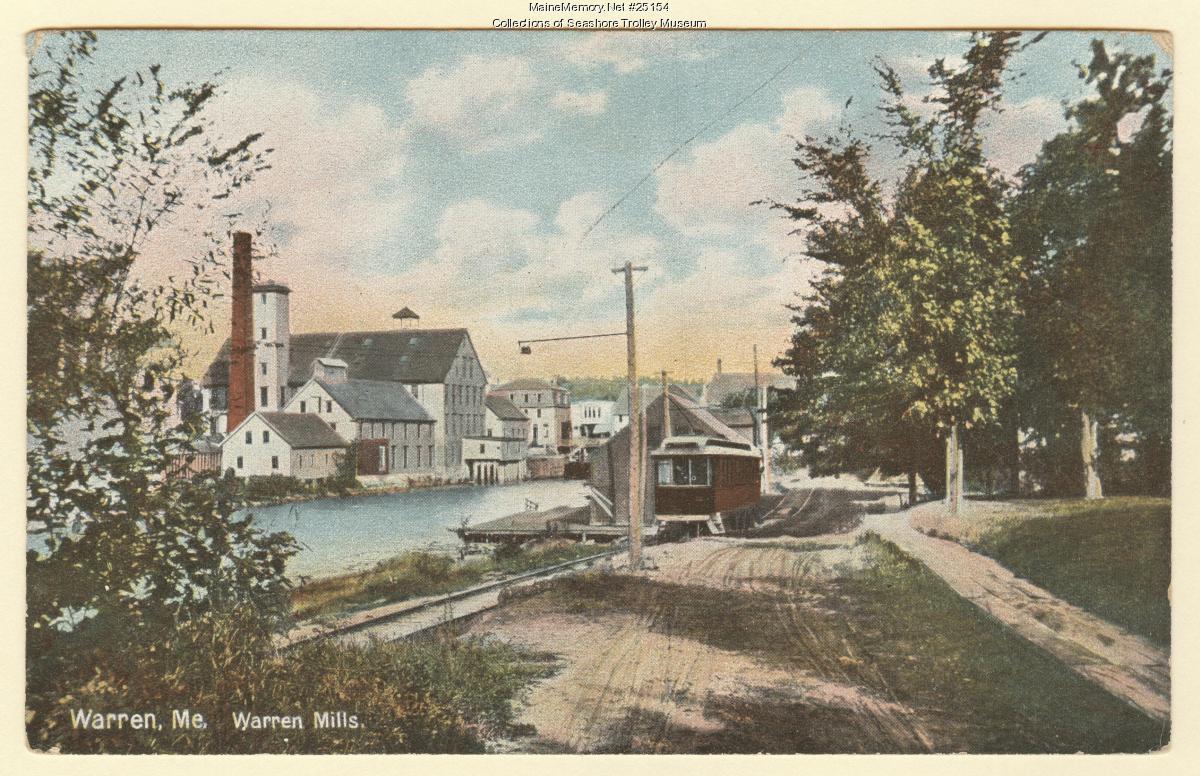
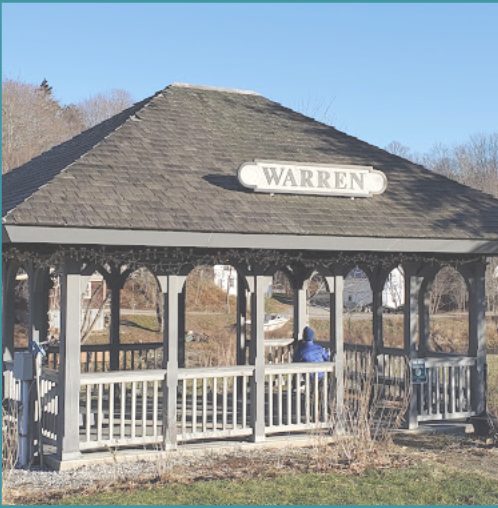
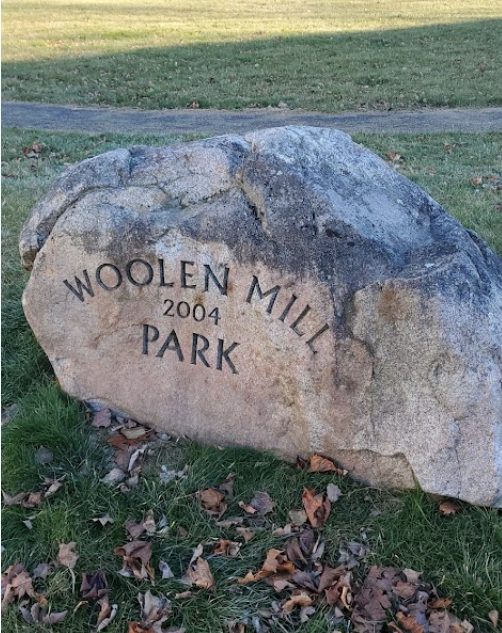
A short detour from U.S. Route 1 in Warren brings travelers to a riverside park where a woolen mill once stood.
Today, Woolen Mill Park offers green space and views of the St. George River. The factory building is gone, but the site still has a story to tell about the industries that helped sustain this Maine village.
One connection is especially tangible. Sculptor Jay Sawyer created an artwork for the park using material salvaged from the demolished Georges River Woolen Mill. Part of the old workplace became a tribute on the same property.
Why Build a Mill Here?
Warren Village sits at the head of the river’s tidal waters, a setting that offered both water power and access for shallow-draft vessels.
An account from the Chronicles of Knox County, dating to around 1922 and reproduced in a town report, describes water power at the village woolen mill and an upstream electric generating plant used to supply additional power. The river was infrastructure as well as scenery.
The village’s industrial history extended beyond wool. Lumbering, lime burning, and shipbuilding were also important parts of Warren’s early economy. The woolen mill belonged to a community accustomed to making and moving goods.
A Workplace That Helped Sustain the Village
The same historical account reports that woolen manufacturing had continued, with interruptions, since 1842. Around the time of the account, the Georges River Woolen Mills employed approximately 100 people.
That gives the park a different scale when you’re standing beside the river. This was a place where people came to work, and where manufacturing supported daily life in the surrounding village.
A nearby house offers another connection. The Warren Historical Society’s Dr. Campbell House was purchased in 1893 by George Walker, superintendent of the Georges Woolen Mill. Today, the society maintains the house and collections that include displays about Warren’s industries. Visits can be arranged through the society.
The mill’s story reaches beyond the footprint of its buildings into the homes and records of the people associated with it.
From Wool to Rope, and Then a Park
The property’s manufacturing history continued after its woolen years. Campbell Environmental Group, which investigated the site under a Maine Department of Environmental Protection contract, documents Crowe Rope Industries’ use of the facility from 1966 to 1997 to manufacture polypropylene rope.
The later conversion to public space involved more than removing a building. Environmental investigations examined the former industrial property, and the town demolished the building and removed identified items of concern. The consultant describes the resulting public green space as an appropriate use of the property.
Pieces of the Mill Became Art
Sawyer’s Sunrise at Woolen Mill Park was installed in 2010. In his account of the project, he explains that the sculpture was made from material recovered during demolition of the mill. It’s a fitting way to preserve a connection without rebuilding the factory.
The buildings no longer frame the river, but some of their material remains on the site in a new form. That makes the artwork more than decoration because it links the park with the industrial landscape that came before it.
Why It’s Worth the Stop
Woolen Mill Park is an easy place to pause during a Route 1 drive. The town lists historical interpretation, benches, picnic tables, and nearby parking.
There’s also a reason to look toward the water. A town report describes the park as a place to watch birds feeding during the spring alewife run, including osprey and eagles.
Know Before You Go
Location: Woolen Mill Park, Main Street beside the St. George River, Warren Village, Warren, ME 04864.
Historic dates: A circa-1922 account traces woolen manufacturing to 1842; the park sculpture was installed in 2010.
What you’ll find: A former mill site, historical interpretation, public art, river views, and picnic seating. The mill building no longer stands.
Hours: The town lists the park as open year-round, dawn to dusk.
Admission: No general admission fee is listed on the town’s park page.
Parking: Available nearby; follow posted restrictions.
Time needed: Allow approximately 20–30 minutes for a relaxed look around; this is a suggested visit length.
Pro Tip: Look for Sunrise at Woolen Mill Park and consider where its material came from. Pair the park with an arranged visit to the Warren Historical Society if you want to explore the village’s industrial history further.









 Continue with Google