

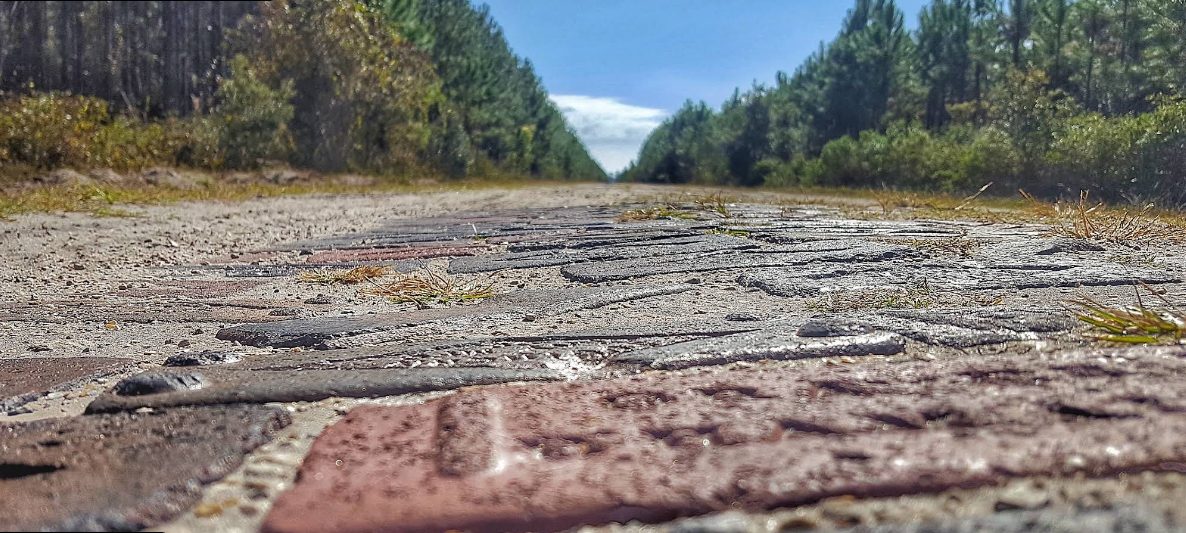
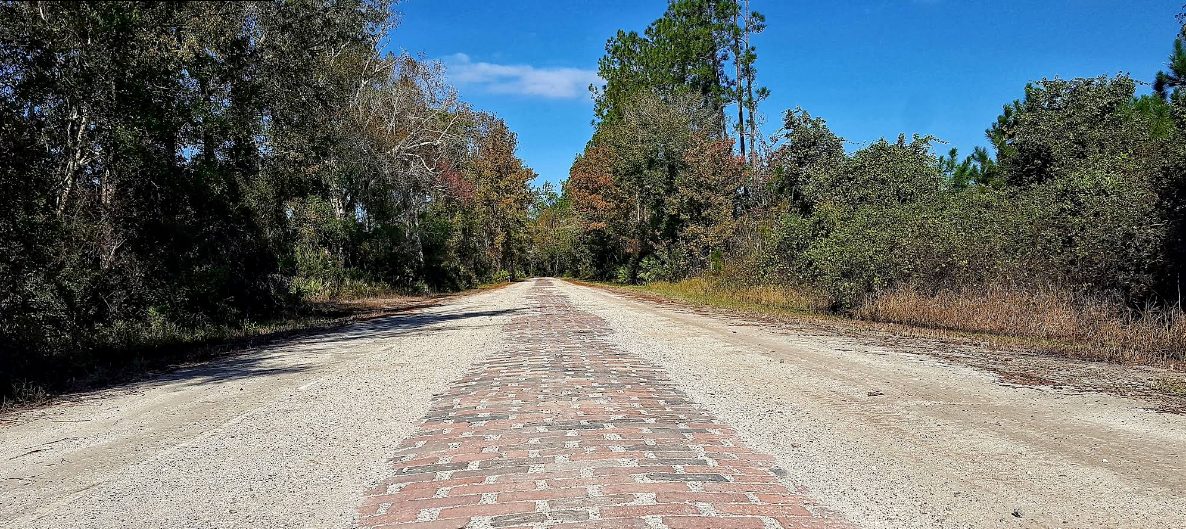
Just a few miles west of U.S. Route 1 in the tiny community of Espanola, Florida, a narrow brick road disappears into the trees. At first glance, Old Brick Road might look like an abandoned backroad. In reality, you’re looking at a surviving piece of one of America’s earliest major highways.
Built in 1916, this brick roadway became part of the Dixie Highway, an ambitious network of roads connecting the Midwest with Florida decades before the modern interstate system existed. For early automobile travelers heading south, roads like this represented something revolutionary: the possibility of driving long distances across the country.
Today, the uneven red bricks, encroaching vegetation, and quiet woods make Old Brick Road feel worlds away from modern U.S. Route 1 nearby.
The Highway Before the Highway
In the early 1900s, long-distance automobile travel could be an adventure in the worst possible way. Roads were often little more than dirt tracks that became muddy, sandy, or nearly impassable depending on the weather.
The Dixie Highway project sought to change that.
Flagler County’s section was constructed using millions of locally manufactured bricks laid across the Florida landscape. The resulting road carried automobiles, residents, goods, and adventurous tourists through communities such as Espanola.
Then transportation changed again.
A newer highway opened through the region in 1927, bypassing Espanola. That roadway eventually became part of U.S. Route 1, shifting traffic away from the old brick highway and leaving the former route behind.
The road that once represented the future of automobile travel had become obsolete in barely a decade.
Why It’s Worth the Stop
What makes Old Brick Road remarkable is how much of it survives.
Roughly 10 miles of historic brick roadway remain north of Espanola, creating what may be one of the longest surviving rural stretches of brick highway in the United States.
There are no neon signs, amusement rides, or elaborate visitor centers here. The appeal is standing on the bricks and imagining Model T-era motorists bumping their way south through rural Florida more than a century ago.
For Route 1 travelers, there’s another reason this stop is special.
You’re essentially visiting Route 1’s predecessor.
The modern highway just a few miles away represents the next generation of the same idea: creating a dependable north-south route that could connect communities and carry travelers through the eastern United States.
Old Brick Road lets you see what that kind of road trip looked like before Route 1 existed.
Know Before You Go
- Location: Espanola, Flagler County, Florida
- Route 1 proximity: The Espanola entrance is approximately 3–4 road miles from U.S. Route 1
- Historic designation: Part of the former Dixie Highway
- Built: 1916
- Length: Roughly 10 miles of historic brick roadway survive
- Cost: Free
- Important: This is an old rural road rather than a developed tourist attraction. Conditions can be rough, and portions may be better suited to exploring on foot or with an appropriate vehicle.
- Pro Tip: Don’t expect a perfectly restored historic road. The weeds, worn bricks, and encroaching woods are part of what makes this place so fascinating.







 Continue with Google